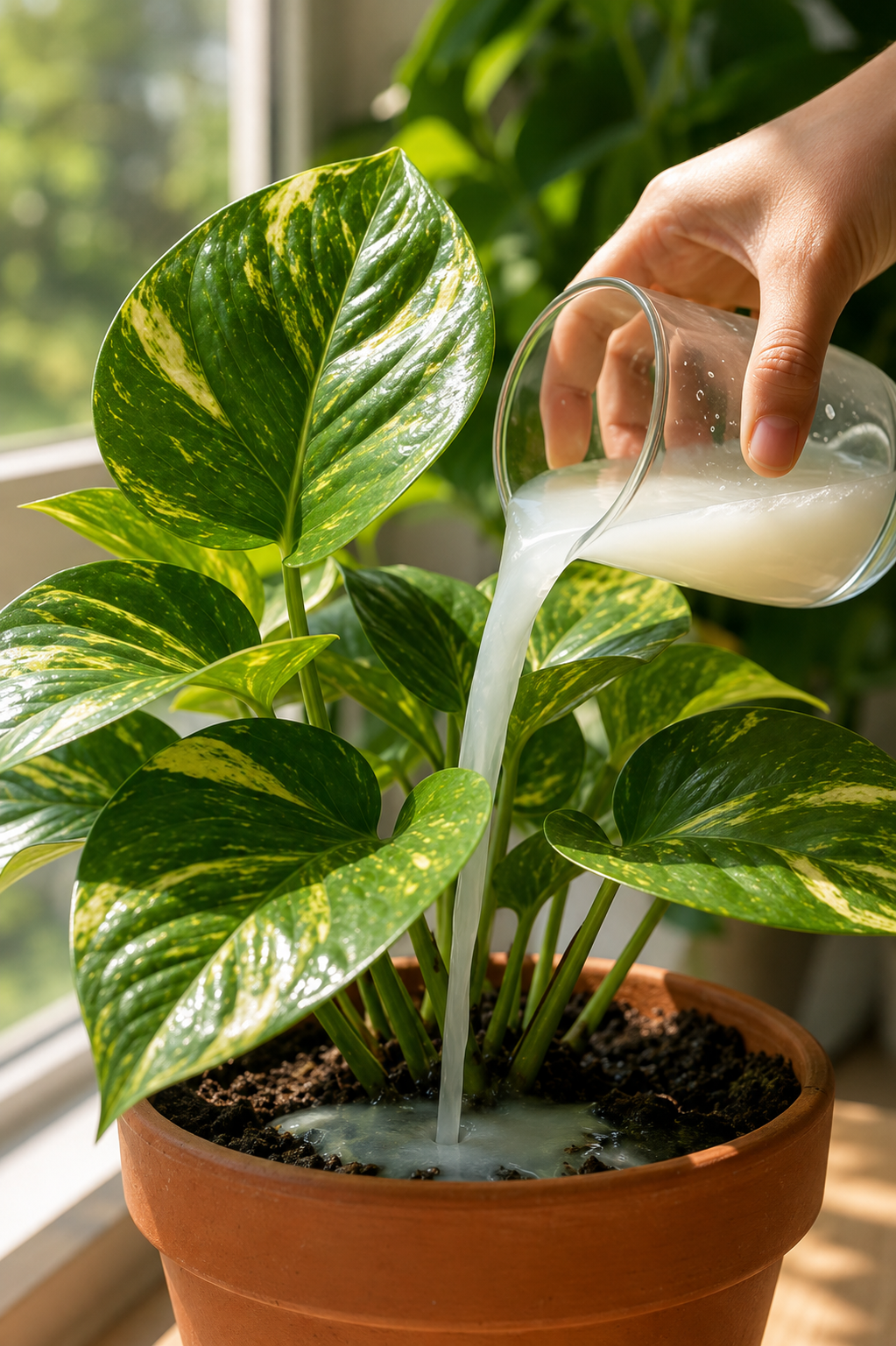
🟢The Golden Pothos (Epipremnum aureum), often called Devil’s Ivy, is one of the most popular and resilient indoor houseplants in the world. Renowned for its heart-shaped, glossy leaves marbled with creamy yellow variegation, this tropical vine thrives under a wide variety of indoor conditions. While commercial fertilizers provide concentrated nutrients, more plant enthusiasts are turning to sustainable, kitchen-derived organic feeding methods. One of the most effective, budget-friendly growth hacks is rice water fertilizer.
🟢Pouring leftover fermented or unfermented rice water into your potted Pothos supplies essential minerals and starch compounds that feed beneficial soil microbes, encourage lush leaf expansion, and promote rapid vine trailing. In this ultimate professional guide, we examine why rice water works so well, how to prepare it safely, and best practices for long-term Pothos care! 🪴✨
The Science: Why Golden Pothos Thrives on Rice Water 🔬
🟢When you rinse or boil rice, the water turns cloudy as it absorbs microscopic starches, vitamins, and minerals from the grain surface. These organic compounds transform plain tap water into a gentle, nutrient-packed natural liquid fertilizer:
- Starch Compounds: Complex carbohydrates feed beneficial bacteria and mycorrhizal fungi living in the potting soil. Healthy soil microflora break down organic matter into forms that plant roots absorb easily. 🧫
- Nitrogen (N): Promotes rapid vegetative growth, deep green leaf pigmentation, and vibrant yellow variegation on trailing vines. 🍃
- Phosphorus (P) & Potassium (K): Strengthens root systems, enhances cellular water retention, and improves resistance against common indoor plant diseases. 🛡️
- Micronutrients: Contains trace amounts of Calcium, Magnesium, Zinc, and B-vitamins (B_1, B_2, B_6) that stimulate healthy root cell division. 🧪
Rice Water vs. Other Organic Liquid Fertilizers 📊
🟢Comparing natural kitchen fertilizers helps you select the best feeding strategy for your tropical houseplants. Below is a detailed breakdown of popular homemade liquid fertilizers:
| Organic Fertilizer Type | Key Nutritional Components | Preparation Method | Best Application Frequency | Risk of Odor or Mold ⚠️ |
|---|---|---|---|---|
| Soaked Rice Water (Uncooked) 🌾 | Starch, Nitrogen, Potassium, B-Vitamins | Soak raw rice in cold water for 30 minutes; strain liquid | Once every 2–3 weeks | Low (if allowed to drain completely) |
| Fermented Rice Water (Sour Water) 🥛 | Amino acids, Lactic acid bacteria, Starch | Let soaked rice water sit at room temp for 24–48 hours | Once monthly (diluted 50/50 with water) | Moderate (mild sour scent) |
| Boiled Rice Water (Unsalted) 🥣 | Concentrated carbohydrates, Potassium | Strain water after boiling rice; cool to room temp | Once every 3–4 weeks (diluted 50%) | Moderate if overused |
| Banana Peel Liquid Tea 🍌 | Potassium (K), Phosphorus (P), Calcium | Steep chopped banana peels in water for 48 hours | Once every 3 weeks | Moderate (attracts fruit flies if left sitting) |
| Diluted Green Tea / Coffee ☕ | Nitrogen, Tannic acid, Antioxidants | Brew mild tea/coffee; dilute 1:4 with fresh water | Once monthly | High if soil remains |
Step-by-Step Guide: How to Prepare & Apply Rice Water Safely 👩🌾👨🌾
Step 1: Prepare the Rice Water (Soaking Method) 🌾
- Take 1 cup of uncooked white or brown rice in a clean bowl.
- Add 2 to 3 cups of room-temperature filtered water.
- Swirl the rice gently with your hands or a spoon for 2 to 3 minutes until the water turns milky white.
- Strain the cloudy liquid into a glass or jar, reserving the rice for cooking.
Step 2: Check Soil Moisture & Drain Capacity 🪴
- Check the terracotta or ceramic pot to ensure it has functional drainage holes at the base.
- Insert your finger 1 to 2 inches into the topsoil. The soil should feel dry to the touch before applying any liquid drench. Pro Tip: Golden Pothos roots prefer drying out slightly between waterings; never pour liquid fertilizer into already soggy soil!
- Slowly pour the prepared rice water around the base of the plant, distributing it evenly across the soil surface.
- Continue pouring until a small amount of liquid drips out of the pot’s bottom drainage holes.
- Allow the pot to drain completely for 15 minutes, then empty the drainage tray beneath the pot to prevent root rot (Pythium).
- Spring & Summer (Active Growth Season): Pothos grows vigorously during warm months. Apply rice water every 2 to 3 weeks alongside bright, indirect sunlight to boost trailing vine growth. 🌿
- Autumn (Transition Period): Growth begins to slow down. Reduce application to once a month as light levels decrease. 🍂
- Winter (Dormancy Phase): Pothos enters a resting phase during winter. Water sparingly with plain water only when the top 50% of the soil dries out; pause all fertilizer applications until spring returns. ❄️
- Using Salted or Seasoned Rice Water: Never use water left over from cooking rice with salt, butter, oil, or seasonings! Sodium causes severe root dehydration and foliage burn. 🚫
- Applying Hot Liquid: Always allow boiled rice water to cool completely to room temperature before pouring it onto your plant. Hot water scalds sensitive root tissues instantly. 🌡️
- Over-Fermenting or Stagnant Storage: Storing uncooked rice water in an airtight container for more than 3 days at room temperature can cause harmful anaerobic bacteria and bad odors to develop. Use fresh or lightly fermented water within 48 hours! 🧫
- Neglecting Indirect Light Needs: While rice water provides essential nutrients, Pothos needs bright, indirect sunlight near a window to convert those nutrients into new variegated leaves through photosynthesis. ☀️
Frequently Asked Questions (FAQ) ❓
Can I spray rice water directly onto Pothos leaves?
🟢Yes! Diluted rice water can be used as a mild foliar spray. Mist the upper and lower leaf surfaces once a month, then wipe the leaves down with a soft microfiber cloth to remove dust and boost photosynthesis.
Will rice water attract pests like fungus gnats or ants?
🟢If used in moderation and allowed to drain properly, rice water does not attract pests. However, if you overwater or leave standing liquid in the soil, the excess starch can encourage fungus gnats. Always let the top layer of soil dry out between applications!
What is the best potting mix for Golden Pothos?
🟢Combine 70% standard indoor potting soil, 20% perlite (for aeration), and 10% orchid bark chips. This well-draining mixture prevents soil compaction while retaining just enough moisture for healthy root uptake.