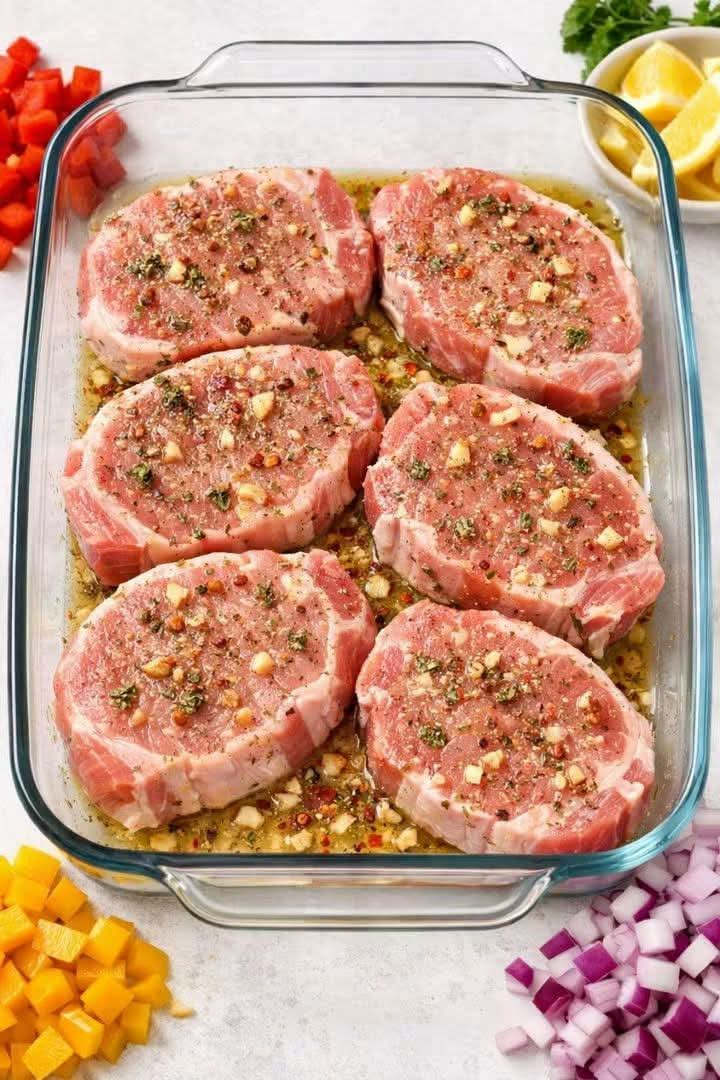
Few culinary delights compare to thick, perfectly seasoned cuts of meat resting in a rich, aromatic garlic and herb marinade. Whether you are planning a cozy family dinner or preparing a weekend feast, taking the time to properly marinate and season your steaks or chops turns simple cuts into restaurant-quality comfort food. As shown in the preparation stage, laying thick cuts in a clear baking dish filled with olive oil, minced garlic, cracked red pepper flakes, and dried herbs creates a powerhouse of flavor that penetrates deep into every fiber.
In this comprehensive culinary guide, we will explore the science of acid-and-oil marinades, the importance of fresh aromatics, and the step-by-step cooking techniques needed to ensure juicy, tender perfection every single time.
1. The Science Behind an Effective Marinade
A great marinade relies on a balanced synergy of three key components: fat (oil), acid, and flavor agents (aromatics & herbs).
- The Oil Base (Fat): Extra virgin olive oil or melted butter acts as a flavor carrier. Because many aromatic compounds in garlic and dried herbs are fat-soluble, oil dissolves these flavors and distributes them evenly over the surface of the meat.
- The Acidic Element: Fresh lemon wedges, lemon juice, or light vinegar gently break down surface proteins, softening the outer layer of the meat and allowing seasonings to penetrate more effectively.
- Aromatics & Spices: Minced fresh garlic, red pepper flakes for subtle heat, coarse sea salt, ground black pepper, and crushed thyme or rosemary create a complex savory crust as the meat cooks.
2. Complementary Ingredients & Flavor Pairings
To elevate a simple pan-baked or grilled meal into a complete visual and taste experience, fresh side ingredients play a crucial role:
- Fresh Aromatics: Diced red onions and sweet yellow bell peppers (as pictured surrounding the dish) provide a crisp, sweet contrast to the rich, savory meat when roasted alongside.
- Citrus Brightness: Serving with fresh lemon wedges adds a pop of acidity right before serving, cutting through the richness of the garlic butter and olive oil.
- Fresh Herbs: Finishing the dish with chopped fresh parsley or chives right out of the oven adds color and a clean, refreshing finish.
3. Step-by-Step Preparation & Cooking Protocol
To achieve tender, juicy, and flavor-packed results, follow this structured cooking workflow:
- Arranging the Cuts: Place thick, high-quality meat cuts in a single layer inside a wide glass or ceramic baking dish.
- Pouring the Marinade: Drizzle generous amounts of seasoned olive oil infused with minced garlic, red pepper flakes, oregano, and black pepper over both sides of each cut.
- Marinating Time: Cover the dish and let the meat marinate in the refrigerator for at least 30 minutes to 2 hours. Bring it to room temperature for 15 minutes before cooking for even heat distribution.
- Cooking Method:
- Oven Baking: Bake in a preheated oven at 375°F (190°C) for 20 to 25 minutes until the internal temperature reaches your preferred doneness, basting halfway through with the pan juices.
- Pan-Searing / Grilling: Transfer the marinated cuts to a hot cast-iron skillet or grill, searing each side for 4 to 6 minutes until a rich golden brown crust forms.
- Resting the Meat: Remove from heat and allow the meat to rest on a warm plate for 5 to 10 minutes. This lets the juices redistribute throughout the meat, preventing it from drying out when sliced.
By adhering to these professional marinating principles and precision cooking techniques, you can effortlessly serve a tender, fragrant, and deeply flavorful dinner that will impress any food lover!