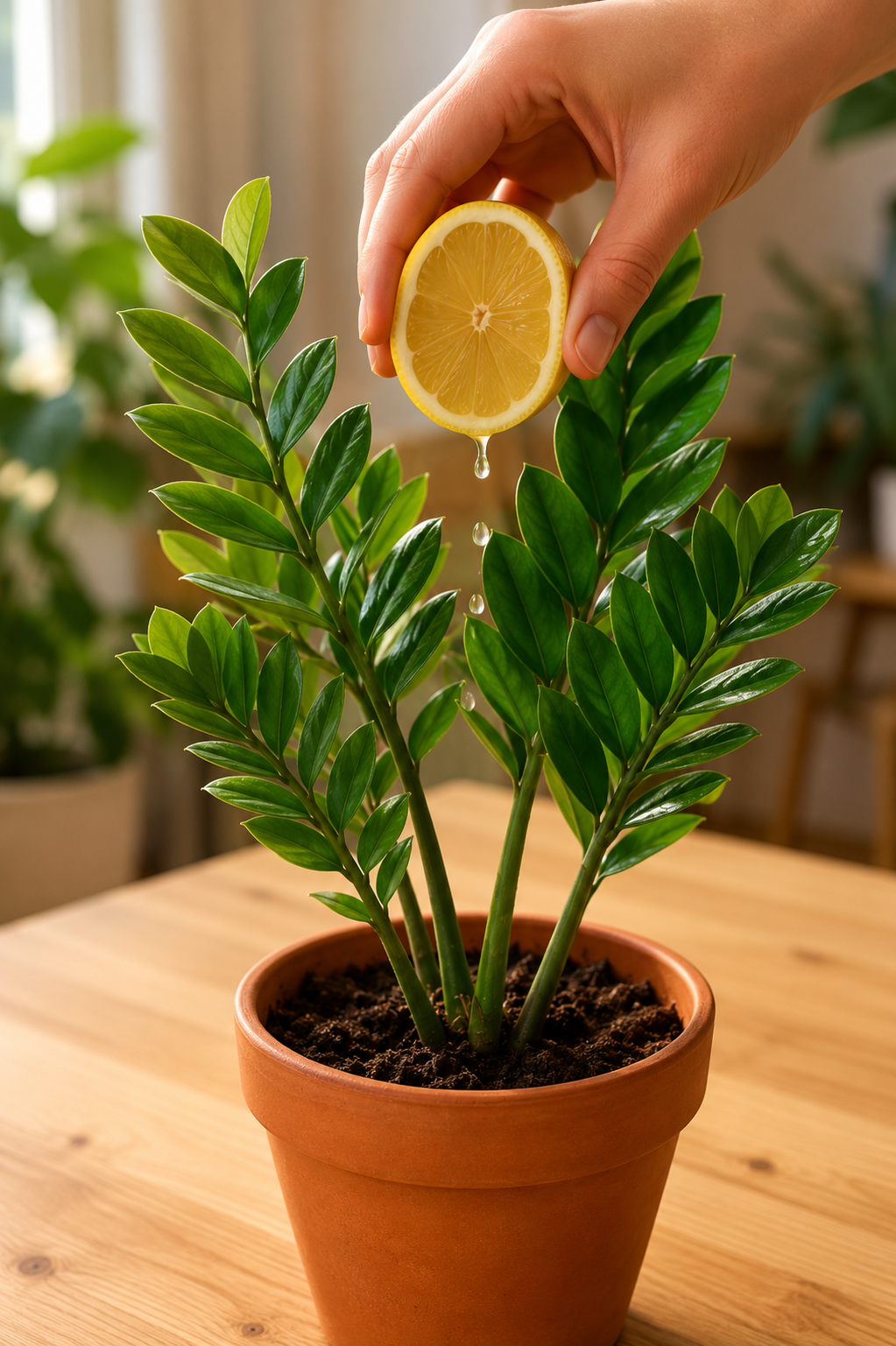
🟢The ZZ Plant (Zamioculcas zamiifolia) is universally celebrated as one of the most indestructible indoor houseplants. Featuring waxy, feather-like stems lined with smooth, deep green leaflets, this tropical African native tolerates low light levels, dry air, and long periods of neglect. However, even the hardiest ZZ plants accumulate household dust, mineral residues from hard water, and dull leaf grime over time.
🟢One popular organic houseplant hack involves using diluted lemon juice. Fresh lemon juice acts as a natural leaf shine solution and mild soil acidifier, breaking down tap water mineral deposits while restoring the glossy sheen of your ZZ plant. In this professional website guide, we explore the science behind using lemon juice for ZZ plants, step-by-step application techniques, and essential rules to prevent leaf burn! 🪴✨
The Science: Benefits of Lemon Juice for Houseplants 🔬
🟢Lemon juice contains natural citric acid, ascorbic acid (Vitamin C), and essential micronutrients. When diluted properly with water, it offers distinct botanical benefits for indoor tropical plants:
- Removes Alkaline Mineral Deposits: Hard tap water leaves stubborn white calcium carbonate spots on glossy leaflets. The citric acid in lemon juice neutralizes and dissolves these alkaline deposits instantly. 🧼
- Enhances Leaf Shine Naturally: Unlike commercial petroleum-based leaf shine sprays—which clog microscopic leaf pores (stomata)—diluted lemon juice removes grime safely, leaving leaves squeaky clean without impeding respiration. ✨
- Adjusts Soil pH for Acid-Loving Plants: Tap water in many cities is highly alkaline (pH > 7.5). Adding a few drops of lemon juice to irrigation water gently lowers soil pH toward a slightly acidic range (6.0 – 6.8), improving nutrient bioavailability for roots. 🧪
- Mild Pest Repellent: The natural limonene and citrus aroma act as a mild deterrent against soft-bodied pests like fungus gnats and spider mites. 🐛
Lemon Juice vs. Other Houseplant Cleaning & Soil Solutions 📊
🟢Selecting the right natural cleaner for smooth-leafed tropical plants helps maintain plant health while avoiding damage. The table below compares common household solutions used for plant cleaning and soil acidifying:
| Solution Type | Primary Active Agent | Primary Function | Application Method | Risk of Leaf Damage ⚠️ |
|---|---|---|---|---|
| Diluted Lemon Juice 🍋 | Citric Acid (C_6H_8O_7) | Leaf cleaning & mild soil acidification | Wipe leaves with cloth or dilute in watering can | Very Low (when properly diluted) |
| Diluted Neem Oil Spray 🌿 | Azadirachtin | Organic pest treatment & foliage cleaning | Spray foliage and wipe gently with cloth | Low (Avoid direct bright sun) |
| Distilled Water / Rainwater 💧 | Pure H_2O (Zero minerals) | Gentle dust removal & soil flushing | Spray foliage or drench potting substrate | Zero Risk |
| Diluted White Vinegar 🍶 | Acetic Acid (CH_3COOH) | Mineral deposit remover | Wipe leaves with highly diluted solution (1 tsp/gal) | Moderate (High risk if undiluted) |
| Commercial Leaf Shine Sprays 🧴 | Petroleum distillates / Oils | Cosmetic leaf gloss | Spray directly on leaf surfaces | High (Clogs leaf stomata) |
Step-by-Step Guide: How to Apply Lemon Juice Safely 👩🌾👨🌾
🟢Applying lemon juice to your ZZ plant requires proper dilution. Never squeeze raw, concentrated lemon juice directly onto leaves or into the soil, as high acidity can cause chemical burns. Follow these simple steps:
Step 1: Prepare the Diluted Leaf-Cleaning Solution 🍋
- Squeeze 1 teaspoon of fresh lemon juice (or bottled 100% pure juice) into 2 cups (500 ml) of lukewarm distilled or filtered water.
- Stir thoroughly to ensure the citric acid is evenly distributed throughout the liquid.
Step 2: Gently Wipe the Leaves (Top & Bottom) 🧼
- Dip a soft microfiber cloth, cotton pad, or sponge into the diluted lemon solution.
- Squeeze out excess liquid so the cloth is damp, not dripping.
- Support the underside of each ZZ leaflet with one hand, and gently wipe the top surface with the cloth to dissolve dust and hard water spots.
- Wipe the stems (petioles) from the base upward to remove accumulated grime.
Step 3: Acidify Soil (Optional Monthly Drench) 💧
- For soil application, mix 1/2 teaspoon of fresh lemon juice per 1 quart (1 liter) of water.
- Check the soil moisture first: the top 2 inches of soil in the terracotta or plastic pot should be dry.
- Pour the mixture around the root zone until water drips out of the pot’s bottom drainage holes.
- Empty the saucer after 15 minutes to avoid root rot (Rhizoctonia).
ZZ Plant Seasonal Care Schedule 🗓️
🟢Adjusting your care routine throughout the seasonal cycle keeps your ZZ plant vibrant and thriving year-round:
- Spring & Summer (Active Growth Period): ZZ plants produce new light green, glossy shoots. Clean foliage with the lemon juice mixture once a month. Water thoroughly every 2 to 3 weeks when soil is completely dry. 🌿
- Autumn (Transition Phase): Growth slows down. Reduce watering to once every 3 to 4 weeks. Wipe dust off leaves every 6 weeks to optimize sunlight absorption during shorter winter days. 🍂
- Winter (Dormancy Phase): The plant enters rest. Water sparingly every 4 to 6 weeks only when the rhizomes feel firm. Pause all fertilizer applications until spring! ❄️
Top 4 Common Mistakes to Avoid ⚠️
- Pouring Undiluted Lemon Juice: Concentrated lemon juice has a low pH (pH \approx 2.0). Applying pure juice directly to leaves or soil will scorch foliage and burn underground rhizomes! 🚫
- Placing Plant in Direct Sunlight After Cleaning: Wet leaves coated with citric solution exposed to direct, scorching sun can experience sun scalding or leaf spots. Always keep your ZZ plant in bright, indirect light. ☀️
- Overwatering the Rhizomes: ZZ plants store water in thick, potato-like underground rhizomes. Overwatering causes yellowing leaves and mushy root rot. Always let soil dry out completely between waterings! 🥔
- Using Salted or Flavored Lemon Products: Never use lemon juice blends containing sugar, salt, preservatives, or artificial flavorings (such as lemonade mixes). These attract ants and fungal growth. 🧫
Frequently Asked Questions (FAQ) ❓
Can I use lemon juice on all indoor plants?
🟢Diluted lemon juice is great for smooth, glossy-leafed tropical plants like ZZ plants, Golden Pothos, Monstera, and Rubber Trees. Avoid using liquid sprays on plants with fuzzy or textured leaves (like African Violets) as moisture gets trapped in leaf hairs.
How often should I clean my ZZ plant leaves?
🟢Wiping down leaves once every 4 to 6 weeks is sufficient to remove dust and maintain maximum light absorption for healthy photosynthesis.
What is the best potting mix for a ZZ Plant?
🟢Use a fast-draining potting mixture composed of 60% standard indoor potting soil, 30% perlite or pumice, and 10% coarse sand. Fast drainage prevents water retention around the potato-like rhizomes.