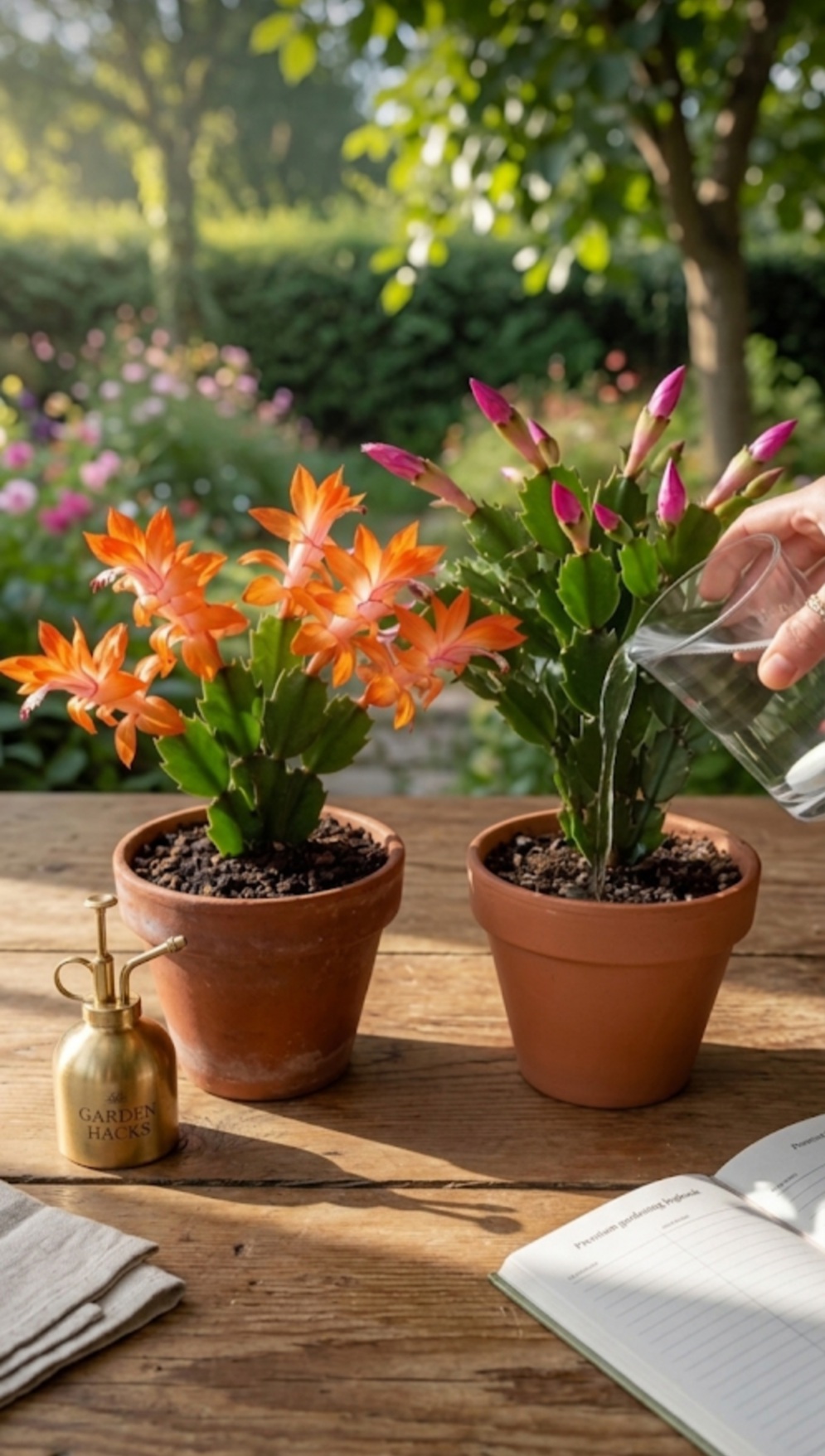
🟢The Christmas Cactus (Schlumbergera bridgesii) and its close relative, the Thanksgiving Cactus (Schlumbergera truncata), are among the most popular indoor holiday plants. Unlike desert cacti that thrive in hot, arid conditions, these tropical epiphytes are native to the cool, humid rainforests of coastal Brazil. Featuring flat, segmented green stems and vibrant trumpet-shaped flowers in shades of orange, pink, red, and white, they bring vibrant color to indoor gardens during late autumn and winter.
🟢Whether you are trying to trigger vibrant new floral buds, establish a proper watering routine, or prevent leaf segment dropping, this ultimate professional care guide covers everything you need to keep your Christmas Cactus thriving year-round! 🪴✨
Desert Cacti vs. Holiday Cacti: Key Differences 🔬
🟢Understanding the natural habitat of the Christmas Cactus is essential for proper indoor care. Because they grow attached to tree branches (epiphytes) in shaded rainforests, their water and light requirements differ significantly from arid desert cacti.
- Light: Prefers bright, indirect light rather than scorching direct sunlight. ☀️
- Soil Requirements: Needs light, organic-rich, highly porous soil that drains rapidly. 🪴
- Moisture Level: Requires consistent moisture during active growth and budding seasons; never allow the soil to turn bone-dry for extended periods. 💧
Christmas Cactus Care & Seasonal Feeding Overview 📊
🟢Matching your care routine to the plant’s seasonal cycle ensures long-term health and heavy seasonal blooming. Below is a complete seasonal guide for managing watering, lighting, and fertilizing requirements:
| Season & Growth Phase | Watering Frequency 💧 | Ideal Light Conditions ☀️ | Fertilizer Application 🧪 | Target Temperature Range 🌡️ |
|---|---|---|---|---|
| Spring (Active Growth) 🌿 | Water when top 1 inch of soil feels dry | Bright, indirect sunlight | Balanced 20-20-20 liquid fertilizer (diluted 50%) every 2–4 weeks | 65°F – 75°F (18°C – 24°C) |
| Summer (Stem Development) ☀️ | Water thoroughly 1–2 times per week | Dappled shade outdoors or filtered window light | High-potassium liquid food once monthly | 70°F – 80°F (21°C – 27°C) |
| Early Autumn (Bud Induction) 🌸 | Reduce watering slightly; keep top 50% soil dry | 12–14 hours of continuous darkness per night | Stop fertilizing completely during bud formation | 55°F – 65°F (13°C – 18°C) |
| Late Autumn / Winter (Full Bloom) ✨ | Keep soil evenly moist (never soggy) | Bright indirect light away from hot drafts | No fertilizer needed while flowers are open | 60°F – 68°F (15°C – 20°C) |
| Late Winter (Post-Bloom Rest) 💤 | Water sparingly every 2–3 weeks | Medium indirect sunlight | Pause fertilizing for 4–6 weeks | 60°F – 65°F (15°C – 18°C) |
Step-by-Step Guide: How to Properly Water & Care for Your Christmas Cactus 👩🌾👨🌾
Step 1: Master the “Soak and Drain” Watering Technique 💧
- Check the moisture level of the terracotta pot before watering. Insert your finger 1 inch into the soil mixture.
- Pour room-temperature water directly onto the soil surface around the plant base until water runs freely out of the drainage holes at the bottom of the pot.
- Allow the saucer to collect excess runoff for 10 to 15 minutes, then empty the saucer completely. Pro Tip: Never let the terracotta pot sit in standing water, as stagnant water causes root rot (Phytophthora).
- Because Schlumbergera plants absorb atmospheric moisture through leaf segments (cladodes), maintain ambient humidity levels between 50% and 60%.
- Use a brass mister to lightly spray the foliage during hot summer days, or place the pot on a pebble tray filled with water.
- Cool Temperatures: Expose the plant to night temperatures around 55°F to 60°F (13°C to 15°C) starting in late September.
- Complete Darkness: Provide 12 to 14 hours of uninterrupted darkness every night for 6 consecutive weeks (place the plant in a dark closet or cover it with a breathable box from 6 PM to 8 AM).
- Reduce Water: Cut back on watering frequency during this resting phase until tiny pink or orange buds appear at the segment tips!
- Twist Off Healthy Segments: Select healthy, green stem branches. Gently twist off a cutting containing 2 to 4 stem segments.
- Callus the Cut Ends: Lay the segment cuttings on a dry paper towel for 24 to 48 hours to allow the cut ends to dry out and form a protective callus layer.
- Plant in Porous Soil Mix: Insert the bottom segment 1 inch deep into a small pot filled with a mix of 50% potting soil and 50% perlite or coarse sand.
- Water Sparingly: Keep the soil slightly damp and place the pot in bright indirect light. Roots will develop within 3 to 4 weeks!
- Soggy, Wrinkled Leaves: Caused by either severe underwatering or root rot from overwatering. Inspect the roots: if roots are firm and white, give the plant a thorough soak. If roots are black and mushy, prune damaged roots and repot in fresh, dry soil. 🩺
- Dropping Flower Buds: Sudden changes in temperature, cold window drafts, or moving the pot to a different light orientation while buds are forming will cause buds to drop prematurely. Keep the plant in a stable location! 🚫
- Reddish or Purple Stem Segments: A sign of sunburn or excessive direct sunlight exposure. Move the plant a few feet away from south- or west-facing windows. ☀️
- Fungus Gnats in Soil: Soil that stays wet for too long attracts fungus gnats. Allow the top layer of soil to dry out between waterings and top the soil with a thin layer of coarse sand. 🪰
Frequently Asked Questions (FAQ) ❓
What is the best potting mix for a Christmas Cactus?
🟢Use a light, airy potting blend consisting of 60% quality indoor potting soil, 20% perlite or pumice, and 20% orchid bark chips. This ensures fast drainage while holding sufficient moisture.
Why is my Christmas Cactus blooming at Thanksgiving or Easter?
🟢Schlumbergera cacti are often mislabeled. Thanksgiving cacti (Schlumbergera truncata) have pointed, claw-like leaf teeth and bloom in November. Christmas cacti have rounded, tear-drop leaf edges and bloom in late December. Easter cacti (Rhipsalidopsis) feature rounded segments with bristles and bloom in spring!
How long do Christmas Cactus plants live?
🟢When given proper care, a Christmas Cactus can live for 20 to 50 years (or even longer), often becoming cherished family heirlooms passed down through generations!