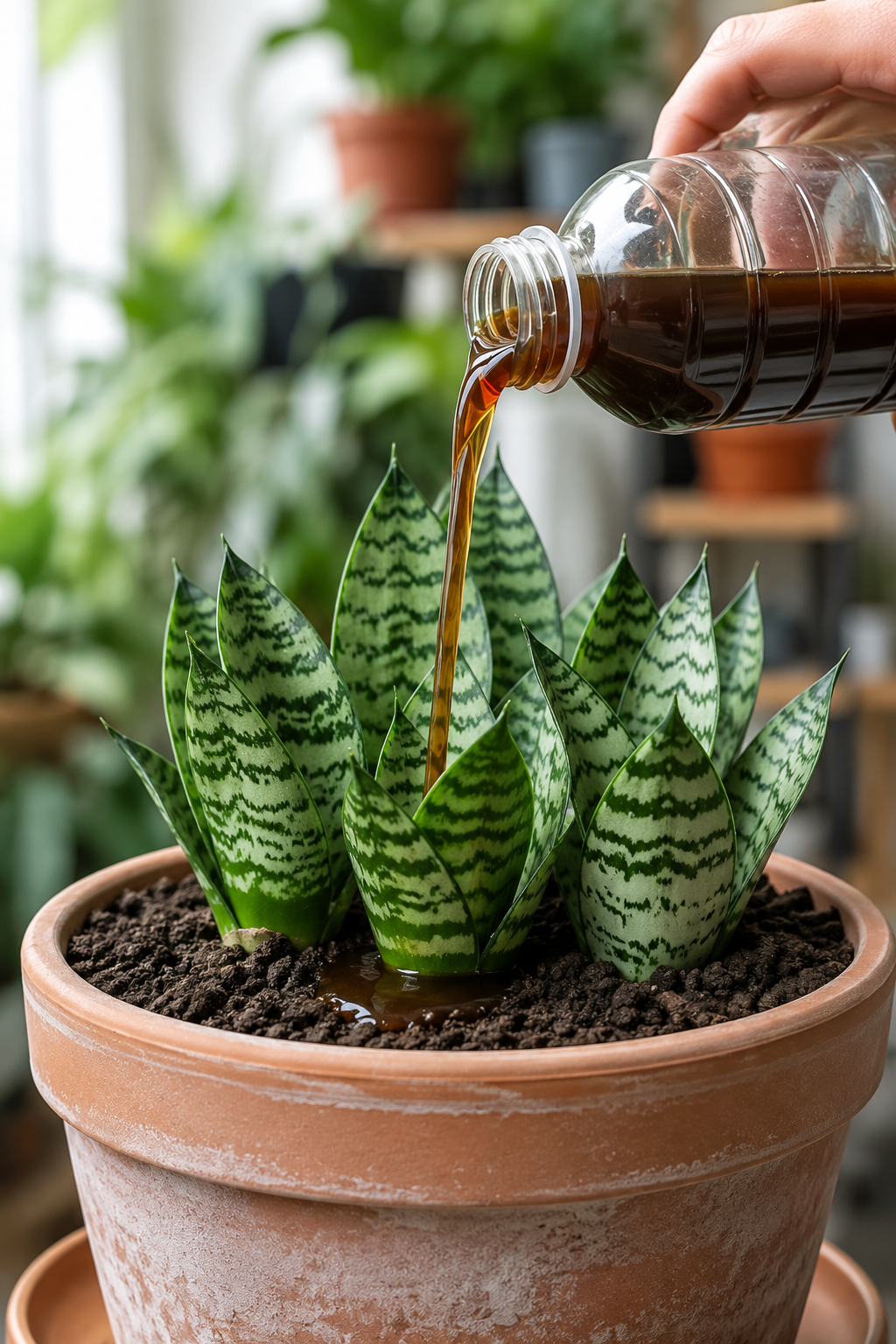
✓The Snake Plant, known botanically as Sansevieria or Dracaena trifasciata, is celebrated globally as one of the most durable, low-maintenance, and air-purifying indoor plants available today. While cultivars like Sansevieria trifasciata ‘Hahnii’ (the Bird’s Nest Snake Plant) are naturally resilient and slow-growing, plant enthusiasts around the world are constantly searching for safe, organic ways to accelerate leaf development and enhance foliage coloration.
✓A viral gardening trend across social media platforms involves pouring dark, nutrient-rich liquids—such as diluted coffee brews, compost tea, or liquid organic fertilizer—directly into potted Sansevieria soil. But what exactly happens when you feed your Snake Plant homemade organic liquid fertilizers? Does dark liquid fertilizer truly stimulate rapid pup production, or can it harm delicate root systems?
✓In this article, we will explore the science of organic liquid fertilizers, step-by-step application techniques, safety precautions, and how to create the ultimate nutrient-dense liquid feed for your Snake Plants right at home! 🌿✨
Understanding Liquid Fertilization for Sansevieria 🔬🌱
✓Unlike fast-growing tropical houseplants, Snake Plants are native to arid regions where soil nutrients are naturally sparse. Their metabolic rate is relatively slow, meaning they do not require heavy chemical fertilization. However, liquid nutrients offer distinct physiological advantages when applied correctly:
- Immediate Root Absorption: Liquid fertilizers deliver dissolved nitrogen, potassium, and trace elements directly to the root zone for rapid uptake. 💧
- Soil Microbiome Activation: Organic liquid feeds—such as compost tea or diluted coffee extracts—feed beneficial soil microorganisms, improving soil aeration and nutrient cycling. 🦠✨
- Enhanced Chlorophyll Production: Nitrogen-rich liquids help Sansevieria produce deeper green pigments and sharp, vibrant yellow or dark bands across their fleshy leaves. 🍃
Popular Dark Liquid Feeds: Benefits & Risks ☕ Dark Brews Explained
The image of pouring a dark, rich liquid into terracotta pots has captured the imagination of plant lovers. Let’s look at the most common natural liquids used in home plant care:
1. Diluted Spent Coffee Brews ☕
✓Coffee grounds contain significant amounts of nitrogen, potassium, and magnesium. When steeped in water and heavily diluted (resembling light tea), cold brewed coffee provides a gentle boost to leafy foliage. However, straight, undiluted coffee is overly acidic and can scorch tender root tissues if applied directly.
2. Compost Tea 🍃
✓Compost tea is created by steeping fully decomposed organic compost in aerated water. This yields a dark, dark-brown liquid packed with beneficial bacteria, humic acids, and balanced macronutrients that condition the soil naturally.
3. Seaweed & Kelp Liquid Extracts 🌊
✓Liquid kelp is a power-packed organic tonic rich in natural growth hormones (cytokinins and auxins). It encourages sturdy root growth and stimulates new offsets (pups) without burning the roots.
Step-by-Step: How to Apply Liquid Fertilizer Safely 🛠️📋
✓Over-fertilizing a drought-tolerant plant like Sansevieria can cause leaf softening and root rot. Follow these clear steps to feed your plant safely:
- Check Soil Moisture First: Never pour liquid fertilizer into bone-dry soil. Lightly moisten the soil with plain water an hour before feeding to prevent root burn. 🚿
- Dilute to Half (or Quarter) Strength: If using commercial liquid fertilizer or homemade coffee brew, dilute it to 25%–50% of the standard recommended strength. The liquid should look light brown, not pitch black. 🚰
- Pour Around the Base: Pour the liquid evenly around the soil edges near the root zone. Avoid pouring dense liquids directly into the central leaf rosette, as trapped moisture inside leaf crowns can lead to fungal crown rot. 🎯
- Allow Proper Drainage: Ensure your terracotta or plastic pot has functional drainage holes. Let all excess liquid drain completely out of the bottom tray. 🕳️
- Set a Schedule: Apply liquid nutrients only during active growing seasons (Spring and Summer) once every 4 to 6 weeks. Pause all fertilization completely during late Autumn and Winter. 🗓️✨
Quick Comparison: Organic Liquid Feeds vs. Commercial Fertilizers 📊
The table below compares the three main methods of feeding indoor Snake Plants:
| Feature / Criteria | Diluted Homemade Brews (Coffee/Compost Tea) ☕ | Liquid Synthetic Fertilizers 🧪 | Organic Seaweed / Kelp Concentrates 🌊 |
|---|---|---|---|
| Nutrient Source | Natural / Repurposed Waste | Chemical Salts (N-P-K) | Natural Marine Kelp |
| Nutrient Release | Gentle & Slow | Instant & High Intensity | Balanced & Hormone-Rich |
| Risk of Root Burn | Low (if well diluted) | Medium to High | Very Low |
| Soil Microbe Impact | Extremely Beneficial | Can reduce microbial life | Highly Beneficial |
| Pup / Offset Stimulation | Moderate | High | Excellent |
| Application Frequency | Every 4–6 weeks (Spring/Summer) | Every 6–8 weeks (Spring/Summer) | Every 3–4 weeks (Spring/Summer) |
| Cost & Accessibility | Nearly Free / Low Cost | Moderate | Moderate to High |
Essential Rules & Common Mistakes to Avoid 🚨💡
To keep your Snake Plants thriving and vibrant, keep these critical guidelines in mind:
- Avoid Added Sugar or Milk: Never use coffee or tea drinks containing sugar, milk, or artificial creamers. Sugars attract fungus gnats, ants, and mold, while dairy products cause foul odors and root decay. 🚫🥛
- Ensure High Light Exposure: Plants in bright, indirect light consume nutrients much faster than plants kept in dark corners. Reduce feeding significantly for low-light plants. ☀️
- Watch for Warning Signs: If leaf tips begin turning crispy brown or leaves become soft and yellow, stop fertilizing immediately and flush the soil with pure distilled water. ⚠️🍂
- Use Breathable Terracotta Pots: Terracotta pots allow moisture from liquid feedings to evaporate evenly through clay walls, reducing the risk of waterlogged soil. 🏺
Final Thoughts 🎯🌿
Pouring a carefully diluted, nutrient-rich liquid fertilizer into your Snake Plant’s soil is a simple, highly effective way to encourage robust foliage, rich leaf color, and healthy new growth. Whether you prefer organic compost teas, gentle coffee extracts, or liquid seaweed, moderation remains the key to success. Feed your Sansevieria sparingly during the warm growing months, protect the leaf crown from standing water, and enjoy a lush, thriving indoor jungle! 🚀🌱