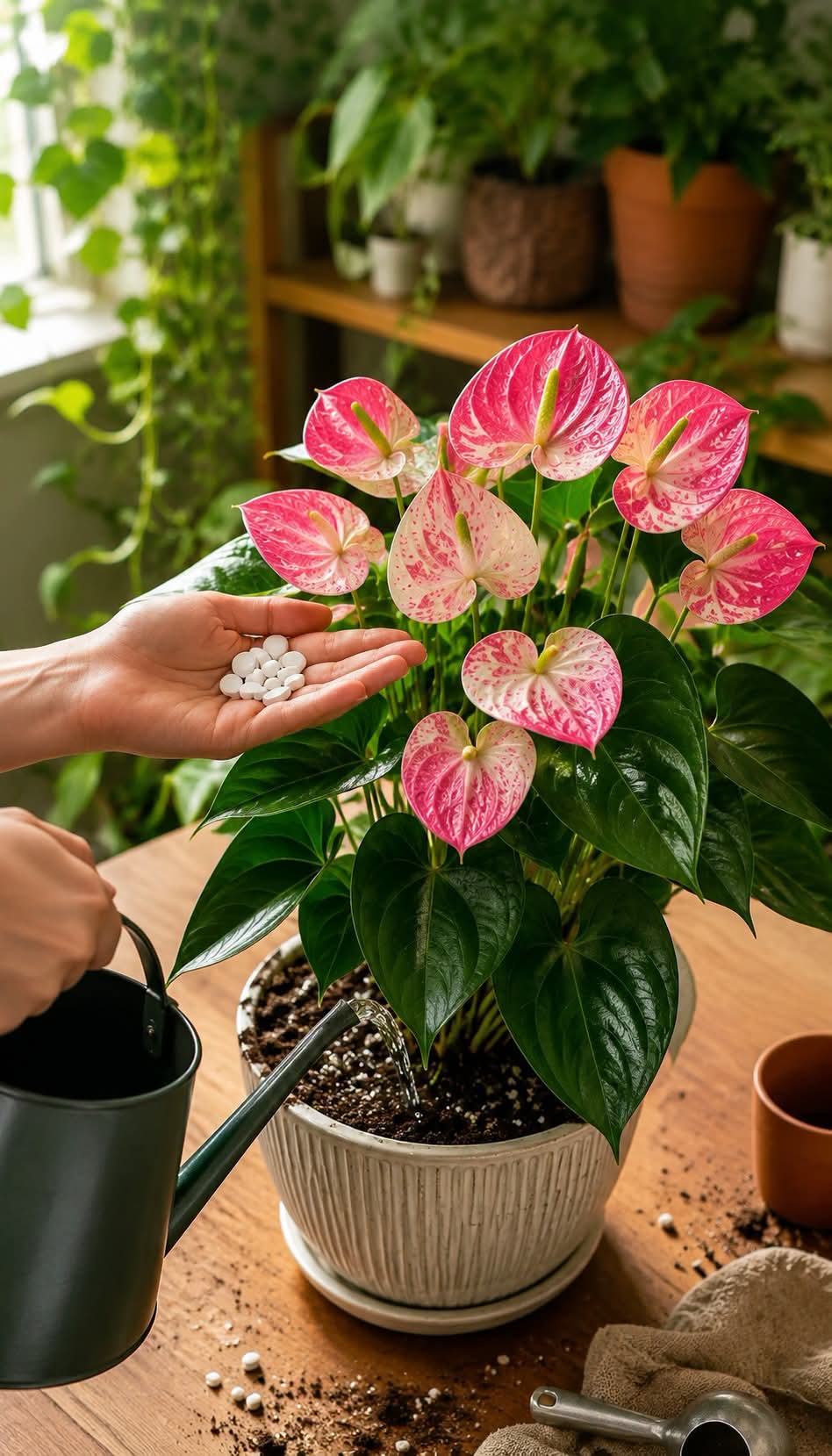
Anthuriums, commonly known as Flamingo Flowers or Tailflowers, are among the most beloved tropical houseplants worldwide. Celebrated for their glossy, heart-shaped leaves and vibrant, heart-shaped spathes (flowers), rare cultivars like the Pink Speckled Anthurium (Anthurium andraeanum) have taken plant communities by storm. Their distinctive speckled pink-and-white blooms make them a breathtaking focal point in any indoor garden or home display. 💖🌸
Recently, social media trends have highlighted adding white tablets—ranging from slow-release fertilizer pills to dissolved aspirin or potassium supplements—directly into the soil while watering Anthuriums to induce continuous blooming. But how do these tablet supplements actually affect Anthurium flower production, and what is the safest way to maintain long-lasting, vibrant pink blooms?
In this comprehensive guide, we will break down the science of Anthurium bloom encouragement, how nutrient tablets interact with tropical soil, step-by-step care techniques, and essential daily habits to keep your Anthuriums flowering all year round! 🌿✨
Understanding the Secret Behind Anthurium Flowering 🔬🌸
Anthuriums are epiphytic or semi-epiphytic plants native to the warm, humid rainforests of Central and South America. In their natural habitat, they cling to tree trunks and soil surfaces rich in decaying organic matter. Unlike typical houseplants that bloom only in spring, Anthuriums can produce flowers continuously throughout the entire year if provided with adequate light, humidity, and balanced minerals.
When you see plant collectors placing white tablets into the soil near the plant base, they are usually applying one of three things:
- Slow-Release Fertilizer Tablets: Formulated with balanced N-P-K (Nitrogen, Phosphorus, Potassium) to deliver steady nutrients every time the plant is watered. 💊💧
- Aspirin (Salicylic Acid) Tablets: Dissolved in watering cans to boost the plant’s systemic acquired resistance (SAR), making it more resilient against root pathogens and environmental stress. 🛡️🌱
- Calcium & Magnesium Supplements: Essential minerals that strengthen cell walls, preventing bloom drop and enhancing spathe pigmentation. 🌸✨
The Role of Phosphorus & Potassium in Blooming 🧪💖
To achieve dense, vibrant pink-and-white mottled flowers as shown in the image, Anthuriums require specific nutrient ratios:
1. High Phosphorus (P) for Bud Formation 🌸
Phosphorus is the primary nutrient responsible for root growth and blossom development. A lack of phosphorus results in deep green foliage without any new flower buds forming.
2. High Potassium (K) for Color & Longevity 🎨
Potassium helps regulate water uptake and improves flower color intensity. Adequate potassium ensures that pink variegation remains crisp, saturated, and long-lasting on the plant stem.
3. Avoiding Excessive Nitrogen 🍃
While nitrogen produces lush, dark green leaves, an excess of nitrogen will prevent your Anthurium from producing flowers altogether. Nitrogen pushes the plant to focus strictly on leaf growth rather than spathe production.
Step-by-Step: How to Apply Tablets & Water Anthuriums 🛠️📋
Proper application is essential to avoid fertilizer burn and ensure maximum nutrient absorption by the root system:
- Choose the Right Tablet Type: Select a dedicated slow-release indoor plant tablet rich in phosphorus (such as a 10-20-10 or 15-30-15 ratio), or use a plant-safe organic micronutrient tablet. 💊
- Place Near the Root Zone: Gently insert the tablet 1–2 inches deep into the soil midway between the stem base and the rim of the pot. Never place tablets directly against the main stem. 🎯
- Use Room-Temperature Water: Fill a narrow-spout watering can with filtered or distilled water. Avoid cold tap water, which can shock tropical root systems. 🚰
- Water Thoroughly: Slowly pour water over the soil surface, allowing the water to dissolve the tablet gradually and distribute nutrients down to the roots. 💧
- Ensure Proper Drainage: Always use a pot with bottom drainage holes (such as ceramic or terracotta pots with trays). Allow excess water to drain completely—never leave the pot sitting in stagnant water. 🏺
Quick Comparison: Fertilizer Tablets vs. Other Feeding Methods 📊
The table below compares different feeding techniques for tropical Anthuriums:
| Feature / Criteria | Slow-Release Fertilizer Tablets 💊 | Liquid Water-Soluble Fertilizer 💧 | Organic Compost / Worm Castings 🪱 |
|---|---|---|---|
| Nutrient Release | Steady over 2–3 months | Instant upon application | Gradual & natural |
| Bloom Encouragement | High & consistent | High (Requires frequent application) | Moderate |
| Risk of Root Burn | Low (Controlled release) | Medium (If undiluted) | Extremely Low |
| Application Frequency | Every 8–12 weeks | Every 2–4 weeks (Spring/Summer) | Every 3–6 months |
| Best For… | Busy plant owners & bloom boost | Active growing season boost | Long-term soil health & microbiome |
| Ease of Use | Extremely Easy | Easy to Moderate | Easy |
Essential Environmental Care for Pink Anthuriums ☀️💦
While nutrient tablets support flower production, physical environmental conditions remain the true foundation of Anthurium health:
- Bright, Indirect Light: Place your Anthurium near an east- or west-facing window. Bright indirect sunlight is required to trigger continuous blooming. Direct harsh sun will scorch the pink spathes and leaves. ☀️🪟
- High Atmospheric Humidity: Anthuriums thrive in humidity levels between 60% and 80%. Use a room humidifier or group your plants together to maintain moist air. 💨💧
- Chunky, Well-Draining Soil: Use an orchid-style potting mix containing coarse orchid bark, perlite, peat moss, and charcoal. This mimics their natural epiphytic habitat and prevents root rot. 🪵🪴
- Warm Temperatures: Maintain indoor temperatures between 65°F and 80°F (18°C–27°C). Protect your plant from cold drafts, air conditioning vents, and sudden heat spikes. 🌡️
Common Mistakes to Avoid 🚨💡
- Overwatering in Heavy Soil: Anthuriums are highly susceptible to root rot. Only water when the top 1–2 inches of soil feel dry to the touch. 🚫💦
- Over-Supplementing Tablets: Adding too many fertilizer pills at once causes chemical salt accumulation, turning leaf tips brown and crisp. Stick to one tablet per 6-inch pot. ⚠️🍂
- Misting Flowers Directly: Misting water onto pink spathes can trap moisture on delicate flower surfaces, encouraging fungal spot diseases (Botrytis). Mist only the surrounding air or foliage. 🚫🌸
Final Thoughts 🎯🌿
The stunning Pink Speckled Anthurium is a true gem among tropical houseplants. Adding nutrient-rich slow-release tablets into a well-draining soil mix while maintaining consistent watering and bright indirect light creates the ideal environment for continuous, vibrant blooms. Treat your Anthurium to proper care, gentle nourishment, and high humidity, and enjoy its magnificent pink hearts blooming all year long! 🚀💖🌱