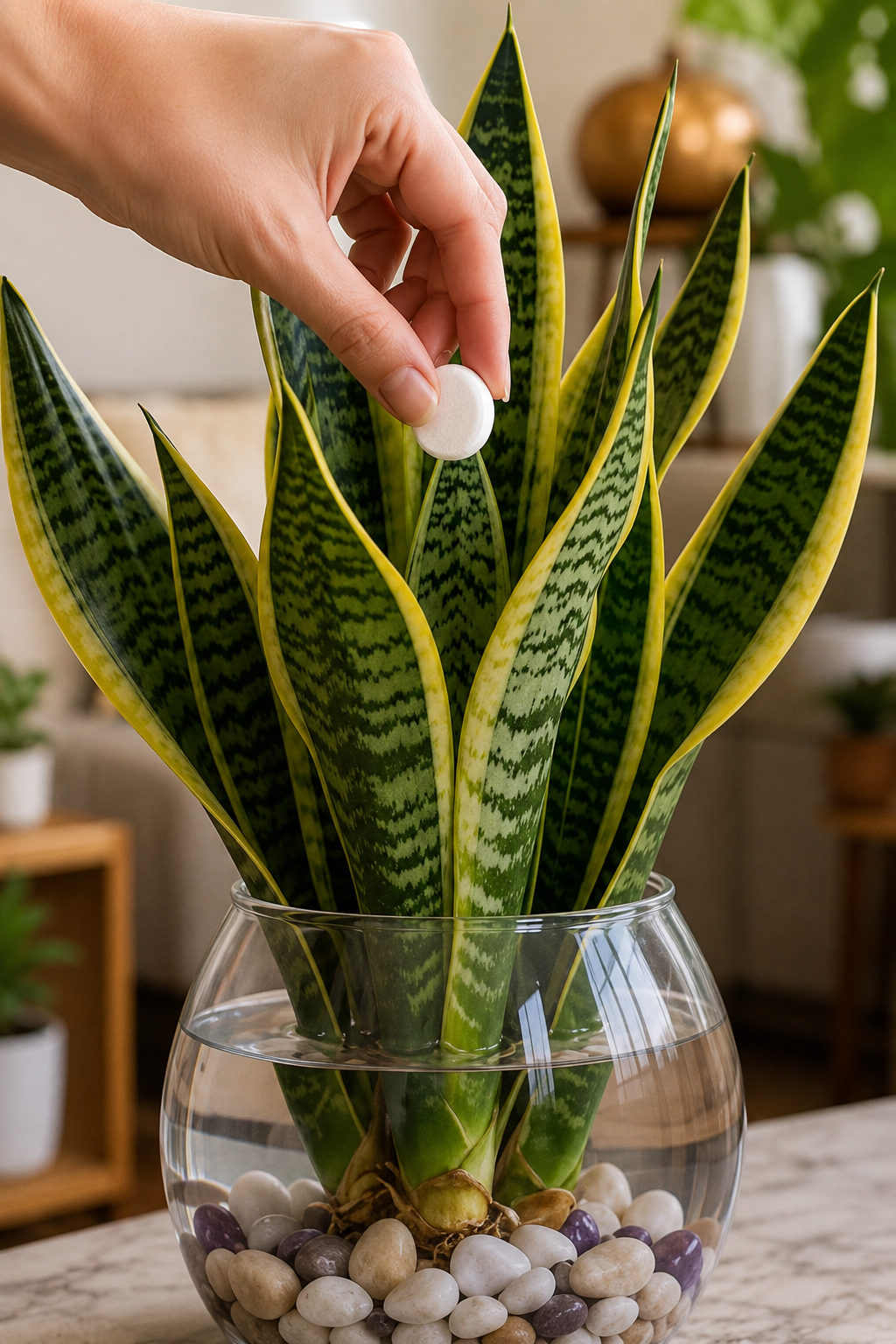
The Snake Plant, scientifically known as Sansevieria (or Dracaena trifasciata), is renowned worldwide as one of the most resilient, air-purifying, and visually striking houseplants you can own. Traditionally grown in well-draining soil, a modern trend has taken social media by storm: growing Snake Plants hydro-culturally in clear glass vases filled with water and decorative stones. Recently, viral short videos have highlighted adding soluble fertilizer tablets directly into the water container to boost root development and leaf vibrancy. But is growing Sansevieria in water safe for the long haul, and how do nutrient tablets affect aquatic plant growth?
In this comprehensive guide, we will break down everything you need to know about water propagation, proper fertilizer tablet application, step-by-step setup procedures, and essential maintenance practices to keep your Snake Plant thriving effortlessly in water. 🌿✨
The Science Behind Growing Snake Plants in Water 🔬🌱
While Snake Plants are naturally native to dry, arid regions of West Africa, they possess an extraordinary capacity to adapt to aquatic environments through proper root adaptation. When a stem cutting or rooted offset is placed in clean water, it gradually develops specialized water roots. These aquatic roots differ structurally from traditional soil roots—they are softer, lighter in color, less woody, and highly efficient at absorbing oxygen dissolved in water.
Growing your Sansevieria in a transparent glass container offers several distinct aesthetic and practical benefits:
- Visual Appeal: The combination of vibrant variegated green leaves, polished river pebbles, and crystal-clear glass creates a sleek, minimalist aesthetic for modern home or office decor. 🏺✨
- Root Monitoring: Clear glass allows you to monitor root health continuously, check for rot, and assess water purity without disturbing the plant. 👁️🔍
- Pest Elimination: Soil-borne pests such as fungus gnats, root mealybugs, and soil mold are completely eliminated from your living space. 🚫🐛
Should You Add Fertilizer Tablets to Water? 💊💧
In many social media videos, plant enthusiasts drop a white nutrient or effervescent tablet into a glass bowl housing a healthy Snake Plant. Before adding any chemical tablet or plant food into your plant’s water glass, it is crucial to understand how aquatic fertilization works.
1. The Purpose of Plant Nutrient Tablets 🧪
Effervescent or slow-release fertilizer tablets contain essential macronutrients (Nitrogen, Phosphorus, Potassium – N-P-K) along with trace minerals like iron, zinc, and magnesium. In soil, these minerals bind to organic particles and release slowly over time. In a purely aquatic environment, every chemical dissolved in water comes into direct, continuous contact with the plant’s delicate root system.
2. The Risks of Over-Fertilization ⚠️
Because water lacks soil buffers, adding a full-strength fertilizer tablet directly to a small glass bowl can easily cause nutrient burn or severe osmotic shock. High concentrations of chemical salts draw moisture out of the root tissues, causing root tip browning, yellowing leaves, and rapid root decay.
3. How to Use Tablets Safely 💡
If you choose to use nutrient or fertilizer tablets in water culture:
- Dilute First: Dissolve a small fraction (usually 1/4 or 1/8) of a standard tablet in a separate gallon of clean water before pouring it into your vase. 💧
- Use Hydroponic Formulas: Ensure the tablet is designed specifically for hydroponic use or aquatic houseplants rather than heavy-duty outdoor garden soil. 🌿
- Flush Frequently: Completely change the water every 2 to 3 weeks to prevent mineral salt buildup and algae growth. 🧼
Step-by-Step: Setting Up Your Snake Plant in Water 🛠️📋
Follow these proven steps to build a healthy, long-lasting water display for your Snake Plant:
- Select a Healthy Plant or Cutting: Choose a robust Snake Plant with firm, undamaged leaves. You can use an entire bare-root plant or a clean leaf cutting. ✂️
- Clean the Roots Thoroughly: If transitioning from soil, gently wash away every particle of dirt from the roots using room-temperature water. Soil left on roots will rot quickly in standing water. 🚿
- Prepare the Glass Vessel: Choose a sturdy glass bowl, vase, or jar. Add a layer of thoroughly washed decorative river stones or quartz pebbles at the base to stabilize the plant stems. 🪨
- Position the Plant: Place the roots carefully among the pebbles so the plant stands upright without tilting. 📐
- Add Fresh Water: Fill the container with filtered, distilled, or settled tap water. Submerge only the roots—keep the upper leaf bases slightly above the water line to avoid crown rot. 🌊
- Provide Mild Nutrient Support: Every 4 to 6 weeks during spring and summer, add a heavily diluted nutrient solution or a dissolved portion of a water-soluble tablet. 💊
Quick Comparison: Growing Methods for Snake Plants 📊
The table below outlines the key differences between traditional soil growth, standard water culture, and tablet-enhanced hydroponics:
| Feature / Criteria | Traditional Soil Cultivation 🪴 | Standard Water Culture 💧 | Tablet-Enhanced Water Hydroponics 💊 |
|---|---|---|---|
| Growth Rate | Moderate to Fast | Slow to Moderate | Moderate |
| Watering Frequency | Every 2–4 weeks (When dry) | Change water every 7–14 days | Change water every 10–14 days |
| Pest Risk | Medium (Fungus gnats, soil pests) | Extremely Low | Extremely Low |
| Maintenance Level | Low | Low to Moderate | Moderate |
| Nutrient Supply | Rich in organic soil matter | Micro-nutrients from tap water | Controlled, balanced hydroponic dosage |
| Risk of Root Rot | Low (if well-draining soil used) | Medium (if leaves submerged) | Medium to High (if over-fertilized) |
| Aesthetic Value | Classic indoor planter look | Modern, transparent, decorative | Modern with enhanced leaf color & size |
Essential Care Tips & Common Mistakes to Avoid 🚨💡
To maintain a thriving aquatic Snake Plant over several years, keep these expert tips in mind:
- Provide Indirect Light: Place your glass container in bright, indirect sunlight. Direct sunlight heats the water, accelerating root rot and encouraging rapid green algae proliferation. ☀️
- Use Filtered Water: Tap water containing high chlorine or fluoride levels can scorch leaf tips. Let tap water sit open for 24 hours before use, or use filtered water. 🚰
- Clean the Glass Regularly: Clean the interior glass walls whenever you notice slime or algae buildup. Wash the decorative stones under warm water during routine changes. 🧼✨
- Prune Damaged Roots: If any root turns brown, soft, or foul-smelling, trim it immediately with sterilized shears and refresh the water completely. ✂️🍂
Final Verdict 🎯🌿
Growing a Snake Plant in a water vase with decorative pebbles creates an eye-catching, low-maintenance centerpiece for any modern home. While adding nutrient tablets can boost foliage vigor and root health, moderation is key! Always dilute tablets to a small fraction of their strength to prevent root burn. With clean water, indirect sunlight, and occasional mild nutrition, your water-bound Sansevieria will stay lush, healthy, and beautiful for years to come! 🚀🌱