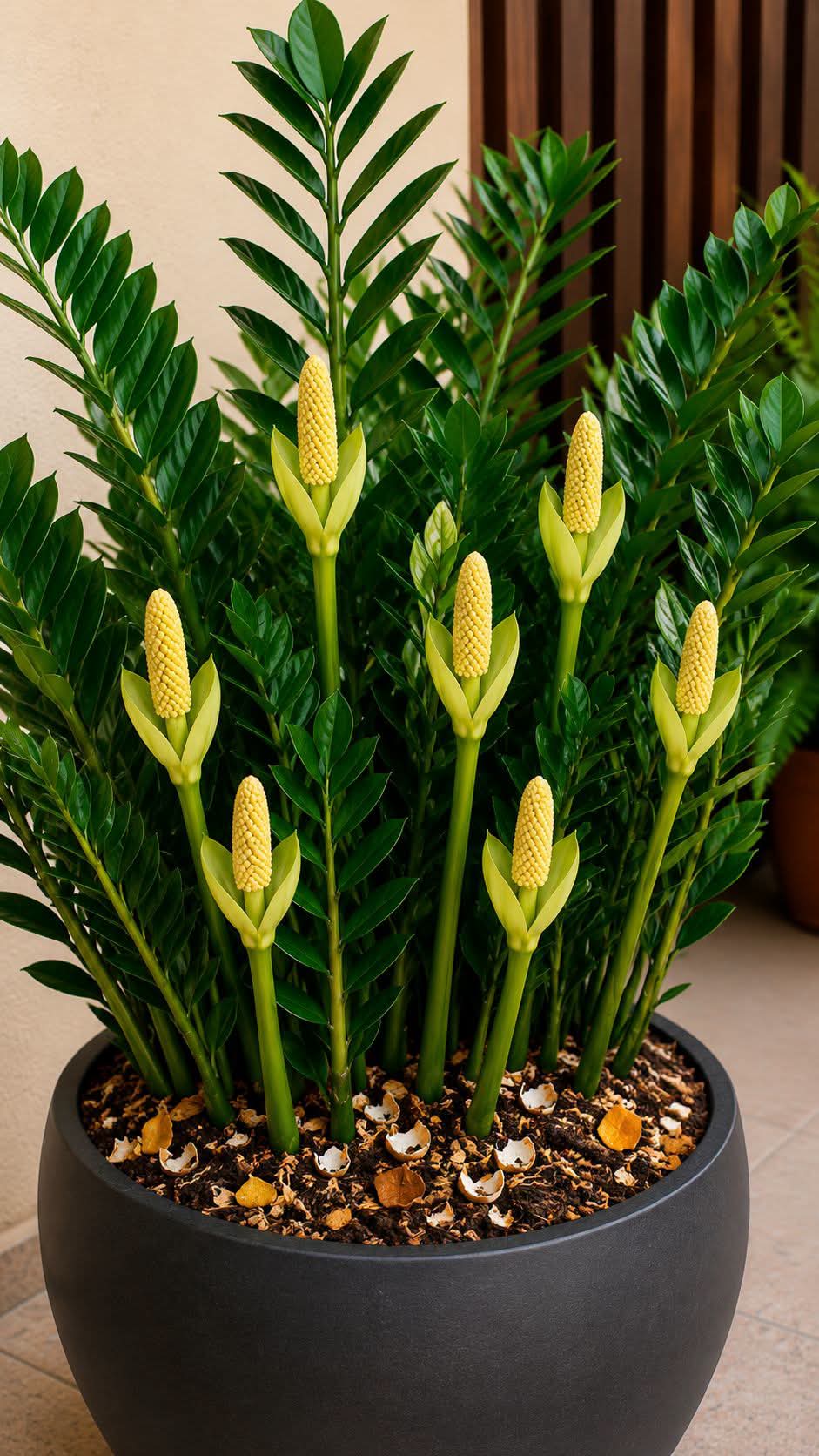
The ZZ Plant (Zamioculcas zamiifolia) is universally celebrated by houseplant enthusiasts for its glossy, emerald-green foliage, architectural elegance, and near-indestructible nature. Native to the dry regions of Eastern Africa, this resilient tropical perennial thrives on minimal attention, making it the ultimate low-maintenance indoor green companion. However, while keeping a ZZ plant alive is remarkably easy, getting one to produce its rare, striking spadix flowers—the pale yellow, corn-cob-like spathes cradled in soft green bracts—is considered the holy grail of indoor gardening. 🌿✨
Seeing a blooming ZZ plant is a rare reward that signals exceptional health, ideal ambient light, and robust root development. By incorporating natural soil amendments like crushed eggshells and citrus peels, you can deliver steady organic nutrients directly into the potting substrate while boosting soil structural integrity. Below is a comprehensive, blog-style guide detailing how to care for your ZZ plant, optimize environmental conditions, and trigger those elusive, gorgeous blossoms! 🛡️✨
📊 Overview: ZZ Plant (Zamioculcas zamiifolia) Care & Blooming Profile ⏱️
| Growth Factor / Requirement | Ideal Specification & Standard 📏 | Horticultural Benefit & Role 💡 |
|---|---|---|
| Scientific Name | Zamioculcas zamiifolia 🌿 | Drought-tolerant Aroid family member (Araceae) |
| Bloom Appearance | Pale Yellow Spadix surrounded by a Green Spathe 🌽 | Rare indoor flower signaling peak maturity and root vigor |
| Light Exposure | Bright, Indirect Natural Light ☀️ | Drives energy for flowering; tolerates low light but won’t bloom |
| Watering Schedule | Every 2 to 4 Weeks (Allow soil to dry fully) 💧 | Prevents bulbous rhizome decay and root rot |
| Organic Soil Booster | Crushed Eggshells & Dried Citrus Peels 🥚🍊 | Provides natural calcium, potassium, and soil aeration |
| Ideal Temperature | 65°F – 85°F (18°C – 29°C) 🌡️ | Warm ambient conditions mimic native East African habitats |
| Substrate Type | Well-Draining Succulent/Cactus Mix 🪴 | Prevents |
🌟 Why ZZ Plants Are Ideal for Modern Homes 🛡️✨
Whether placed in an office corner, a living room floor pot, or an entry console, the ZZ plant stands out as a living piece of modern decor. Its glossy compound leaves naturally reflect light, creating a fresh, polished look without needing leaf shine sprays.
- Extreme Drought Tolerance: 🌵 Beneath the soil surface, ZZ plants possess thick, potato-like underground rhizomes that store massive amounts of water and nutrients. This allows the plant to survive weeks of complete neglect without wilting.
- Natural Air Purification: 🍃 ZZ plants act as effective indoor air scrubbers, filtering out common household toxins such as xylene, toluene, and benzene from ambient indoor air.
- Adaptable Light Requirements: 💡 While they thrive best in bright, dappled sunlight, ZZ plants can maintain deep green foliage even under fluorescent office lighting or shaded room corners.
- Low Pest Vulnerability: 🛡️ Thanks to tough, waxy leaf cuticles, ZZ plants are far less susceptible to common indoor pests like spider mites, scale, or fungus gnats compared to softer foliage plants.
🥚 The Power of Eggshells & Natural Organic Amendments 🍊✨
If you inspect the potting mix of healthy, flowering ZZ plants, you will often find natural soil conditioners layered over the topsoil. Using crushed eggshells and dried fruit rinds is a sustainable, cost-effective way to boost plant nutrition:
- Calcium Carbonate Fortification: 🥚 Eggshells consist primarily of calcium carbonate, an essential macro-mineral that strengthens plant cell walls, promotes healthy root tips, and prevents structural tissue breakdown. As the shells decompose slowly over time, they release steady calcium into the substrate.
- Natural Soil Aeration & Drainage: 🪵 Coarsely crushed eggshells create microscopic air gaps within dense potting soil, improving water drainage and preventing soil compaction around the delicate rhizome base.
- Potassium & Trace Minerals: 🍊 Organic additives such as dried citrus peels slowly release potassium, magnesium, and trace micronutrients into the root zone, fueling flower formation and vibrant leaf pigmentation.
👩🍳 Step-by-Step Guide to Triggering ZZ Plant Blooms 🌸✨
Step 1: Prep the Natural Eggshell Fertilizer 🥚
- Save clean eggshells from your kitchen, rinse them thoroughly with warm water to remove residual albumen, and let them dry completely in the sun for 24 hours.
- Crush the dried shells into medium-to-coarse flakes using your hands, a mortar and pestle, or a rolling pin.
- Scatter a handful of the crushed eggshells evenly across the top layer of your ZZ plant’s soil, gently mixing them into the upper inch of substrate.
Step 2: Optimize Light for Flowering ☀️
- While ZZ plants can survive in dim corners, they will only produce flowers when exposed to medium to bright, indirect sunlight.
- Move your pot near an east-facing window or a few feet back from a bright south/west window where it receives plenty of ambient daylight without harsh direct solar rays burning the leaves.
Step 3: Master the “Ignore & Dry Out” Watering Method 💧
- Overwatering is the single fastest way to destroy a ZZ plant. Water only when the potting mix is 100% dry all the way to the bottom of the container.
- When watering, drench the soil thoroughly until water drains freely from the bottom drainage holes, then empty the excess water from the saucer immediately.
- During autumn and winter, reduce watering to once every 4 to 6 weeks as growth naturally slows.
Step 4: Allow the Roots to Become Slightly Root-Bound 🪴
- ZZ plants are far more likely to produce floral spadixes when their underground rhizomes feel comfortably snug inside their container.
- Avoid repotting your ZZ plant into a oversized container. Wait until the rhizomes begin visibly warping or pushing against the plastic pot walls before upgrading to a pot just 1 to 2 inches larger.
💡 Pro Care Tips for Maintaining ZZ Plant Health 🌿✨
- Wipe the Foliage Clean: 🧽 Waxy leaves gather household dust over time, which blocks light absorption. Gently wipe both sides of the leaves with a damp microfiber cloth every few weeks to keep them shining and photosynthesizing efficiently.
- Keep Away from Extreme Drafts: 🌬️ Position your plant away from cold air-conditioning vents, exterior doors in winter, or intense heat radiators to avoid thermal shock.
- Toxic Handling Precaution: ⚠️ Like all members of the Araceae family, ZZ plants contain calcium oxalate crystals, which can cause mild skin irritation or digestive upset if ingested by pets. Keep plants out of reach of curious cats and dogs, and wash your hands after pruning! 🛡️✨