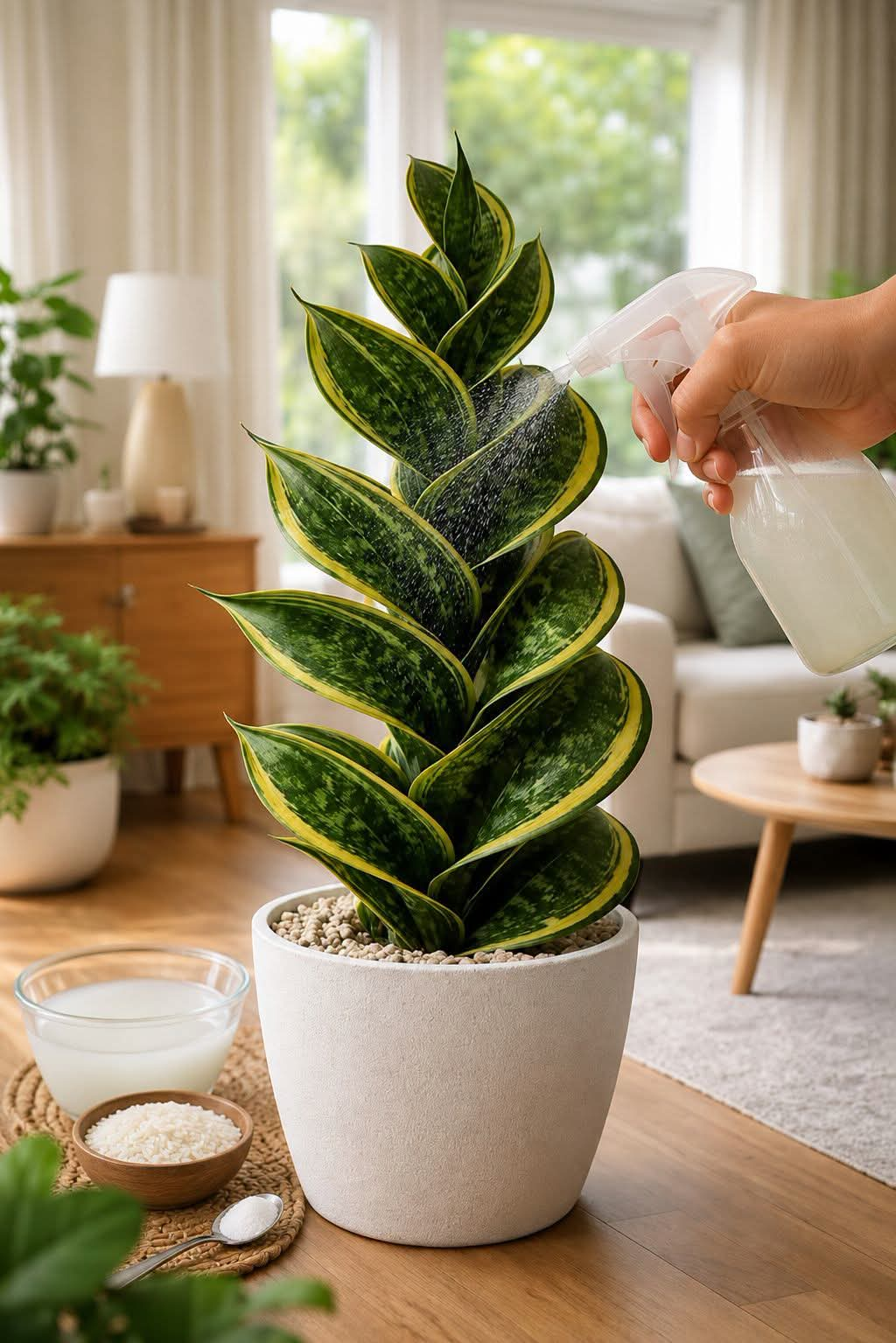
Have you ever looked at a spectacular Spiral Snake Plant (Sansevieria trifasciata ‘Twist’ / Dracaena trifasciata) with its rich yellow-bordered leaves, tight spiraling stem structure, and thick succulent tissue, only to notice dull foliage, brown tips, or slow growth in your indoor setup? 🥀 It can be disappointing when a architectural plant slows down its growth! Snake plants are famous for being low-maintenance, but producing thick, glossy foliage with vibrant yellow margins requires targeted nutrients and protective care.
Before buying expensive commercial leaf shines or synthetic sprays, take a look at your kitchen counter! There is a 100% natural, budget-friendly elixir sitting right in your pantry: Fermented Rice Water Spray! 🌾✨
As shown in the image, spraying a diluted rice water formulation directly onto the thick foliage provides essential micro-nutrients while cleansing the leaves, activating photosynthesis, and building a natural shield against pests and fungal pathogens.
In this comprehensive blog guide, we will explore the botanical science behind fermented rice water, present a structured comparison table, provide step-by-step preparation instructions, and map out a 4-month spiral snake plant care roadmap! 🌿🛡️✨
🛡️ The Botanical Science: How Rice Water Supercharges Snake Plants 🧪✨
Snake plants feature thick leaf cuticles covered in natural protective waxes. Over time, indoor dust blocks their stomata (tiny breathing pores), reducing photosynthetic efficiency. Applying a diluted, fermented rice water mist restores leaf vitality through several key biological mechanisms:
- Starch & Carbohydrate Energy: Fermented rice water is rich in micro-starches that feed beneficial soil and foliar microbes, creating a biological defense system against fungal spores 🛡️.
- Essential Micro-Nutrients: Rice water delivers natural nitrogen, phosphorus, potassium (N-P-K), along with iron, magnesium, and thiamine (Vitamin B1). Vitamin B1 reduces environmental stress and stimulates root growth 🌾.
- Natural Foliar Cleansing: Spritzing leaves removes dust layers, unlocking max photosynthetic capacity and deepening the contrast between dark green centers and golden yellow edges 💛✨.
- Substrate Acidity Support: Fermented rice water has a slightly acidic to neutral pH (6.0 – 6.5), ideal for maintaining optimal root zone absorption in potted succulents 🧪.
📊 Quick Comparison: Fermented Rice Water Spray vs. Commercial Leaf Shines & Synthetics 🌾🧪
| Feature / Metric | Homemade Fermented Rice Water 🌾✨ | Synthetic Commercial Leaf Shines 🧪 |
|---|---|---|
| Cost | Pennies per batch (Kitchen byproduct) 💰 | Expensive retail products ($10 – $22) 💸 |
| Pore Congestion | Keeps leaf stomata open & clean 🍃 | Clogs leaf pores with heavy oils 🚫 |
| Microbial Support | Nourishes beneficial surface microbes 🦠 | Zero biological value ⚠️ |
| Vitamin Content | High in B-Complex vitamins (B1, B2, B6) 🌾 | Synthetic chemical ingredients 📐 |
| Safety Profile | 100% Non-toxic & pet friendly 🐾 | High risk of chemical buildup 🔥 |
| Application Flexibility | Foliar spray & soil drench 🪴 | Foliar |
🥣 Step-by-Step Recipe: How to Brew & Apply Rice Water Spray 🌾💧
Brewing this organic plant tonic requires just a few minutes of active preparation. Follow these exact ratios to create a gentle, effective foliar mist!
🛒 Ingredients & Tools Needed:
- Uncooked White or Brown Rice: 1/2 cup 🌾
- Filtered Water: 2 cups for soaking + extra for dilution 💧
- Baking Soda (Optional): 1/4 teaspoon (for enhanced fungal protection) 🥄
- Spray Bottle & Fine Strainer: For application 🫙
📝 Step-by-Step Preparation Instructions:
Step 1: Wash & Extract 🌾
Rinse 1/2 cup of rice with cold water to remove surface grit. Place the cleaned rice in a bowl, add 2 cups of filtered water, and rub the grains gently between your hands for 2 minutes until the water turns cloudy white (as seen in the glass bowl in the featured image!).
Step 2: Ferment (24 to 48 Hours) ⏳
Strain the cloudy liquid into a clean glass jar. Cover loosely with a cloth and let it sit at room temperature for 24 to 48 hours. Mild fermentation increases nutrient availability and lowers the pH to a plant-friendly range.
Step 3: Dilute the Solution 💧
Never spray concentrated fermented rice water directly on succulents! Dilute the fermented liquid with equal parts fresh filtered water (1:1 ratio). Stir in 1/4 teaspoon of baking soda if extra fungal protection is needed 🥄.
Step 4: Foliar Application 🚿
Pour the diluted solution into a clean spray bottle. Lightly mist the spiraling leaves from top to bottom once every 2 to 3 weeks (as demonstrated in the photo). Wipe down the leaves with a soft microfiber cloth to remove dissolved dust and leave a natural, brilliant sheen! 🌿✨
🗓️ Spiral Snake Plant Revival Timeline: What to Expect 🌱➡️🌾
With bright indirect light, dry soil intervals, and bi-weekly foliar spraying, watch your spiral snake plant flourish:
- Month 1 (Clean Leaves & Pore Activation): Leaves are completely free of dust. Stomata breathe freely, and leaf tissue feels noticeably firmer to the touch 🛡️.
- Month 2 (Color Intensification): The golden-yellow leaf borders become more vibrant, creating a striking contrast with the inner tiger-stripe pattern 💛✨.
- Month 3 (Spiral Stem Extension): Fresh center leaves push upward, extending the characteristic tight spiral architecture 🌀.
- Month 4 & Beyond (Rhizome Pup Sprouting): Stronger photosynthesis drives underground energy storage, resulting in brand-new offshoots (pups) poking up through the topsoil pebbles! 🌸🎉
💡 Pro Tips & Frequently Asked Questions (FAQs) 🚨
❓ Can I use cooked rice water?
No! Always use water from uncooked, raw rice. Water from cooked rice often contains added sodium or starches that are too thick and can attract unwanted mold or pests 🚫.
❓ How often should I water the soil of a spiral snake plant?
Snake plants store large amounts of water in their leaves and rhizomes. Water the soil thoroughly only when the entire pot has dried out completely—typically every 3 to 4 weeks inside typical indoor environments 💧.
❓ How long does fermented rice water stay fresh?
Store fermented rice water in the refrigerator for up to 1 week. Allow it to come to room temperature before spraying your plants, as cold liquid can shock tropical roots and leaves 🧊.
🌟 Final Thoughts: Elevate Your Architectural Plant Care Today! 🌾💖
Maintaining a striking, lush spiral snake plant does not require complex commercial chemicals! With a simple bowl of fermented rice water, proper indirect sunlight, and controlled soil watering, you can enjoy a dust-free, vibrant, and rapidly growing architectural masterpiece right in your living room 🌾🌿✨.
Brew your first batch today and give your snake plant the organic care it deserves! 🌿✨