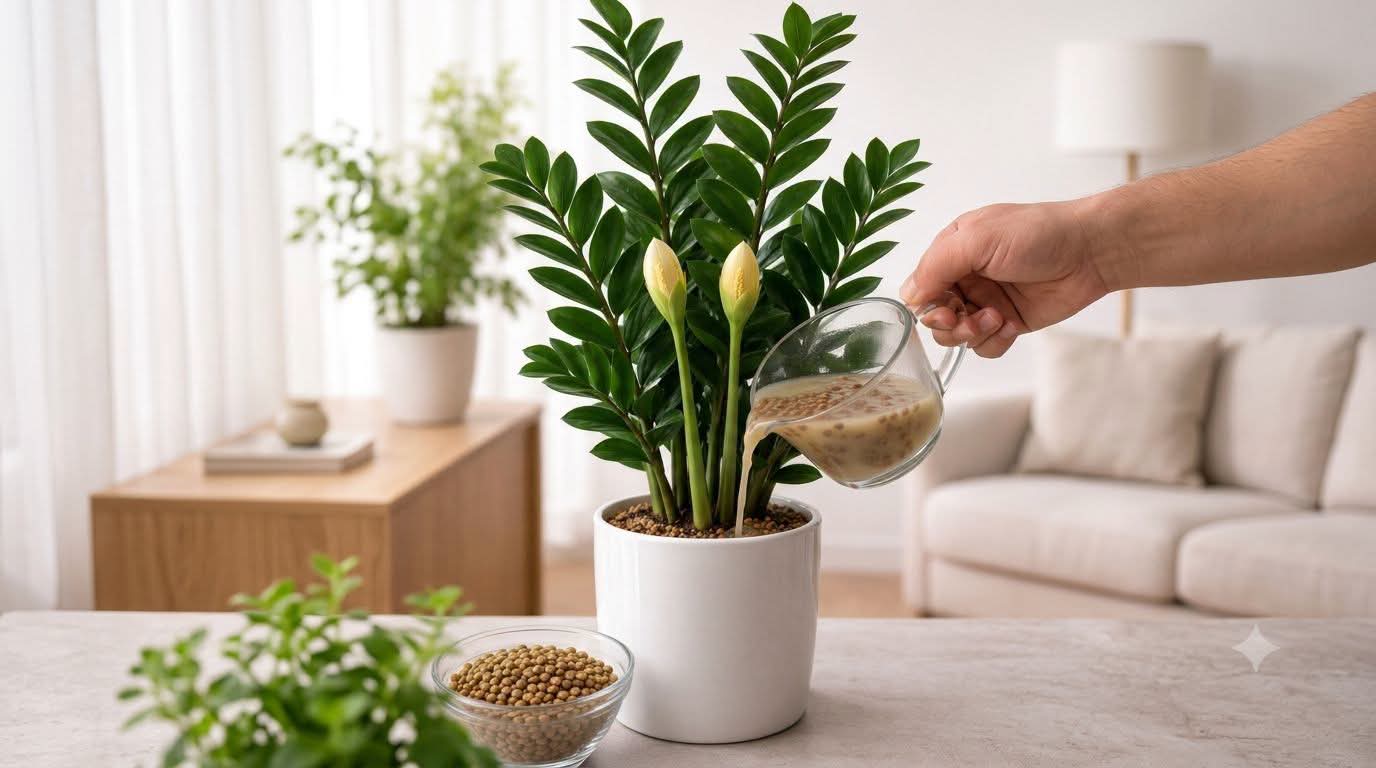
Have you ever seen a lush, vibrant ZZ Plant (Zamioculcas zamiifolia) featuring deep green, wax-coated leaves, thick fleshy stems, and rare, cream-colored spathe flowers popping up right from the soil level? 🥀 It is one of the most stunning sights in the indoor gardening world! ZZ plants are widely celebrated for being nearly indestructible, thrive in low-light environments, and tolerate neglect better than almost any houseplant. However, getting a ZZ plant to produce fresh growth shoots and unlock its rare, exotic blooms requires special root nutrition, soil microbiome balance, and natural growth hormones.
Before you spend money on synthetic liquid plant food or aggressive chemical fertilizers, look into your kitchen pantry! There is a powerful, 100% natural, and budget-friendly secret waiting for you: Fermented Lentil Water Elixir! 🫘✨
As captured in the featured image, pouring a nutrient-rich, fermented lentil infusion gently into the root zone delivers an abundance of micro-elements, natural auxins, and enzymes that stimulate tuber growth, deepen leaf pigmentation, and trigger elusive flowering.
In this ultimate, SEO-optimized blog guide, we will break down the botanical science behind lentil water for ZZ plants, present a detailed comparison table, provide step-by-step preparation instructions, and map out a full 4-month ZZ plant growth roadmap! 🌿🛡️✨
🛡️ The Botanical Science: How Lentil Water Supercharges ZZ Plants 🧪✨
ZZ plants are underground tuberous plants (rhizomatous succulents). Their potato-like rhizomes store massive amounts of water and nutrients. To push out new stems and produce flower spathes, these tubers need specific natural nutrients without the risk of mineral salt burn. Here is how lentil water transforms your plant:
- Natural Auxins & Growth Phytohormones: Sprouted and soaked lentils release natural auxins (indole-3-acetic acid) into the water. Auxins act as powerful organic root stimulants that encourage rapid subterranean rhizome expansion and flower bud formation 🌸✨.
- Potassium & Phosphorus Boost: Lentils are naturally rich in potassium, phosphorus, nitrogen, iron, and magnesium. Phosphorus directly fuels root vitality and flower formation, while potassium strengthens the structural integrity of tall, heavy stems 🫘.
- Soil Microbiome Activation: The starch and micro-proteins in mild lentil tea feed beneficial mycorrhizal fungi and soil bacteria, creating a bio-protective shield against root rot (Pythium) 🛡️.
- Optimal Substrate pH Neutralization: Soaked lentil water has a mild, slightly acidic pH (6.2 – 6.8), creating the ideal chemical environment for maximum nutrient uptake through root hairs 🧪.
📊 Quick Comparison: Homemade Lentil Fertilizer vs. Synthetic Chemical Fertilizers 🫘🧪
| Feature / Metric | Homemade Lentil Water Elixir 🫘✨ | Synthetic Chemical Fertilizers 🧪 |
|---|---|---|
| Cost | Pennies per batch (Kitchen staple) 💰 | Expensive commercial fertilizers ($10 – $25) 💸 |
| Chemical Burn Risk | Zero risk of leaf burn or root damage 🌿 | High risk of salt accumulation & leaf tip burn 🔥 |
| Hormonal Value | Rich in natural plant auxins & enzymes 🧪 | Contains zero organic growth hormones ❌ |
| Soil Micro-Flora Support | Feeds beneficial soil microbes 🦠 | Can degrade microbial biodiversity 🚫 |
| Tuber Health Impact | Encourages firm, healthy rhizome growth 🥔 | Excessive nitrogen can soften tubers ⚠️ |
| Eco-Friendliness | 100% Non-toxic, organic & pet-safe 🐾 | Synthetic chemical origin 🌍 |
🥣 Step-by-Step Recipe: How to Make & Apply Lentil Water Fertilizer 🫘💧
Brewing this organic plant elixir at home takes minimal effort. Follow these precise instructions to prepare a safe, highly effective root feed for your ZZ plant!
🛒 Ingredients & Tools Needed:
- Brown, Green, or Red Lentils: 1 cup of dry, raw lentils 🫘
- Filtered / Rainwater: 4 cups of room-temperature water 💧
- Glass Jar / Pitcher: For soaking and straining 🫙
- Fine Mesh Strainer: To separate the seeds from the liquid 🥣
📝 Step-by-Step Preparation Instructions:
Step 1: Clean & Rinse the Lentils 🫘
Measure 1 cup of raw lentils and rinse them under cool tap water for 30 seconds to remove surface dust or impurities.
Step 2: Steep & Ferment (24 to 36 Hours) ⏳
Place the rinsed lentils into a glass bowl or pitcher and add 4 cups of filtered, room-temperature water. Cover loosely with a cloth and allow it to steep at room temperature for 24 to 36 hours. During this soaking window, the lentils soften, releasing auxins, B-complex vitamins, and essential minerals into the water (turning it a milky, light tan color, as seen in the pitcher!).
Step 3: Strain the Liquid 🥛
Pour the mixture through a fine mesh strainer into a clean pouring cup or glass pitcher. Retain the nutrient-rich lentil tea for your plants (and cook the leftover soaked lentils for a healthy meal!).
Step 4: Soil Drench Application 🪴
Ensure your ZZ plant’s soil is slightly damp. Pour approximately 1/2 cup to 1 cup of the lentil water directly onto the potting medium around the base of the stems once every 3 to 4 weeks during the active growing season.
🗓️ The ZZ Plant Growth Timeline: What to Expect 🌱➡️🌸
With bright indirect light, sparse watering habits, and monthly lentil water feeding, watch your ZZ plant flourish:
- Month 1 (Underground Tuber Expansion): Beneficial microbes populate the substrate. Underground rhizomes absorb nutrients, swelling and expanding into firm, healthy tubers 🛡️.
- Month 2 (Stem Emergence & Gloss): Bright light-green shoots push up through the soil mix. Existing foliage takes on a deep, ultra-glossy wax coat 🍃.
- Month 3 (Flower Spathe Sprouting): Sturdy, pale cream flower buds sprout up from the base of the stems (just like the rare blooms in the featured image!) 🌸✨.
- Month 4 & Beyond (Architectural Perfection): New stems mature into dark green foliage, maintaining a dense, architectural structure with robust natural defense 🌿✨🎉.
💡 Pro Tips & Frequently Asked Questions (FAQs) 🚨
❓ How often should I water my ZZ plant with plain water?
ZZ plants store water in their underground rhizomes and require very little moisture! Only water when the potting soil is 100% dry all the way to the bottom of the pot—typically every 3 to 5 weeks 💧.
❓ Can lentil water attract indoor flies or mold?
Not if you use it correctly! Use the lentil water as an occasional soil drench (once a month) and allow the soil to dry out completely between applications. This prevents mold growth or fungus gnats 🧼.
❓ Does a ZZ plant require direct sunlight to bloom?
No! Direct afternoon sunlight will scorch the glossy leaves. ZZ plants prefer bright, indirect light to bloom, but they can also tolerate low-light corners easily ☀️.
🌟 Final Thoughts: Unlock Rare Blooms & Glossy Foliage Today! 🫘💖
Transforming a simple ZZ plant into an extraordinary specimen with rare cream-colored flower spathes does not require expensive store-bought sprays! With a simple jar of homemade lentil water, proper indirect lighting, and careful watering habits, you can enjoy a healthier, glossier, and thriving indoor masterpiece year-round 🫘🌿✨.
Soak your first batch of lentils today and give your indoor garden the organic nutrient boost it deserves! 🌿✨