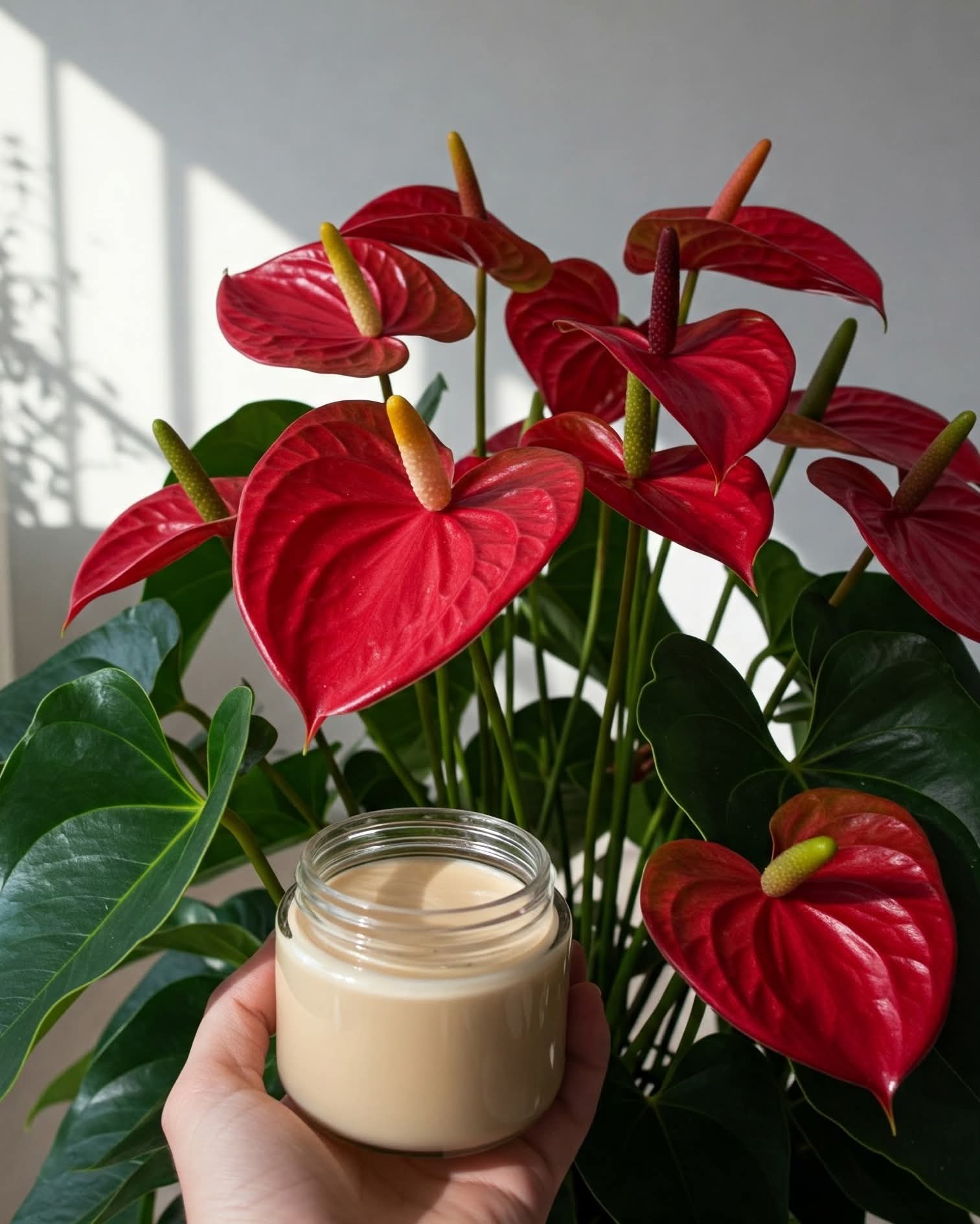
Have you ever looked at a breathtaking Anthurium (Anthurium andraeanum) with its deep red, waxy, heart-shaped spathes and lush, glossy green foliage, only to find yours struggling with dull leaves, stalled growth, or a complete absence of flowers? 🥀 It can be so frustrating when your indoor plants refuse to produce those iconic tropical blooms! Anthuriums are natural showstoppers, but keeping them flourishing with continuous flower spikes indoors requires precise nutrients, protective care, and root stimulation.
Before reaching for expensive chemical sprays, look into your kitchen pantry and refrigerator! There is a powerful, 100% organic secret fertilizer waiting to be brewed: Yeast Milk Elixir! 🥛✨
By combining the natural proteins, enzymes, and calcium in milk with the living B-complex vitamins and growth stimulants in yeast, you create a nutrient-rich organic tea that transforms pale, quiet plants into flowering powerhouses.
In this ultimate blog guide, we will break down the botanical science behind this yeast-milk fertilizer, compare organic tea remedies with synthetic bloom boosters, provide step-by-step preparation and application instructions, and map out a 4-month Anthurium revival timeline! 🌺🛡️✨
🛡️ The Botanical Science: How Yeast & Milk Supercharge Anthuriums 🧪✨
Anthuriums are tropical epiphytes that thrive in environments rich in organic micro-nutrients. Combining yeast and milk creates a synergistic bio-stimulant that acts on both the plant roots and soil microbiology:
- Yeast (Bio-Stimulant Powerhouse): Brewer’s or baker’s yeast (Saccharomyces cerevisiae) is loaded with B-complex vitamins, amino acids, and natural phytohormones (cytokinins and auxins). These compounds trigger rapid cell division, encouraging strong root development and shooting up fresh flower stalks 🌸✨.
- Milk Calcium & Amino Acids: Milk provides bio-available calcium and proteins. Calcium strengthens cell wall structures, preventing soft tissue rot, while improving the vibrant red pigmentation of the flower spathes 🌺.
- Soil Microbiome Activation: The natural sugars and proteins feed beneficial soil bacteria and mycorrhizal fungi, creating a protective shield around the roots that prevents root rot (Phytophthora) 🛡️.
- Lactic Acid Bacteria Protection: Mild lactic acid in diluted milk balances substrate acidity and suppresses harmful fungal pathogens on roots and foliage 🧪.
📊 Quick Comparison: Yeast Milk Elixir vs. Synthetic Chemical Bloom Boosters 🥛🧪
| Feature / Metric | Homemade Yeast Milk Elixir 🥛✨ | Synthetic Chemical Fertilizers 🧪 |
|---|---|---|
| Cost | Pennies per batch (Pantry items) 💰 | Expensive monthly investment ($12 – $30) 💸 |
| Chemical Burn Risk | Zero risk when properly diluted 🌿 | High risk of salt buildup and root scorch 🔥 |
| Soil Microbiology | Feeds and activates beneficial microbes 🦠 | Can degrade living soil over time 🚫 |
| Nutrient Source | Natural vitamins, amino acids, calcium 🥛 | Insoluble chemical salts ⚠️ |
| Eco-Friendliness | 100% Organic, non-toxic, safe for pets 🐾 | Synthetic chemicals 🌍 |
| Preparation Time | Simple 30-minute warm fermentation ⏰ | Instant powder or liquid mix 📐 |
🥣 Step-by-Step Recipe: How to Make & Apply Yeast Milk Fertilizer 🌾💧
Creating this organic nutrient booster is quick and easy. Follow these exact ratios to ensure safe, effective feeding for your Anthuriums!
🛒 Ingredients & Tools Needed:
- Fresh Milk (or Whey/Unsweetened Milk): 2 tablespoons 🥛
- Dry Active Yeast: 1 teaspoon (or 10g fresh yeast) 🧫
- Warm Water: 1 Liter of filtered/distilled water (approx. 95°F–100°F / 35°C–38°C) 💧
- Sugar or Honey: 1/2 teaspoon (to activate the yeast) 🍯
- Glass Jar & Mixing Spoon: For fermentation and application 🫙
📝 Step-by-Step Preparation Instructions:
Step 1: Activate the Yeast 🧫🍯
In a glass jar, pour 1 cup of warm filtered water (not hot, or it will kill the yeast!). Add 1 teaspoon of dry active yeast and 1/2 teaspoon of sugar. Stir gently and let it sit for 10 to 15 minutes until it forms a frothy layer on top.
Step 2: Blend in the Milk 🥛
Add 2 tablespoons of room-temperature milk into the activated yeast mixture. Stir thoroughly until you achieve a smooth, light creamy liquid (just like the jar shown in the featured photo!).
Step 3: Dilute with Water 💧
Pour the concentrated yeast-milk mixture into a container with the remaining warm water to complete the 1-liter solution. Important: Always use diluted solutions on indoor plants to prevent heavy odor or fungus gnats!
Step 4: Soil Drench Application 🪴
Water your Anthurium with plain water first to moisten the roots. Then, pour 1/2 cup to 1 cup of the diluted yeast-milk elixir evenly around the root base once every 3 to 4 weeks during the active growing season.
🗓️ The Anthurium Revival Timeline: What to Expect 🌱➡️🌺
With bright indirect light, proper humidity, and monthly yeast-milk feeding, watch your Anthurium flourish:
- Month 1 (Root Vigor & Shielding): Beneficial microbes populate the root zone. Velamen roots expand, and leaves take on a firmer texture 🛡️.
- Month 2 (Lush Foliage Transformation): Deep green leaves develop a rich, glossy sheen, and new central leaf spikes emerge rapidly 🍃.
- Month 3 (Flower Bud Emergence): Fresh, sturdy flower stems begin popping up from the central leaf sheaths 🪵✨.
- Month 4 & Beyond (Vibrant Red Explosion): Heart-shaped spathes open fully into large, bright red, waxy blooms that stay colorful for months! 🌺✨🎉
💡 Pro Tips & Frequently Asked Questions (FAQs) 🚨
❓ Will milk cause a bad smell or mold in the soil?
Not if you follow the recommended dilution ratios! Using only 2 tablespoons per liter of water prevents souring. Always make sure the top inch of potting mix dries out slightly between waterings to maintain good aeration 💨.
❓ What kind of light makes Anthuriums bloom continuously?
Anthuriums need bright, indirect sunlight to produce heavy blooms. Place them near an east-facing window or a few feet away from a south/west window. Avoid harsh, direct afternoon sun, which scorches leaves ☀️.
❓ Can I use skim milk or plant-based milk?
Yes! Skim milk or low-fat dairy milk works fantastically. Almond milk or soy milk can also be used, provided they are plain and completely unflavored/unsweetened 🥛.
🌟 Final Thoughts: Enjoy Breathtaking Tropical Blooms Year-Round! 🌺💖
Keeping your Anthurium healthy, glossy, and covered in bright red blooms doesn’t require complex chemical regimens! With a simple jar of yeast-milk elixir, proper indirect lighting, and careful root management, you can enjoy a continuous tropical display right in your home 🥛🌺✨.
Brew a quick batch today and give your indoor garden the organic nutrient boost it deserves! 🌿🌺✨