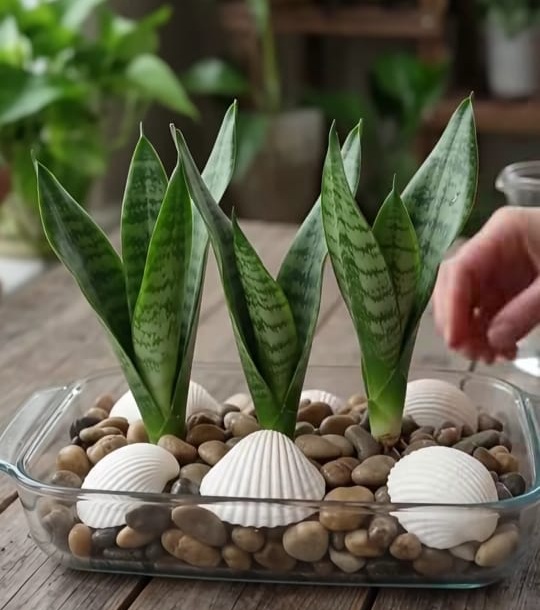
Have you ever looked at a sleek glass container filled with smooth river stones, white decorative seashells, and bright green Snake Plants (Sansevieria / Dracaena trifasciata), and wondered if you could grow these sturdy succulents without any soil at all? 🥀 It is one of the most eye-catching, modern, and popular trends in the indoor plant world! Snake plants are celebrated for being practically indestructible, but switching from traditional potting soil to a glass dish hydroponic arrangement takes their aesthetic appeal to a whole new level.
Growing snake plants in a soil-free glass container ( 💡 ) eliminates messy dirt, repels indoor soil pests, and creates a breathtaking coastal centerpiece for your home or office desk. 🐚✨
In this complete, SEO-optimized blog guide, we will explore the botanical science behind hydroponic snake plant care, provide a detailed comparison table between soil and pebble-water propagation, give you step-by-step assembly instructions matching the featured photo, and reveal a full 4-month growth roadmap! 🌿🛡️✨
🛡️ The Botanical Science: How Hydroponic Snake Plants Thrive 🧪✨
While snake plants are native to arid regions in West Africa and store water inside thick succulent leaves, their thick underground rhizomes adapt surprisingly well to semi-hydroponic environments when anchored correctly in pebbles.
Key Benefits of Growing in Glass with Pebbles & Shells 🐚:
- Pest & Dirt Elimination: Without organic potting soil, you completely eliminate fungus gnats, soil mold, and messy dust in your living room 🛡️.
- Controlled Water Uptake: Smooth pebbles and decorative river stones elevate the leaf crown, ensuring that only the lowest portion of the rhizome or roots stays submerged in water 💧.
- Enhanced Calcium Micro-Minerals: Decorative seashells gradual release microscopic calcium carbonate into the water matrix, strengthening leaf cell walls and keeping upright leaves firm 🐚✨.
- Visual Root Monitoring: Clear glass dishes allow you to inspect root growth and water clarity instantly, preventing root rot before it starts 🔬.
📊 Comparison Table: Soil Potting vs. Glass Dish with Pebbles & Shells 🪨🌱
| Feature / Metric | Traditional Soil Potting 🪴 | Glass Dish with Pebbles & Shells 🐚✨ |
|---|---|---|
| Aesthetic Appeal | Classic rustic potted plant look 🏺 | Modern, high-end coastal decor ✨ |
| Indoor Cleanliness | Potential dirt spills & dust 🧹 | 100% Mess-free & ultra-clean 🧼 |
| Soil Pest Risk | High risk of fungus gnats 🐜 | Zero soil pest breeding ground 🛡️ |
| Root Inspection | Hidden beneath opaque soil 🙈 | Fully visible through transparent glass 🔍 |
| Watering Frequency | Water every 3 to 4 weeks 🗓️ | Refill or change water every 10 to 14 days 💧 |
| Nutrient Source | Organic matter in soil 🌾 | Water |
🐚 Step-by-Step Guide: How to Assemble a Hydroponic Snake Plant Dish 🏺✨
Creating your own coastal hydroponic display (like the exact design shown in the image) is simple, clean, and incredibly fun!
🛒 Materials Needed:
- Glass Dish or Rectangular Container: Clear Pyrex-style or decorative glass dish 🏺
- Smooth River Pebbles: Clean, washed natural stones 🪨
- Decorative White Seashells: Clean scallop or clam shells for accent decor 🐚
- Snake Plant Pups: 3 to 4 healthy dwarf or standard snake plant cuttings/pups 🌿
- Filtered Water: Room-temperature, chlorine-free water 💧
- Liquid Hydroponic Fertilizer: Gentle liquid plant food 🧪
📝 Assembly & Setup Instructions:
Step 1: Clean the Glass Container & Shells 🧼
Wash your clear glass dish thoroughly with warm soapy water to remove dust and bacteria. Rinse river pebbles and white seashells thoroughly under running tap water to remove fine grit or excess salt.
Step 2: Wash Soil Off Roots 🚿
If using snake plant pups taken from a soil pot, submerge their bases in lukewarm water. Gently wash away every trace of soil from the roots and lower rhizomes until they are completely clean.
Step 3: Layer the Pebble Bed 🪨
Spread a 1.5-inch layer of clean river stones across the bottom of the glass dish. This forms a stable drainage foundation for root anchorage.
Step 4: Position Plants & Anchor with Stones 🌿
Stand 3 snake plant pups upright across the dish, evenly spaced apart (as shown in the featured photo). Place additional pebbles around the base of each plant to secure them tightly in an upright position.
Step 5: Add White Seashell Accents 🐚✨
Place decorative white scallop shells strategically around the base of the plants over the stones. These add a striking bright contrast and act as weight stabilizers for the pebbles!
Step 6: Pour Filtered Water & Liquid Food 💧
Pour room-temperature filtered water until it covers only the lower roots (about 1 inch deep). Ensure the upper leaf base stays above water to prevent stem rot. Add 2 drops of liquid hydroponic fertilizer into the water!
🗓️ Growth Timeline: What to Expect 🌱➡️🌾
With bright indirect light and clean water maintenance, here is the timeline for your hydroponic arrangement:
- Week 1 – 2 (Acclimatization): Pups adjust to the stone-and-water environment. Water remains clear and leaf tissue stays plump 🛡️.
- Month 1 (Fresh Hydroponic Roots): White, fleshy water roots sprout from the rhizome base, gripping the river pebbles 🐚✨.
- Month 2 – 3 (Leaf Firmness & Sheen): Foliage takes on a vibrant green tiger-stripe pattern, and leaves stand tall and rigid 🍃.
- Month 4 & Beyond (New Pup Emergence): Fresh miniature shoots begin pushing up through the pebbles alongside the mother leaves! 🌸🎉
💡 Pro Tips & Frequently Asked Questions (FAQs) 🚨
❓ How much water should be in the glass dish?
Keep the water level low—covering only the lower 20% of the roots or the very base of the rhizomes (roughly 1 inch of water). Never submerge the entire plant base or leaves in water! 💧
❓ How often should I change the water?
Rinse the pebbles and change the water every 10 to 14 days to prevent algae growth and replenish oxygen levels in the glass dish 🧼.
❓ Can snake plants live in water forever?
Yes! As long as you provide bright indirect light and add a few drops of hydroponic fertilizer every month, snake plants can thrive in pebble-and-water arrangements for years 🌿✨.
🌟 Final Thoughts: Create Your Coastal Indoor Oasis Today! 🐚💖
Growing snake plants in a glass dish with pebbles and white seashells is an elegant, hassle-free way to bring natural green beauty and coastal serenity into your home 🏺🐚✨. It makes a perfect coffee table piece, desk display, or thoughtful handmade gift for plant lovers!
Assemble your glass dish layout today and enjoy a clean, soil-free indoor garden! 🌿🐚✨