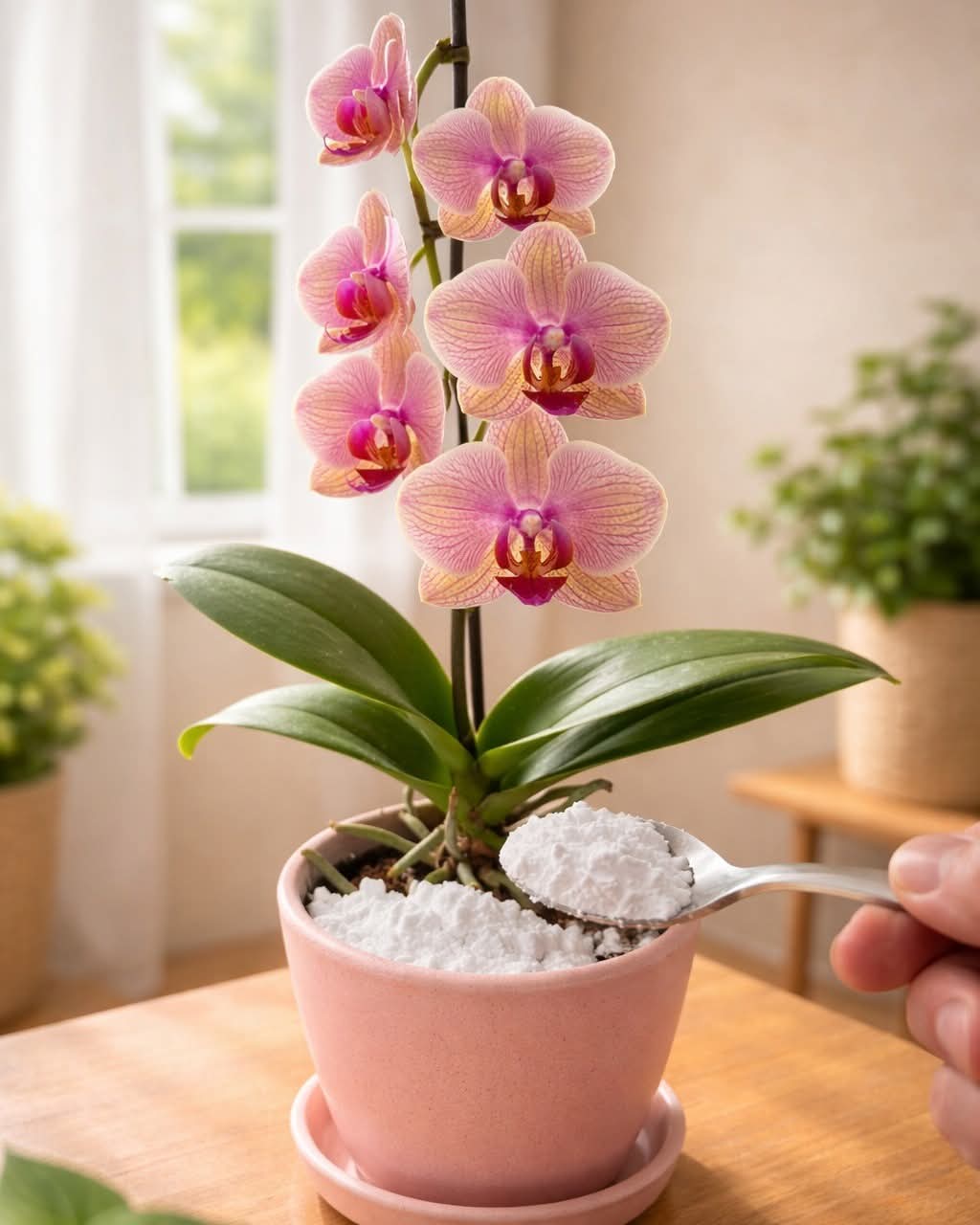
Have you ever looked at a breathtaking Phalaenopsis Orchid (Moth Orchid) in full bloom and wondered how professional botanists keep those delicate pink and yellow petals blooming for months on end? 🥀 Orchids are among the most elegant houseplants in the world, yet they have a reputation for being finicky. Many plant lovers watch in frustration as their orchids drop flowers prematurely, develop stubborn root rot, or refuse to push out new flowering spikes year after year.
Before you invest in costly synthetic fertilizers or complicated growth hormones, look right in your kitchen cabinet! There is an inexpensive, highly effective secret weapon used by experienced indoor gardeners: Baking Soda (Sodium Bicarbonate)! 🥄✨
Used correctly as a natural soil conditioner, pH balancer, and organic fungicide, baking soda can revitalize tired orchid bark medium, protect aerial roots from rot, and trigger vibrant, long-lasting floral spikes. In this SEO-optimized blog guide, we will break down the botanical science behind baking soda for orchids, compare organic hacks with chemical fertilizers, provide clear step-by-step application methods, and reveal a complete 4-month bloom timeline! 🌸🛡️✨
🛡️ The Botanical Science: How Baking Soda Protects & Supercharges Orchids 🧪✨
Phalaenopsis orchids are epiphytic plants that natively grow attached to tree bark in warm, tropical rain forests. Because their aerial root systems absorb moisture and nutrients directly from humid air and organic debris, maintaining proper root health and medium acidity is crucial.
Key Botanical Benefits of Baking Soda 🌾:
- Natural Fungicide & Anti-Rot Shield: Baking soda alters surface pH, creating an alkaline barrier that inhibits fungal spores and root rot pathogens (Phytophthora and Pythium) 🛡️.
- pH Balancing in Aging Bark: As orchid potting bark breaks down over time, it turns excessively acidic. A mild baking soda flush neutralizes toxic acidity, creating an optimal environment for root absorption 🧪.
- Gentle Mineral Boost: Contains trace sodium ions that, when diluted properly, encourage cell turgor pressure, helping foliage remain thick, leathery, and vibrant green 🍃.
- Pest Deterrent: Helps deter soft-bodied pests like fungus gnats and spider mites nesting near the root zone 🐜.
📊 Quick Comparison: Chemical Orchid Fertilizers vs. Baking Soda Hack 🌸🧪
| Feature / Metric | Natural Baking Soda Hack 🥄✨ | Synthetic Chemical Fertilizers 🧪 |
|---|---|---|
| Cost | Pennies per application 💰 | High commercial cost ($10 – $25) 💸 |
| Fungal Protection | Excellent natural fungicide 🛡️ | Requires separate chemical fungicides 🧫 |
| Risk of Chemical Scorch | Zero risk when properly diluted 🌿 | High risk of mineral salt burn on roots 🔥 |
| Substrate Acid Control | Rebalances aging/decaying bark 🧪 | Increases salt buildup over time 🚫 |
| Eco-Friendliness | 100% Non-toxic & safe for pets 🐾 | Contains synthetic salts & chemicals ⚠️ |
| Ease of Application | Quick kitchen dilution method 🥄 | Precise measurement & mixing required 📐 |
🥣 Step-by-Step Guide: How to Apply Baking Soda to Your Orchid 🌸💧
Using baking soda for orchids requires proper dilution to ensure your plant receives all the protective benefits without shocking the roots. Follow these steps carefully:
🛒 Ingredients & Tools Needed:
- Baking Soda: 1/2 teaspoon of pure sodium bicarbonate 🥄
- Filtered / Distilled Water: 1 Liter of room-temperature water 💧
- Liquid Castile Soap (Optional): 2–3 drops (acts as a spreader/sticker) 🧼
- Spray Bottle or Water Jar: For application 🫙
📝 Step-by-Step Application Instructions:
Method 1: Root & Substrate Drenching (As shown in the featured image) 🪴
- Prepare the Solution: Dissolve 1/2 teaspoon of baking soda in 1 liter of warm filtered water. Stir until completely clear 💧.
- Apply to Substrate: Pour 3 to 4 tablespoons of the dilute solution gently over the top bark mix around the base of the orchid once a month 🥄.
- Drain Completely: Ensure all excess liquid drains out through the bottom drainage holes of the pot. Never leave an orchid standing in stagnant water! 🚫💧
Method 2: Foliar Protective Spray 🍃
- Mix 1/2 teaspoon of baking soda and 2 drops of gentle liquid soap into 1 liter of water inside a spray bottle.
- Lightly mist the tops and undersides of the leaves once every 3 weeks to prevent powdery mildew and fungal spots 🛡️.
- Wipe off excess moisture from the central leaf crown using a soft tissue to avoid crown rot 🧻.
🗓️ The Orchid Revival Timeline: What to Expect 🌱➡️🌸
With proper indirect sunlight, controlled watering, and monthly baking soda care, watch your orchid transform over time:
- Month 1 (Root Hygiene & Defense): Fungal spores are neutralized. Roots turn a vibrant silvery-green color, signaling healthy hydration and mineral absorption 🛡️.
- Month 2 (Leaf Sheen & Strength): Leaves become visibly thicker, firm, and take on a rich dark green glossy finish 🍃.
- Month 3 (Flower Spike Emergence): A fresh, green flower spike shoots up from between the leaf nodes, supported by robust stem nodes 🪵✨.
- Month 4 & Beyond (Majestic Blooming): Large, beautiful pink-and-yellow flower buds swell and unfold into long-lasting, breathtaking blooms that remain vibrant for months! 🌸✨🎉
💡 Pro Tips & Frequently Asked Questions (FAQs) 🚨
❓ How often should I water my orchid?
Orchids should be watered only when the potting bark is nearly dry and the roots look silvery-grey. When fully hydrated, roots turn bright green. Overwatering is the #1 cause of orchid mortality! 💧
❓ What type of light is best for blooming orchids?
Phalaenopsis orchids thrive in bright, indirect sunlight (such as an east-facing window sill). Direct harsh sunlight will burn the tender leaves, while low light prevents flower spike formation ☀️.
❓ Can I apply dry baking soda directly onto orchid roots?
No! Always dilute baking soda in water before applying. Direct application of raw dry powder can dehydrate delicate root tissues 🥄🚫.
🌟 Final Thoughts: Enjoy Breathtaking Orchid Blooms Year-Round! 🌸💖
Transforming a dormant orchid into a flower-packed home masterpiece doesn’t require expensive greenhouse treatments! With a simple pinch of baking soda, bright indirect light, and proper watering habits, you can keep your orchids healthy, pest-free, and blooming beautifully all year long 🥄🌸✨.
Try this gentle, budget-friendly hack today and enjoy a regal tropical display in your living space! 🌿🌸✨