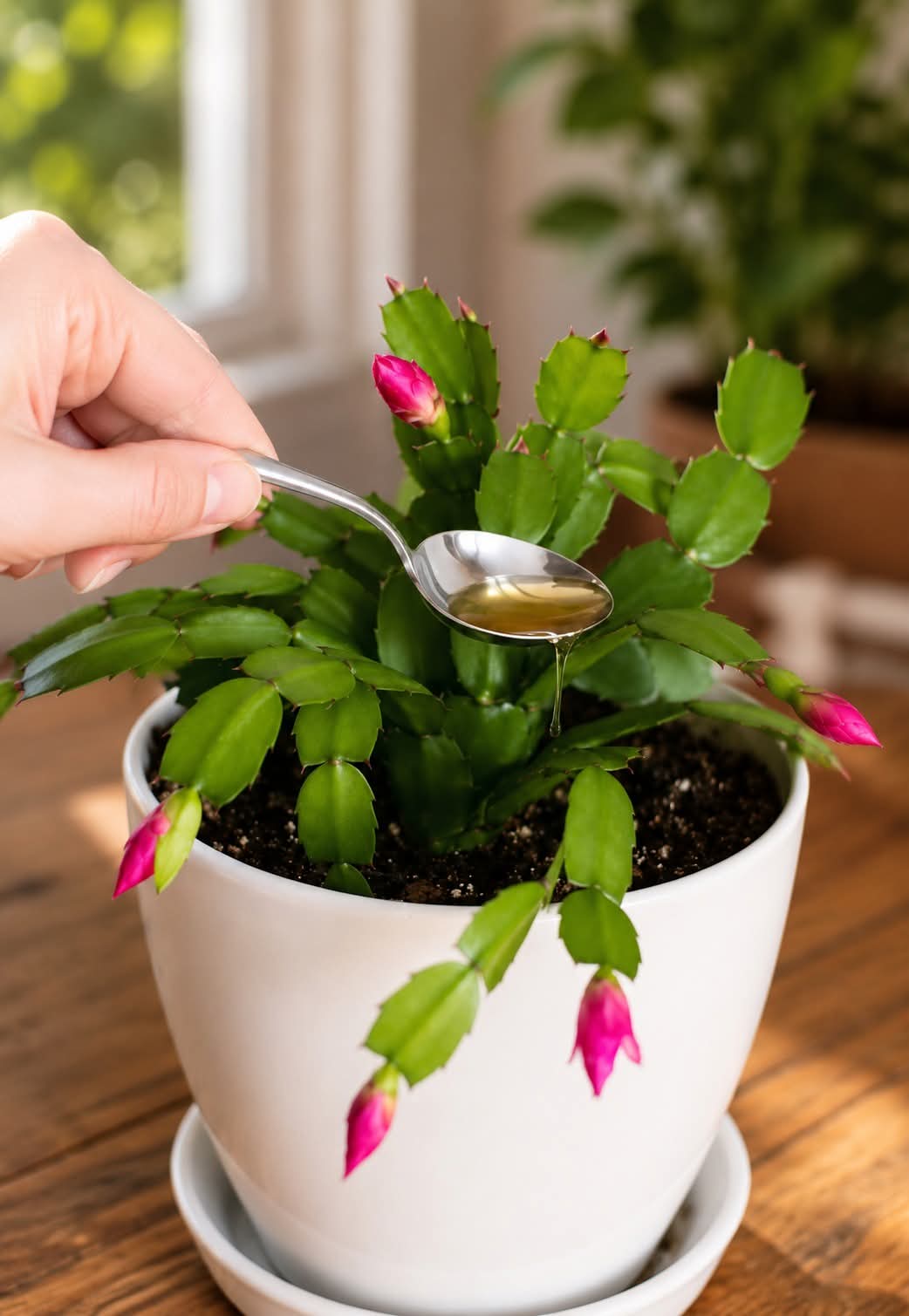
If you are an indoor plant parent, houseplant enthusiast, or green thumb aiming to trigger explosive, vibrant floral displays on your Christmas Cactus (Schlumbergera), look no further 🌸✨! Christmas Cacti are beloved indoor tropical epiphytes, famous for their lush segmented green stems and brilliant magenta-pink flower buds that open during cooler seasons. Feeding your potted specimens with mild, organic liquid teas delivers bioavailable potassium and essential trace minerals needed to fuel abundant flower bud formation without stressing sensitive root systems 🛡️🌵.
By applying gentle homemade bio-elixirs—such as diluted blackstrap molasses tea, banana peel tea, or rice water—directly around the root base with a spoon, you nourish beneficial soil microbes and support vigorous stem development. Let’s break down the complete ingredient matrix, step-by-step 4-stage feeding guide, potting media specifications, and professional botanical care secrets for guaranteed houseplant success!
🛒 Master Ingredient Matrix & Botanical Care Specifications
Nurturing a healthy blooming Christmas Cactus requires balancing targeted organic nutrients, high-porosity potting media, proper ceramic drainage containers, and bright indirect light exposure 🌸🛡️. Here is your master specifications breakdown 📋✨:
| Care Component | Material & Tool Specifications | Botanical Function & Horticultural Impact | Recommended Organic Alternatives |
|---|---|---|---|
| Plant Specimen 🌵 | Blooming Schlumbergera (Christmas Cactus) | Primary potted epiphyte featuring green segmented stems and vibrant pink buds (pictured center). | Thanksgiving Cactus (Schlumbergera Truncata) or Easter Cactus. |
| Liquid Bio-Elixir 🥄 | Diluted Molasses / Banana Peel Tea | Delivers potassium, calcium, and trace minerals that trigger blooming cycles (pictured). | Fermented Rice Water, Liquid Kelp Extract, or Potato Water. |
| Spoon Applicator 🥄 | Stainless Steel Table Spoon | Allows precise, gentle liquid feed application around stem bases without splashing buds (pictured). | Small Pipette, Dosing Dropper, or Mini Measuring Cup. |
| Potted Container 🏺 | Glazed Ceramic Pot with Catch Saucer | Holds substrate and collects excess runoff while allowing root ventilation (pictured). | Unglazed Terracotta Clay Pot with Drainage Hole. |
| Aerated Substrate 🪵 | Succulent Soil + Perlite + Orchid Bark | Porous, free-draining mix that prevents soggy soil and root rot during liquid feeding. | Coco Coir mixed with Pumice Granules. |
| Indoor Light Setup ☀️ | Bright, Indirect Window Light | Drives active photosynthesis to feed blooming energy without scorching segment tips (pictured). | Diffused LED Grow Lamp. |
👩🌾 Step-by-Step Christmas Cactus Feeding & Bloom Care Guide
Follow this simple 4-stage botanical care guide to inspect your plant, prepare a gentle nutrient-rich elixir, apply spoon feeding around the root crown, and support a stunning floral display, exactly as featured in the indoor garden setup 🌸✨!
Step 1: Inspect Foliage & Aerate Soil Surface 🛠️🪵
- Place your potted Christmas Cactus on a clean wooden table near a bright window (as shown in the main image).
- Examine the green segment tips to identify emerging vibrant pink flower buds.
- Inspect topsoil moisture levels—if soil feels dry, proceed with feeding; if overly soggy, allow it to dry out first.
- Take a clean wooden skewer or small fork and gently loosen the top 1/2 inch of substrate around the pot perimeter.
- Aerating topsoil ensures that applied liquid feeds penetrate smoothly into the root zone instead of running off down the inside edges of the pot.
Step 2: Prepare a Gentle Organic Liquid Elixir 🥣🥄
- Avoid harsh synthetic fertilizers high in concentrated nitrogen when buds are forming, as excess chemical salts can cause delicate flower buds to drop prematurely!
- Mix a gentle, potassium-rich liquid feeding solution using natural ingredients:
- Banana Peel Tea: Steep dried banana peels in water for 48 hours to create a natural potassium-rich feed.
- Molasses Solution: Mix 1/2 teaspoon of unsulfured blackstrap molasses into 1 quart of warm water to feed beneficial soil bacteria and add trace minerals (as featured on the spoon).
- Fermented Rice Water: Use starchy first-rinse rice water allowed to sit overnight for a mild mineral boost.
- Ensure the liquid solution reaches room temperature prior to application to avoid root temperature shock.
Step 3: Apply Liquid Elixir Target-wise to Root Base 🥄🌸
- Fill a tablespoon with your prepared room-temperature liquid feed (as demonstrated in the central action shot).
- Carefully pour 2 to 3 spoonfuls of liquid over the topsoil right around the base of central stems, allowing it to soak evenly into the substrate.
- Botanical Secret: Using a spoon permits precise moisture control directly over root zones while keeping liquid off swollen flower buds and delicate segment joints, preventing bud rot!
- Wipe away any unintended liquid drops from segment tips with a soft cloth.
Step 4: Manage Light, Humidity & Bloom Maintenance ☀️📈
- Position your treated cactus in a warm spot receiving bright, indirect sunlight (60°F to 70°F / 15°C to 21°C).
- To encourage buds to open fully into vibrant flowers, keep ambient room temperatures stable and avoid sudden cold drafts or heater vents.
- Provide high humidity around the plant (50% or higher) by placing the pot on a pebble tray filled with water.
- Maintain consistent, light soil moisture—water lightly whenever the top inch of potting mix dries out.
- Enjoy weeks of brilliant pink blooms opening across every branch tip!
💡 Pro Secrets for Spectacular Christmas Cactus Blooms
- Prevent Bud Drop: Once flower buds appear, do not move or rotate your pot relative to its light source! Sudden light changes cause stressed plants to drop unopened buds 🌸.
- Master the Pre-Bloom Darkness: To initiate bud set in early autumn, keep your plant in complete darkness for 12 to 14 hours each night for 6 continuous weeks while reducing watering 🌙.
- Use Airy Epiphytic Soil: Never plant in dense heavy garden soil! Always use porous mixes containing orchid bark, perlite, and coarse sand to ensure free drainage 🪵.
Incorporate this simple organic feeding routine into your houseplant care routine today to encourage strong stems, healthy roots, and a breathtaking burst of seasonal color! 🌸✨🛡️🌵🌺