If you are an indoor plant parent, houseplant enthusiast, or home gardener seeking to revive variegated foliage, balance soil pH, and stimulate vibrant offset shoots on your Spider Plant (Chlorophytum comosum), look no further 🍋✨! Spider plants are world-renowned for their arching green-and-white leaves, air-purifying qualities, and easy-going nature. Applying mild, highly diluted natural acidifying solutions—such as water infused with a slice of fresh lemon—helps break down alkaline mineral build-up in soil, facilitating faster nutrient absorption right at the root zone 🛡️🌿.
By supplying a gentle citrus-infused liquid feed around the base of potted specimens, you restore optimal soil acidity, clear mineral crusts from terra cotta edges, and encourage long, healthy stolons packed with baby plantlets. Let’s explore the complete material and care matrix, a step-by-step 4-stage feeding guide, potting substrate specifications, and professional plant care secrets for guaranteed houseplant success!
🛒 Master Ingredient Matrix & Botanical Care Specifications
Nurturing lush, bushy Spider Plants with vibrant foliage requires balancing natural pH adjusters, high-porosity potting media, proper drainage containers, and bright indirect window light 🍋🛡️. Here is your master specifications breakdown 📋✨:
| Care Component | Material & Tool Specifications | Botanical Function & Horticultural Impact | Recommended Natural Alternatives |
|---|---|---|---|
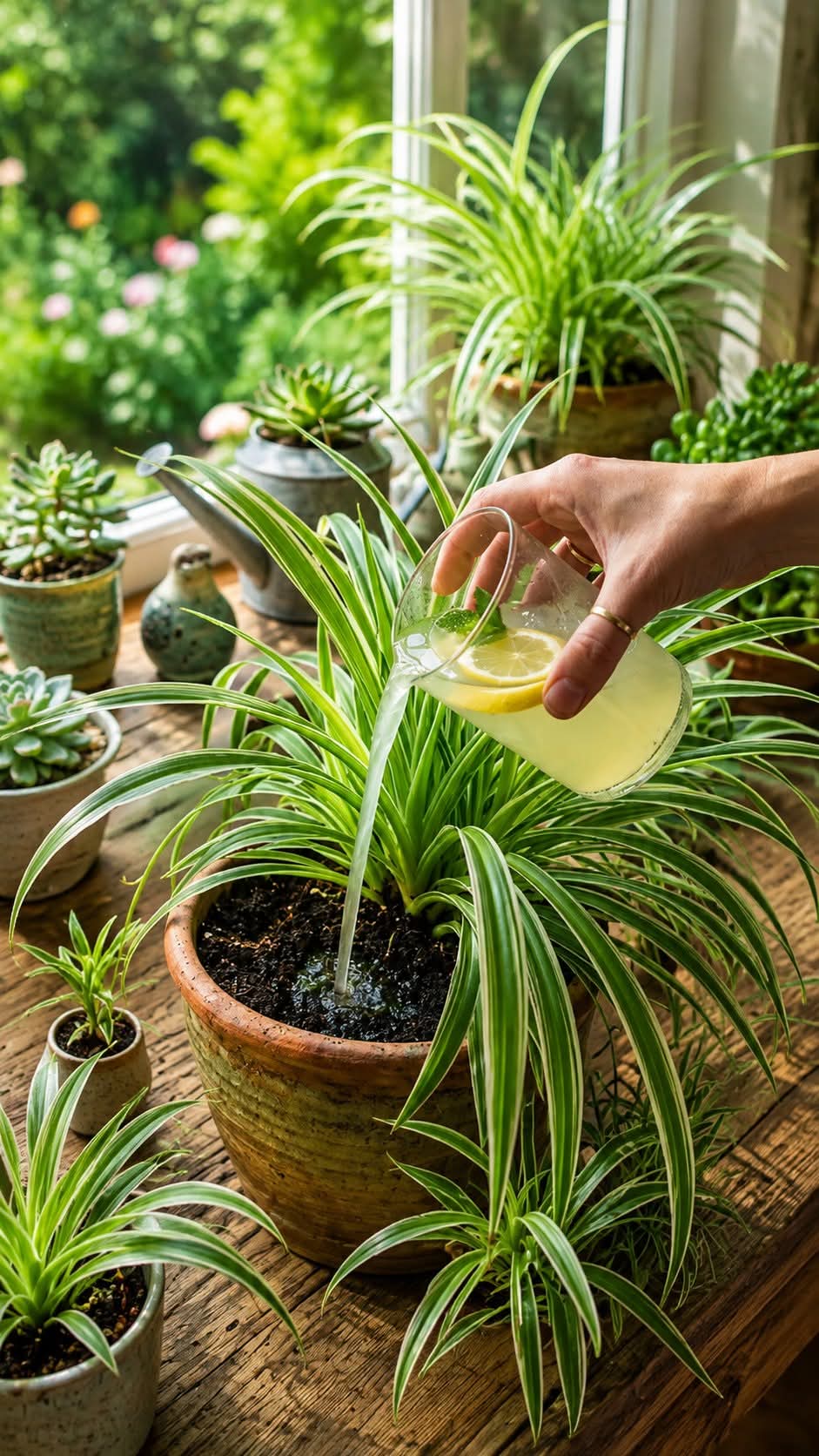
| Plant Specimen 🌿 | Variegated Spider Plant (Chlorophytum) | Primary foliage specimen featuring arching green and cream leaves (pictured center). | Non-Variegated Green Spider Plant or Boston Fern. |
| Citrus Water Elixir 🍋 | Fresh Lemon Slice + Filtered Water | Lowers soil pH, neutralizes tap water alkalinity, and solubilizes minerals (pictured). | Diluted Organic White Vinegar or Rice Water. |
| Glass Applicator 🥛 | Clear Glass Beaker / Cup | Delivers controlled, even liquid application directly over the topsoil bed (pictured). | Watering Can, Small Pitcher, or Measuring Cup. |
| Terracotta Pot 🏺 | Unglazed Rustic Clay Container | Porous clay wall allows root respiration while draining excess water (pictured center). | Ceramic Pot with Bottom Drainage Hole. |
| Aerate Substrate 🪵 | Peat Moss + Perlite + Coco Coir | Light, fluffy potting blend that prevents waterlogging and protects thick tuberous roots. | Pumice Granules with Pine Bark. |
| Light Environment ☀️ | Bright, Indirect Window Light | Drives active photosynthesis for rapid leaf growth and runner production (pictured background). | Diffused LED Grow Light. |
👩🌾 Step-by-Step Spider Plant Citrus Feeding Guide
Follow this simple 4-stage botanical care guide to inspect your plant, mix a mild citrus-infused liquid feed, apply soil irrigation, and support lush leaf growth, exactly as featured in the indoor gardening setup 🍋✨!
Step 1: Inspect Foliage & Aerate Substrate Surface 🛠️🪵
- Position your potted Spider Plant on a rustic wooden table near a bright window (as shown in the main image).
- Examine the leaf tips to identify any browning caused by tap water minerals or fluoride accumulation.
- Take a clean wooden skewer or mini garden trowel and gently loosen the top 1/2 inch of soil around the pot perimeter.
- Aerating topsoil breaks up dry crusting and allows applied liquid feeds to penetrate deep into the root zone instead of pooling on top or running down container sides.
Step 2: Prepare a Gentle Citrus-Infused Water Elixir 🥣🍋
- Avoid using concentrated lemon juice directly, as strong acid can burn sensitive root tissue!
- Fill a clear glass cup with 1 cup of room-temperature distilled or filtered water (as demonstrated in the central action shot).
- Add 1 thin slice of fresh lemon (or 2-3 drops of fresh lemon juice) to the water.
- Stir gently and allow it to steep for 2 to 3 minutes to create a extremely mild, slightly acidic liquid feed (pH 6.0 to 6.5).
- Botanical Secret: Spider plants thrive in slightly acidic to neutral soil. Tap water in many regions is alkaline, which locks out essential iron and manganese—adding a hint of citrus unlocks these trace minerals!
Step 3: Apply Liquid Solution Target-wise to Soil 🥛🌱
- Hold your glass cup securely over the soil line inside the ceramic or terracotta pot (as captured in the photo).
- Slowly pour the diluted citrus water directly over the root crown area, allowing it to soak deep into the potting substrate.
- Ensure liquid saturates the root mass evenly until excess water drains freely into the catch saucer below.
- Keep liquid application focused on the soil surface rather than drenching leaf centers to maintain tidy foliage.
Step 4: Manage Light, Moisture & Runner Propagation ☀️📈
- Place your treated Spider Plant in a bright spot receiving indirect sunlight (60°F to 75°F / 15°C to 24°C).
- Spider plants thrive near bright windows where direct harsh midday sun is filtered out (pictured background).
- Water consistently whenever the top 1 inch of soil feels dry to the touch—typically every 5 to 7 days.
- As long stem stolons push out small plantlets (“spiderettes”), allow them to develop aerial roots before snipping and rooting in small pots or water glass jars!
💡 Pro Secrets for Thriving Spider Plants
- Flush Soil Periodically: Every few months, flush your potting soil with pure distilled water to wash away residual salts and keep tuberous roots healthy 🏺.
- Prevent Brown Leaf Tips: Brown tips are usually caused by fluoridated tap water, low humidity, or dry soil. Using filtered water infused with a drop of lemon prevents tip burn 🍋!
- Propagate Spiderettes Easily: Snip baby plantlets off long runners once they develop small brown root nodes at their base and root them in water or damp soil for easy plant sharing 🌿!
Incorporate this simple organic citrus-watering routine into your houseplant care schedule today to foster vibrant green leaves, robust tuberous roots, and an abundance of charming baby spiderettes! 🍋✨🛡️🌿🌸