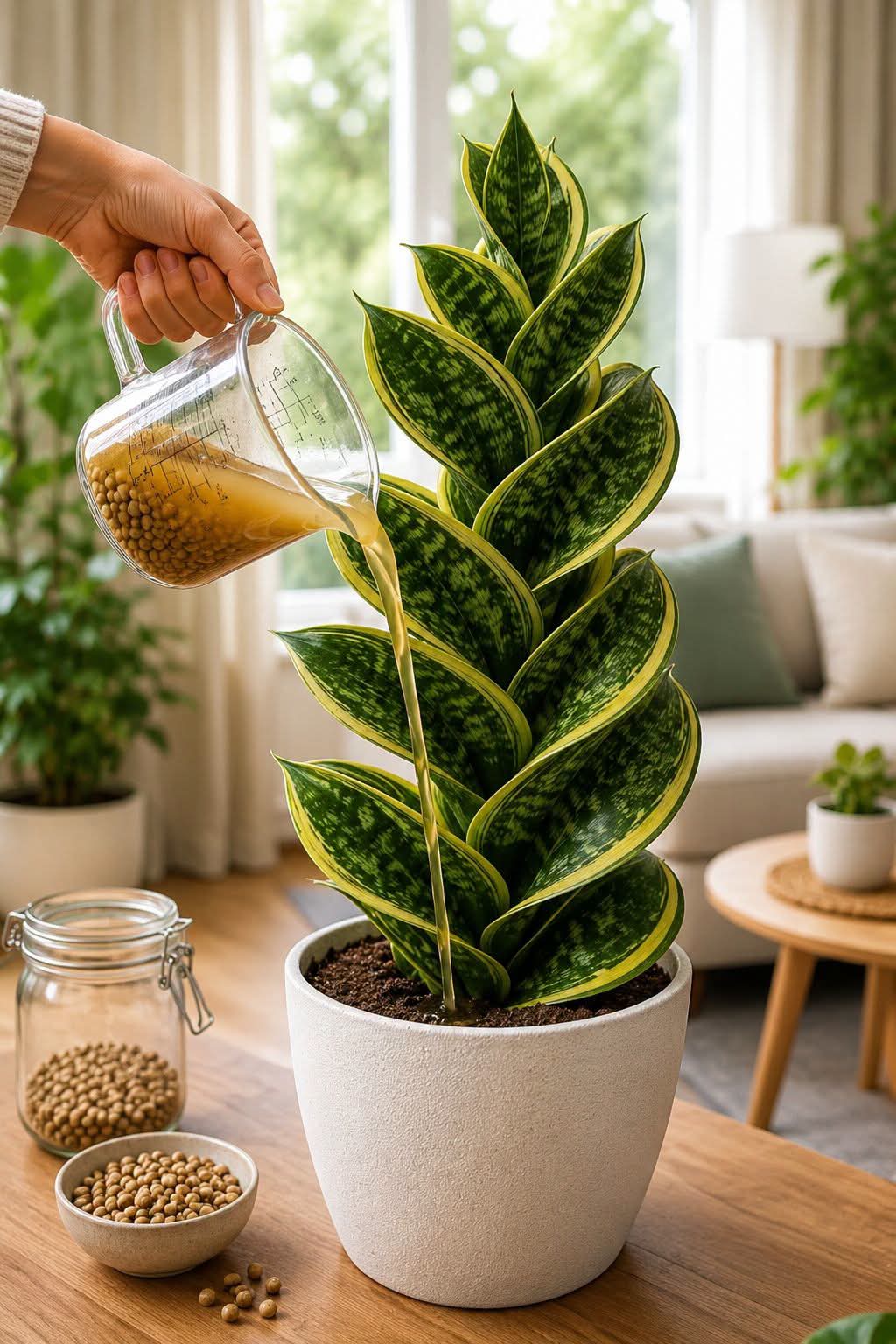
The Snake Plant (Sansevieria or Dracaena trifasciata) is an absolute legend in the indoor gardening community! Renowned for its bold, architectural leaves with yellow margins, exceptional air-purifying abilities, and low-maintenance nature, it is a favorite for homes and offices alike 🌿✨. However, to keep its thick, succulent foliage lush and vibrant, giving it gentle organic nourishment is key.
Instead of relying on synthetic chemical fertilizers that can burn roots or cause salt buildup in soil, many plant enthusiasts use nutrient-rich organic legumes! Soaking soybeans or chickpeas in water releases a golden, protein- and nitrogen-dense liquid fertilizer that feeds both the soil microbes and the plant’s roots 🫛✨. Let’s break down the science, preparation, and step-by-step application guide for this organic plant booster!
🛒 Organic Ingredients & Tool Guide
Before preparing your homemade liquid fertilizer, gather these simple pantry supplies to ensure a clean, effective brew 📋✨.
| Ingredient / Tool | Category | Nutrients / Function | Benefits for Snake Plants |
|---|---|---|---|
| Soybeans / Chickpeas 🫛 | Organic Fertilizer Base | High in Nitrogen (N), Amino Acids, Calcium, Potassium | Stimulates leaf formation, deepens green pigmentation, and builds strong plant cell walls. |
| Filtered / Rain Water 💧 | Liquid Base | Pure hydration free from harsh chlorine or mineral buildup | Provides a clean solvent to extract vitamins and minerals without shocking delicate root hairs. |
| Glass Measuring Jug 🥛 | Preparation Vessel | Allows easy measurement, mixing, and controlled pouring | Ensures a precise pour directly into the soil without splashing the leaf rosette. |
| Potted Snake Plant 🪴 | Target Specimen | Variegated Sansevieria with geometric foliage | Absorbs slow-release organic nutrients to produce thick, glossy new shoots (“pups”). |
| Glass Storage Jar 🫙 | Storage Vessel | Sealed container for soaking legumes | Keeps the infusion fresh and clean during the soaking process. |
👩🌾 Step-by-Step Guide: Making & Applying Legume Water Fertilizer
Follow this straightforward process (as shown in the image above) to prepare and feed your snake plant naturally 🪴✨!
Step 1: Prepare the Legume Soak 🫛
- Measure ½ cup of raw, dried soybeans or chickpeas.
- Rinse the legumes thoroughly under cold tap water to remove any dust or dirt.
- Place the clean legumes into a glass jar or jug and pour 3 cups of room-temperature filtered water over them.
Step 2: Steep for Nutrient Extraction ⏰
- Seal the jar loosely and let the legumes soak for 24 to 48 hours at room temperature.
- As the beans swell, the water will turn a warm golden-amber color, indicating that natural amino acids, nitrogen, and minerals have extracted into the liquid.
Step 3: Strain the Liquid 🥛
- Strain out the solid soybeans or chickpeas, reserving the golden liquid fertilizer in a glass measuring pitcher.
- (Optional) Dilute the golden fertilizer with equal parts fresh water if your soil is already slightly moist.
Step 4: Water Your Snake Plant 🪴✨
- Slowly pour the golden soybean water directly onto the soil around the base of the plant.
- Avoid pouring liquid directly into the central leaf rosette, as trapped moisture in the crown can lead to rot!
- Allow excess water to drain out completely from the bottom drainage hole of your pot.
💡 Expert Care Tips for Snake Plant Success
- Feeding Frequency: Apply this natural legume fertilizer once every 3 to 4 weeks during the spring and summer active growing season ☀️. Reduce feeding in autumn and winter when the plant enters dormancy.
- Allow Soil to Dry Out: Snake plants are succulents that store water in their thick leaves! Always let the top 2 inches of soil dry out completely between waterings to prevent root rot 🌵.
- Provide Bright Indirect Light: While snake plants survive in low-light corners, providing soft, bright indirect sunlight accelerates growth and deepens leaf coloration 🌿.
Enjoy nourishing your houseplants with this easy, chemical-free organic trick! 🪴