Orchids (Phalaenopsis) are widely celebrated for their exquisite, long-lasting blossoms and timeless elegance 🌸✨. However, encouraging a stubborn orchid to produce lush foliage and explosive flower spikes can sometimes feel like a daunting task for indoor gardeners. While chemical fertilizers are readily available, many plant lovers prefer gentle, organic alternatives that nourish the root system without risking nutrient burn or salt accumulation.
Enter the power of organic kitchen staples: Mung Beans and Fresh Cucumber Slices! Combining protein-rich, nitrogen-boosting mung beans with hydrating, vitamin-packed cucumber slices creates a natural slow-release feeding system right inside your orchid container 🌿🥒. Let’s break down the science, the steps, and the expert technique behind this viral orchid care method!
🛒 Organic Ingredients & Tool Guide
Before upgrading your orchid container, gather these simple organic supplies to ensure a clean and effective application 📋✨.
| Component / Ingredient | Key Nutrients / Properties | Function & Benefits for Orchids |
|---|---|---|
| Potted Orchid 🌸 | Healthy Phalaenopsis Specimen | The target plant needing a natural nutrient boost to stimulate new flower spikes. |
| Mung Beans 🫘 | Nitrogen, Potassium, Phosphorous, Amino Acids | Acts as a natural organic slow-release fertilizer that feeds beneficial soil microbes and strengthens root networks. |
| Fresh Cucumber Slices 🥒 | Potassium, Magnesium, Silica, High Moisture Content | Cools the top layer, maintains gentle surface humidity, and supplies essential trace minerals during watering. |
| Clear Plastic Pot 🫙 | Transparent, Well-Draining Vessel | Allows sunlight to reach photosynthetic roots while offering a clear view of root health. |
| Orchid Bark & Moss 🪵 | Coarse, Aerated Potting Mix | Ensures proper airflow around roots, preventing moisture retention and rot. |
👩🌾 Step-by-Step Guide: Applying the Organic Mung Bean & Cucumber Boost
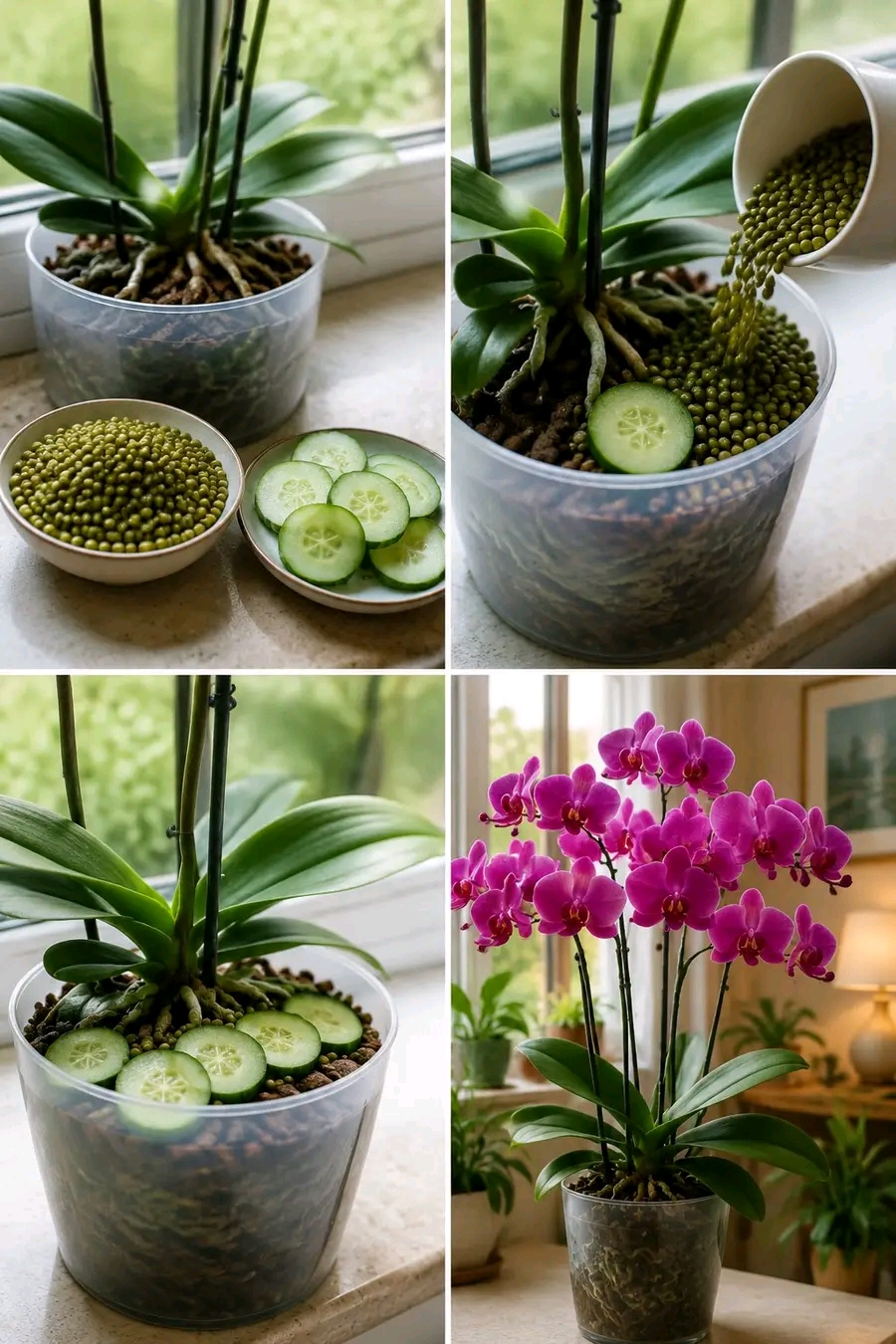
Follow this precise 4-step process (as illustrated in the photos above) to feed your orchid and encourage vibrant magenta blooms 🌸✨!
Step 1: Inspect Your Orchid & Potting Setup 🩺
- Ensure your orchid is settled inside a clean, well-draining clear pot filled with fresh orchid bark or moss (top-left panel).
- Check that the roots are healthy, firm, and green or silvery-white. Trim away any dead, papery, or mushy roots before applying any organic amendments.
Step 2: Layer the Mung Beans 🫘✨
- Take a cup of dry green mung beans (top-right panel).
- Gently pour a uniform layer of mung beans across the top layer of the orchid bark around the base of the plant.
- Keep the beans evenly spread out without covering the central stem base or crown directly. As you water your orchid over the coming weeks, these nutrient-dense legumes release natural amino acids and essential minerals into the potting medium.
Step 3: Arrange the Cucumber Slices 🥒
- Slice a fresh, crisp cucumber into round discs about ¼-inch thick.
- Arrange the cucumber slices neatly in a circle over the layer of mung beans (bottom-left panel).
- The hydrating cucumber slices slowly release trace elements like potassium and silica as moisture evaporates, while keeping the upper ambient air around the root collar gently humidified!
Step 4: Water and Watch the Floral Magic Unfold 🌸✨
- Water your orchid lightly over the cucumber and mung bean layer using filtered or room-temperature water.
- Place the pot on a bright windowsill with indirect sunlight.
- Replace the cucumber slices every 3 to 5 days to keep everything fresh and clean.
- Over the following weeks, your orchid will absorb these natural nutrients, resulting in thick green leaves, robust aerial roots, and breathtaking clusters of deep pink and purple blooms (bottom-right panel)!
💡 Expert Tips for Safe & Successful Organic Care
- Maintain Good Ventilation: Always keep your orchid in a well-ventilated room with gentle air movement to prevent mold from forming on organic additives 🌬️.
- Avoid Overwatering: Water your orchid only when the bark medium dries out completely and the roots inside the clear vessel turn a silver-grey color 💧.
- Monitor and Replace: Remove any decaying vegetable pieces promptly and refresh the top layer to maintain a clean, hygienic growing environment 🥒✨.
Enjoy cultivating vibrant, heavy-blooming orchids using this clever organic feeding routine! 🌸