Orchids (Phalaenopsis) are undoubtedly among the most breathtaking indoor plants, known for their elegant blooms and exotic beauty 🌸✨. However, they can also be notoriously finicky! When an orchid suffers from dehydration, droopy leaves, or root rot, many plant parents assume it is beyond saving. But before giving up on a struggling orchid, look no further than a simple organic secret hiding right in your home: Fresh Aloe Vera gel!
Aloe vera is packed with natural enzymes, vitamins, amino acids, and growth hormones (like gibberellins and auxins) that act as a powerful natural root stimulant and immunity booster for plants 🌿. By combining an aloe vera soak with proper repotting in orchid bark, you can transform a limp, dehydrated orchid into a thriving, heavy-blooming beauty! Let’s break down everything you need to know about growing and reviving orchids using natural aloe vera step-by-step 🪴👇.
🛒 Tools & Organic Ingredients at a Glance
Before starting your orchid rescue and repotting session, gather all essential supplies to ensure a smooth, stress-free process 📋🌸.
| Supply / Ingredient | Category | Purpose & Benefits |
|---|---|---|
| Struggling Orchid 🌸 | Phalaenopsis Specimen | Dehydrated or root-damaged orchid needing revival and fresh potting medium. |
| Fresh Aloe Vera Leaf 🌿 | Organic Root Elixir | Rich in enzymes, natural hormones, and antibacterial compounds that stimulate new roots and hydration. |
| Clear Plastic Orchid Pot 🫙 | Container | Clear pots allow sunlight to reach the photosynthetic aerial roots and make monitoring root moisture easy. |
| Coarse Orchid Bark Mix 🪵 | Potting Medium | Provides maximum airflow and fast drainage so delicate epiphytic roots never rot. |
| Sphagnum Moss 🌾 | Moisture Retainer | Placed topically or mixed lightly to maintain gentle, consistent ambient humidity. |
| Filtered / Distilled Water 💧 | Hydration Base | Free from harsh tap minerals or chlorine that can burn delicate silver orchid roots. |
👩🌾 Step-by-Step Guide: Reviving & Repotting Orchids with Aloe Vera
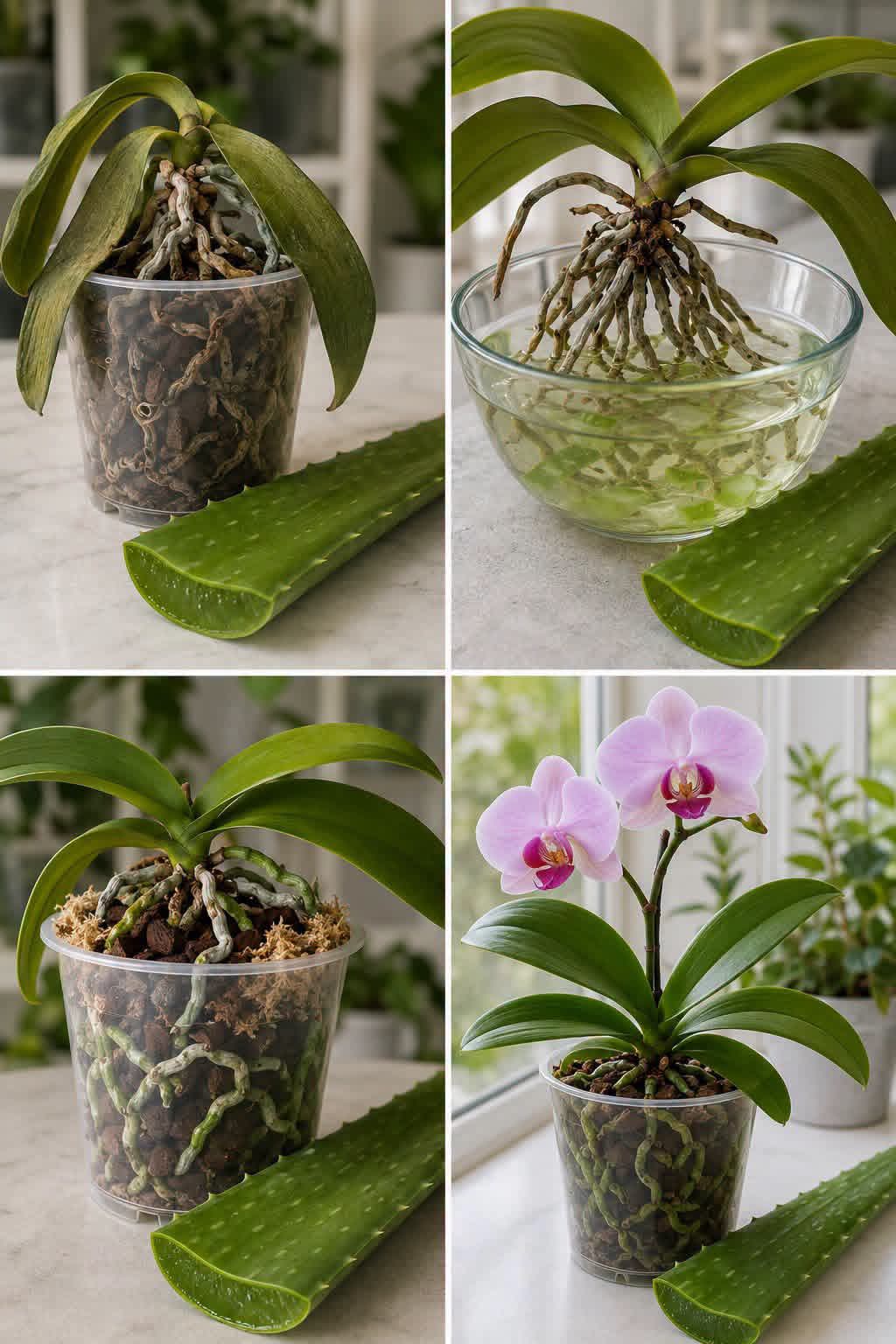
Follow this detailed 4-step process (as illustrated in the step-by-step photos above) to bring your orchid back to life and encourage vibrant new blooms 🌸✨!
Step 1: Diagnose and Unpot the Orchid 🩺
- Carefully remove the orchid from its old pot (top-left panel).
- Gently shake off all old, broken-down potting bark from around the root ball.
- Inspect the roots: cut away any soft, mushy, black, or completely hollow/dried roots using sterilized shears. Keep all firm, plump green or silvery roots intact!
Step 2: Prepare and Apply the Aloe Vera Soak 🌿💧
- Take a fresh, fleshy aloe vera leaf and slice off a 2-to-3-inch chunk.
- Scoop out the clear inner gel into a glass bowl filled with warm, filtered water, or slice small pieces of aloe vera directly into the water (top-right panel).
- Whisk gently to infuse the natural aloe enzymes and nutrients throughout the water.
- Lower the orchid’s bare root system into the aloe vera water bath and allow it to soak for 20 to 30 minutes.
- Remove the orchid from the aloe bath and gently shake off excess liquid.
- Hold the orchid inside a clean, well-draining clear plastic pot (bottom-left panel).
- Fill around the roots using fresh, coarse orchid bark, tapping the pot gently on your table so the bark settles evenly without compacting the roots.
- Add a thin layer of moist sphagnum moss around the top layer of bark to hold gentle ambient humidity around the upper root collar.
- Place your newly repotted orchid in a bright location with indirect sunlight (such as an east- or north-facing window sill).
- Water only when the roots inside the clear pot turn from vibrant green to a silvery-grey color.
- Within weeks, you will notice firm green leaves standing tall, fresh root growth stretching through the bark, and eventually a strong flower spike yielding gorgeous pink or white blossoms (bottom-right panel)!
- Never Use Standard Potting Soil: Orchids are epiphytes (air plants) in nature. Planting them in standard garden soil will suffocate and kill their roots! Always use specialized orchid bark 🪵.
- Avoid Water in the Crown: Never let water sit inside the central crown of the leaves overnight, as this causes crown rot! Always dry the leaf center with a soft paper towel if it gets wet 💧.
- Temperature Drops Trigger Blooms: To encourage a reblooming spike in autumn or winter, expose your healthy orchid to slightly cooler night temperatures (around 55°F to 65°F / 13°C to 18°C) for a couple of weeks 🌸!