[Indoor Gardening 🌿] [Plant Care Guide 📖] [Natural Fertilizer 🍊] [Home Styling 🏡]
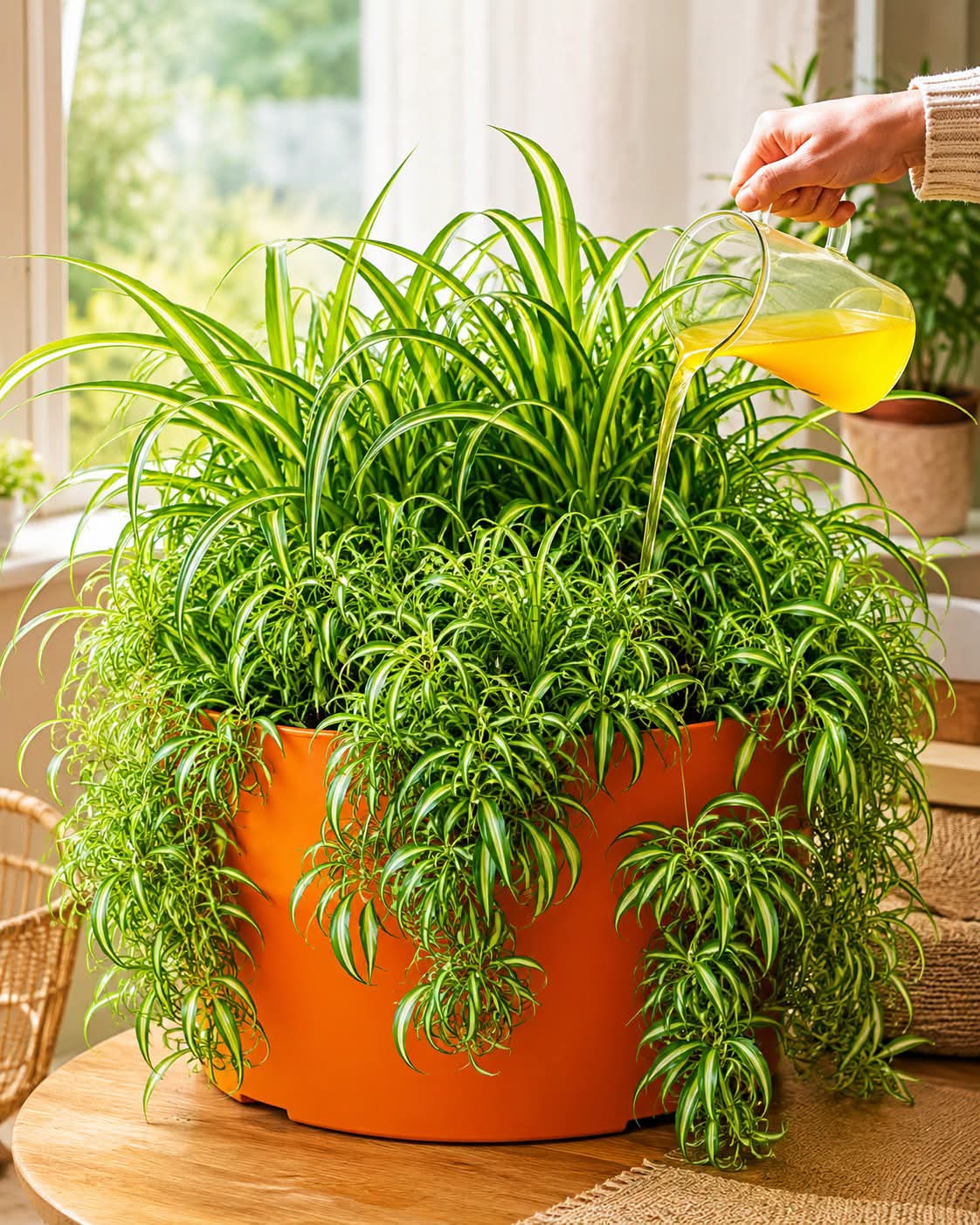
Spider Plants (Chlorophytum comosum) are among the most resilient, adaptable, and visually striking indoor plants. As illustrated in the image, a lush, vibrant Spider Plant cascades over the edge of a bright terracotta-orange pot, producing dozens of leafy baby offsets (“spiderettes”). A hand pours a warm amber liquid—a natural, DIY orange peel fertilizer liquid—directly into the soil near a sunlit window.
Whether you are looking to boost foliage growth, encourage proliferation of plantlets, or publish an SEO-friendly guide for your plant blog, this comprehensive article covers everything from natural organic fertilizer hacks to watering routines, propagation, and structured care tables.
Why Orange Peel Liquid Works for Spider Plants 💖
[Organic Care 🌿] [Nutrient Rich 🧪] [Eco-Friendly ♻️]
- Rich Micronutrient Boost: Citrus peels are packed with potassium, nitrogen, phosphorus, magnesium, and calcium, which nourish lush green leaves and stimulate robust root growth.
- Mild Soil Acidifier: Spider Plants prefer a neutral to slightly acidic soil environment (pH\ 6.0 – 7.0). Diluted citrus peel liquid gently balances soil acidity for optimal nutrient absorption.
- Natural Pest Deterrent: The natural d-limonene compound found in orange peels helps ward off common household pests like fungus gnats, aphids, and spider mites.
- Zero-Waste Gardening: Reusing kitchen fruit scraps creates a sustainable, chemical-free liquid fertilizer that costs virtually nothing while keeping indoor plants thriving.
Complete Care & Preparation Setup 🛒
[Gardening Supplies 🛒] [Natural Ingredients 🍊] [Plant Essentials 🪴]
To care for a cascading Spider Plant like the one pictured, gather these essential supplies and ingredients:
🪴 1. Plant & Potting Essentials
- Spider Plant (Chlorophytum comosum): Variegated or solid green variety with cascading offsets.
- Terracotta or Plastic Planter: Includes bottom drainage holes to prevent water retention.
- Well-Draining Potting Mix: Lightweight blend of peat moss, perlite, and pine bark.
🍊 2. DIY Orange Peel Fertilizer Ingredients
- Peels from 2 to 3 organic oranges (fresh or dried peels).
- 4 cups Filtered or boiled water.
- Glass pitcher or jug: For steeping and pouring the liquid fertilizer cleanly.
Step-by-Step Guide: How to Make & Apply Orange Peel Water 🍊
[Step-by-Step 📖] [DIY Liquid Fertilizer 🧪] [Healthy Foliage 🌿]
Follow these simple steps to prepare and apply this gentle organic plant booster:
Step 1: Brew the Citrus Extract 🍊
- Chop clean orange peels into small pieces to maximize surface area.
- Place the peels in a heat-resistant glass container and pour 4 cups of hot water over them.
- Cover and let the mixture steep for 24 to 48 hours at room temperature until the water turns a deep golden-amber color.
Step 2: Strain & Dilute 💧
- Strain out the solid peels using a fine mesh sieve.
- Dilute the amber concentrate with equal parts fresh room-temperature water (1:1\text{ ratio}). Never apply concentrated citrus liquid directly, as excess acidity can burn plant roots.
Step 3: Water Your Spider Plant 🪴
- Pour the diluted citrus water evenly around the base of the plant soil until it begins to trickle out of the drainage holes.
- Allow all excess liquid to drain completely into a saucer before returning the pot to its decorative tray or stand.
- Apply this natural booster once every 3 to 4 weeks during the spring and summer growing seasons.
Quick Reference Care Specifications 📊
[Overview Table 📋] [Growth Needs ⚙️]
| Care Parameter | Ideal Specification |
|---|---|
| Light Preference [Light ☀️] | Bright, indirect sunlight (East or shaded South window) |
| Watering Schedule [Water 💧] | Every 7 to 10 days (allow top 50% of soil to dry out) |
| Ideal Temperature [Temp 🌡️] | 55^\circ\text{F} – 80^\circ\text{F}\ (13^\circ\text{C} – 27^\circ\text{C}) |
| Humidity Level [Air 💨] | 40\% – 60\% (Thrives in average indoor humidity) |
| Soil Type [Medium 🪨] | Well-draining potting soil enriched with perlite |
| Fertilizer Frequency [Feeding 🍊] | Monthly using diluted organic fertilizer during growing |
Pro Plant Care Secrets for Success 💡
[Gardening Hacks 🪄] [Pro Tips 🪴]
- Avoiding Brown Leaf Tips: Tap water high in fluoride or chlorine often causes brown, crunchy leaf tips on Spider Plants. Use filtered water, rainwater, or let tap water sit uncovered for 24 hours before watering.
- Encouraging Offsets (“Spiderettes”): Spider Plants produce trailing plantlets more abundantly when slightly root-bound in their pots under bright, indirect light conditions.
- Cleaning the Leaves: Wipe down long arching leaves with a soft damp cloth every few weeks to remove household dust and optimize photosynthesis.
Simple Propagation Steps 🌱
[Propagation ✂️] [Rooting In Water 💧]
- Water Propagation: Snip individual baby plantlets from trailing runners and set them in small glass jars filled with clean water. Roots will sprout within 7 to 10 days!
- Direct Soil Planting: Press the bottom of a baby offset directly into a small pot filled with moist soil while still attached to the parent stem. Once rooted, snip the main runner.
Frequently Asked Questions (FAQs) ❓
Q: Will orange peel water make my soil too acidic for Spider Plants?
A: When properly diluted (1:1 ratio with plain water) and applied only once a month, citrus peel water provides a safe, mild nutrient boost without altering soil pH drastically.
Q: Are Spider Plants safe for households with pets?
A: Yes! Spider Plants are non-toxic to cats and dogs according to the ASPCA, making them a safe choice for pet-friendly homes.
Final Thoughts 🌟
[Green Living 🌿] [Home Styling 🏡]
🟢Using natural homemade orange peel liquid is an easy, eco-friendly way to keep your Spider Plant lush, healthy, and overflowing with charming baby plantlets. Combined with proper indirect light and good drainage, your indoor greenery will continue to thrive for years!
🟢Try making your own citrus plant booster today, share your results with fellow plant enthusiasts, and enjoy the beauty of cascading foliage! Happy growing! 🪴🍊🌿✨