[Indoor Gardening 🌿] [Orchid Care Guide 📖] [Natural Fertilizer 🍵] [Home Styling 🏡]
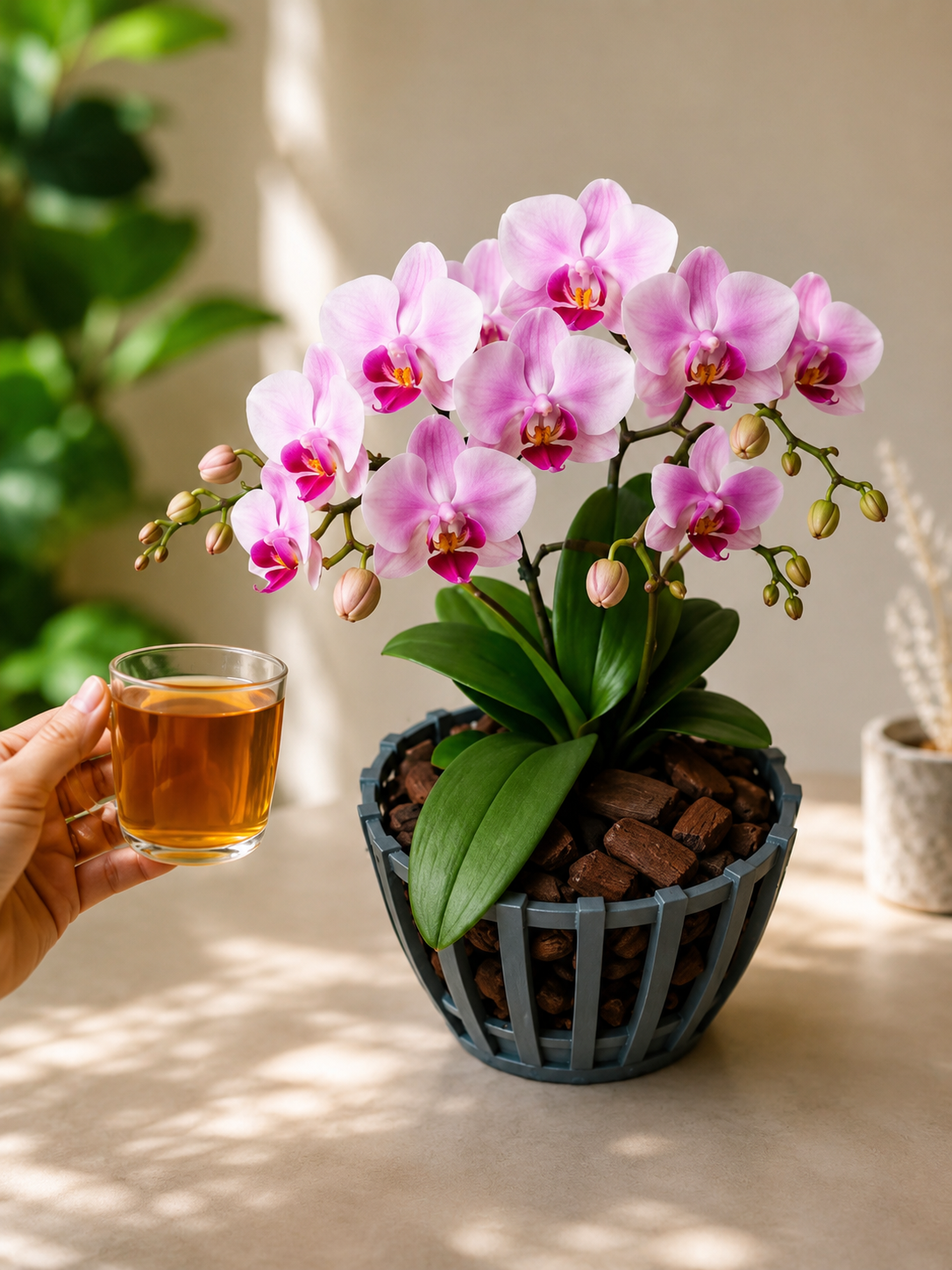
🟢Orchids are widely celebrated as some of the most captivating flowering houseplants in the world. As showcased in the image, a thriving Phalaenopsis Orchid (Moth Orchid) displays an abundance of delicate pink-and-white blooms above lush, deep green foliage, potted in a slatted orchid basket with chunky bark substrate. Beside the plant, a glass cup filled with clear amber tea highlights a popular organic plant hack: using lukewarm, diluted black tea as a gentle natural fertilizer and booster.
🟢Whether you are looking to encourage reblooming, improve soil acidity, or write a comprehensive, SEO-optimized guide for your indoor gardening website, this complete article covers everything from natural tea fertilizing methods and potting techniques to daily maintenance and structured care tables.
Why Black Tea Works Wonders for Orchids 💖
[Organic Growth 🌿] [Gentle Acidifier 🧪] [Root Booster 🌱]
- Optimal Soil Acidity: Orchids naturally thrive in slightly acidic environments (pH\ 5.5 – 6.5). Black tea contains natural tannic acid that subtly lowers substrate pH to match their natural rainforest habitat.
- Essential Micronutrient Boost: Brewed tea releases trace amounts of potassium, nitrogen, and foliage-nourishing minerals that stimulate root growth and encourage frequent reblooming spikes.
- Natural Pathogen Inhibitor: The mild antimicrobial properties of tannins help protect delicate aerial roots against fungal infection and harmful bacterial growth inside bark potting media.
- Eco-Friendly & Safe: Unlike synthetic chemical fertilizers that can burn tender orchid roots if over-applied, diluted organic tea provides gentle, slow-release nutrition.
Essential Supplies & Care Setup 🛒
[Gardening Supplies 🛒] [Bark Substrate 🪵] [Slatted Planter 🪴]
🟢To maintain a stunning Phalaenopsis orchid like the one pictured, gather these key supplies and environmental essentials:
🌸 1. Orchid & Potting Essentials
- Phalaenopsis Orchid (Moth Orchid): Features soft pink-white petals with vibrant magenta centers and sturdy green leaves.
- Slatted Basket or Aerated Orchid Pot: Provides vital airflow (360^\circ) around roots to replicate tree-canopy epiphytic growing conditions.
- Chunky Pine Bark Substrate: Ensures maximum aeration and rapid water drainage, preventing stagnant moisture.
🍵 2. Natural Tea Fertilizer Mixture
- 1 Pure Black Tea Bag (Plain Ceylon or English Breakfast without added flavorings or oils).
- 2 Cups Warm pure water (distilled, filtered, or rainwater).
- Glass Cup or Pitcher: For diluting and applying the lukewarm tea mix safely.
Step-by-Step Guide: How to Apply Tea to Orchids 🍵
[Natural Feeding 🌿] [Step-by-Step 📖] [Healthy Blooms 🌸]
🟢Follow these simple steps to safely nourish your orchids using diluted organic black tea:
Step 1: Brew & Dilute the Tea Solution 🍵
- Steep 1 black tea bag in a cup of hot water for 3 to 5 minutes until steeped.
- Remove the tea bag and allow the tea to cool down completely to room temperature. Never pour hot liquid on living plants!
- Dilute the brewed tea with equal parts fresh filtered water until it reaches a clear, light amber color (similar to the glass shown in the photo).
Step 2: Apply as a Flushing Root Rinse 💧
- Place your slatted orchid planter over a sink or tray.
- Pour the diluted, room-temperature black tea slowly over the chunky pine bark substrate, letting it thoroughly saturate the roots.
- Allow all excess liquid to drain out completely through the bottom and side slats of the basket. Orchid roots must never sit in standing water.
Step 3: Optional Foliage Cleaning & Wiping 🧽
- Dip a clean microfiber cloth or cotton pad into the cool, diluted tea mixture and squeeze out excess liquid.
- Gently wipe dust off the dark green leaves. The mild tannins help clean the leaves while giving foliage a healthy, natural gloss.
Quick Reference Orchid Care Specifications 📊
[Overview Table 📋] [Growth Needs ⚙️]
| Care Parameter | Ideal Specification |
|---|---|
| Light Requirement [Light ☀️] | Bright, indirect light (east or shielded south window) |
| Watering Frequency [Water 💧] | Every 7 to 10 days (allow bark to dry slightly between waterings) |
| Substrate Type [Medium 🪵] | Medium to large chunky fir/pine bark with charcoal |
| Temperature Range [Temp 🌡️] | 65^\circ\text{F} – 80^\circ\text{F}\ (18^\circ\text{C} – 27^\circ\text{C}) |
| Humidity Level [Air 💨] | 50\% – 70\% relative humidity |
| Tea Feeding Cycle [Feeding 🍵] | Once every 3 to 4 weeks during active growth/blooming |
Pro Chef & Gardener Secrets for Success 💡
[Gardening Hacks 🪄] [Pro Tips 🪴]
- Avoid Flavored Teas: Always use 100% pure black tea or green tea. Avoid flavored teas containing essential oils, sugars, artificial aromas, or bergamot (like Earl Grey), which can harm orchid roots.
- Observe Root Color: Healthy Phalaenopsis roots appear bright green when fully hydrated and turn silvery-grey when it is time to water again.
- Drop Temperatures for Blooms: To induce new flower spikes, expose your orchid to slightly cooler night temperatures (55^\circ\text{F} – 60^\circ\text{F} / 13^\circ\text{C} – 15^\circ\text{C}) for 2 to 3 weeks during autumn.
Common Orchid Troubleshooting 🎨
[Plant Doctor 🩺] [Healthy Care 🌿]
- Yellowing Leaves: Often a sign of overwatering or direct sunburn. Move the plant slightly further away from direct windows and check for soft, over-saturated roots.
- Bud Drop (Blast): Sudden changes in room temperature, cold drafts, or low room humidity can cause young flower buds to yellow and drop off before opening.
- Wrinkled, Soft Leaves: Indicates underwatering or root loss due to decayed substrate. Inspect the bark medium and soak the roots briefly in lukewarm water or tea solution.
Frequently Asked Questions (FAQs) ❓
Q: Can I use green tea or chamomile tea for orchids?
A: Yes! Pure green tea and plain chamomile tea can also be used when diluted. Green tea offers mild antioxidants, while chamomile provides natural anti-fungal benefits for healthy root systems.
Q: How often should I re-pot my Phalaenopsis orchid?
A: Repot every 1 to 2 years using fresh chunky bark. Over time, pine bark breaks down and compacts, which reduces essential root airflow.
Final Thoughts 🌟
[Green Living 🌿] [Home Styling 🏡]
🟢Using diluted black tea as an organic care booster is a simple, effective, and budget-friendly way to keep your Phalaenopsis Orchids healthy, vibrant, and full of breathtaking blossoms. Paired with proper aeration and indirect sunlight, your indoor garden will thrive for years to come!
🟢Try this easy organic tea routine today, share your blossoming results with fellow plant enthusiasts, and enjoy the stunning beauty of healthy orchids! Happy growing! 🌸🍵🌿✨