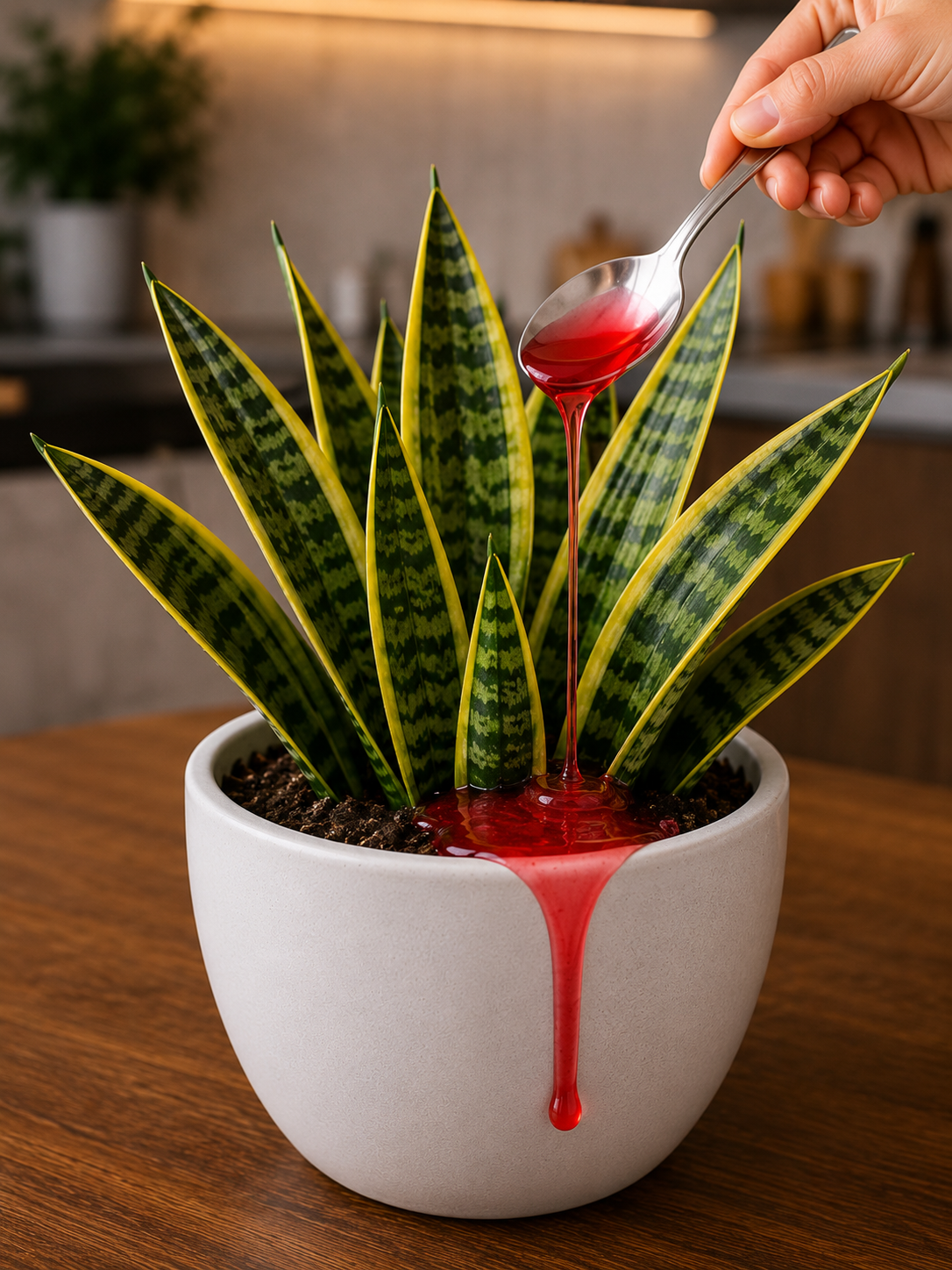
🟢Social media platforms are constantly overflowing with bizarre gardening trends, quick fixes, and viral “hacks” that promise to transform your indoor houseplants overnight. One of the latest viral images circulating across plant communities depicts someone pouring a thick, bright red syrup—resembling fruit syrup, Grenadine, or sugary liquid fertilizer—directly over a Snake Plant (Sansevieria trifasciata).
🟢While these dramatic visuals attract millions of views and engagement online, pouring sugary, sticky, or artificial liquids into your plant pots can cause catastrophic damage to your houseplant. In this comprehensive article, we will debunk the dangerous red syrup viral myth, explore what happens to soil when exposed to sugary substances, and provide safe, scientifically backed alternatives to make your snake plant flourish naturally! 🌿✨
What is the Viral “Red Syrup” Trend? 🧪
🟢The viral image shows a spoon dripping a thick, translucent red syrup onto the soil and leaves of a potted snake plant. On social media feeds, posts like these often claim that sweet syrups, fruit juices, or specialized red elixirs act as “magic boosters” to trigger rapid growth, produce vibrant leaf colors, or instantly revive dying plants.
🟢However, experienced botanists and horticulturists strongly warn against following these viral DIY hacks. Houseplants lack human-like digestive systems; they manufacture their own sugars through photosynthesis using sunlight, water, and carbon dioxide. Pouring processed sugar or artificial syrups directly into the soil disrupts the natural ecosystem of the plant’s roots.
Why Sugary Syrups Harm Snake Plant Soil & Roots ⚠️
🟢Applying liquid sugar, syrups, or unfermented fruit concentrates to houseplant soil sets off a chain reaction of harmful biological processes. Below is a breakdown of why this practice is dangerous for your snake plant:
- Attracts Pests & Insects: Sugar is a magnet for common indoor pests such as ants, fruit flies, and fungus gnats. Once attracted, these insects infest the soil and lay larvae that feed on young root hairs. 🐜
- Feeds Harmful Mold & Fungi: High sugar concentrations feed harmful soil bacteria and mold spores. The top layer of soil quickly develops thick white or green fungus that smothers the base of the plant. 🍄
- Triggers Root Rot (Osmotic Shock): Concentrated sugar syrup draws water out of the plant’s root cells through osmosis rather than allowing the roots to absorb water, drying out and damaging the root system. 💧
- Blocks Air & Oxygen Circulation: Thick, sticky liquids coat soil particles and drainage pathways, suffocating the roots and preventing essential oxygen exchange. 🌬️
Safe Natural Fertilizers vs. Viral Liquid Hacks 📊
Instead of risking your houseplants with viral internet hacks, choosing proper organic or balanced fertilizers ensures healthy, long-term growth. Here is a comparison of common liquid amendments versus proper snake plant fertilizers:
| Amendment / Fertilizer Type | Safety Level 🛡️ | Effect on Soil Health 🦠 | Root Rot Risk ⚠️ | Pest Attraction Rate 🐜 |
|---|---|---|---|---|
| Processed Sugar / Red Syrup 🍯 | Highly Dangerous ❌ | Promotes harmful bacterial & fungal blooms | Extremely High | Extremely High (Ants, Gnats) |
| Diluted Molasses Water (1 tsp/gal) 🟤 | Use with Caution ⚠️ | Feeds beneficial microbes in small amounts | Moderate if overused | High |
| Balanced Liquid Fertilizer (10-10-10) 🧪 | Safe & Recommended ✅ | Delivers exact required N-P-K minerals | Low (when diluted 50%) | None |
| Organic Worm Castings Tea 🪱 | Safe & Recommended ✅ | Introduces rich micro-nutrients & beneficial fungi | Very Low | None |
| Compost Tea Concentrate 🍂 | Safe & Recommended ✅ | Improves soil structure and nutrient absorption | Very Low | Minimal |
What to Do If You Applied Syrup to Your Plant 🚑
🟢If you or someone in your household tried this viral hack, prompt action is necessary to save the snake plant’s root system before rot sets in:
Step 1: Flush the Soil Thoroughly 🚿
🟢Take the potted snake plant to a sink or outdoor garden space. Gently flush the soil with lukewarm tap water for 5 to 10 minutes, allowing water to drain freely out of the bottom drainage holes to wash out soluble sugars.
Step 2: Repot in Fresh Soil 🪴
🟢If the syrup was thick or sticky, flushing alone may not remove it all. Carefully remove the plant from its pot, gently brush away the sugar-coated soil from the roots, and repot it in a fresh, well-draining succulent or cactus mix (50% potting soil, 25% perlite, 25% pumice or bark).
Step 3: Trim Damaged Roots ✂️
🟢Inspect the rhizomes and roots for mushy, dark brown, or foul-smelling sections. Use sterilized pruning shears to cut away rot before repotting in dry, clean soil.
Safe Ways to Boost Snake Plant Growth Naturally 🌟
🟢Snake plants are famously resilient and thrive best with simple, minimal care. Follow these proven horticultural tips to promote healthy growth and bright leaves naturally:
- Provide Bright, Indirect Sunlight: While snake plants survive low light, bright indirect light fuels natural sugar production through photosynthesis, boosting growth and leaf variegation. ☀️
- Follow the “Soak & Dry” Watering Method: Allow the soil to dry out 100% between waterings. Water deeply until liquid flows from the drainage holes, then empty the saucer. 💧
- Feed Twice a Year: Apply a balanced, water-soluble houseplant fertilizer diluted to half strength only during the spring and summer active growing seasons. 🌸
- Clean the Leaves Regularly: Dust buildup on long vertical leaves blocks sunlight absorption. Wipe leaves gently with a damp microfiber cloth once a month to keep them shining naturally. 🧽
Pro Tips for Identifying Reliable Plant Advice Online 💡
- Check the Source Credentials: Look for advice from certified horticulturists, university agricultural extensions, or established botanical gardens rather than anonymous short-form video channels. 📚
- Avoid “Instant Miracle” Claims: Healthy plant growth takes time and consistency. Any hack claiming overnight transformation using household food items should be treated with skepticism. 🔍
- Understand Plant Physiology: Plants need minerals (Nitrogen, Phosphorus, Potassium, Calcium, Magnesium) rather than human food sugars. Stick to products designed specifically for botanical nutrition. 🔬
Frequently Asked Questions (FAQ) ❓
Can plants process sugar syrup as food?
🟢No. Plants produce their own glucose internally through photosynthesis using sunlight, water, and carbon dioxide. External sugars applied to soil cannot be utilized directly by plant roots.
Why do some gardeners use molasses on plants?
🟢Unsulfured blackstrap molasses contains trace minerals like iron, calcium, and potassium. While some organic gardeners use tiny amounts (1 teaspoon per gallon of water) to feed beneficial soil microbes, overapplication still risks attracting insects and mold.
What is the best natural fertilizer for snake plants?
🟢Diluted worm casting tea, organic kelp meal extract, or a balanced 10-10-10 liquid fertilizer applied at half-strength during spring and summer are the safest and most effective choices.