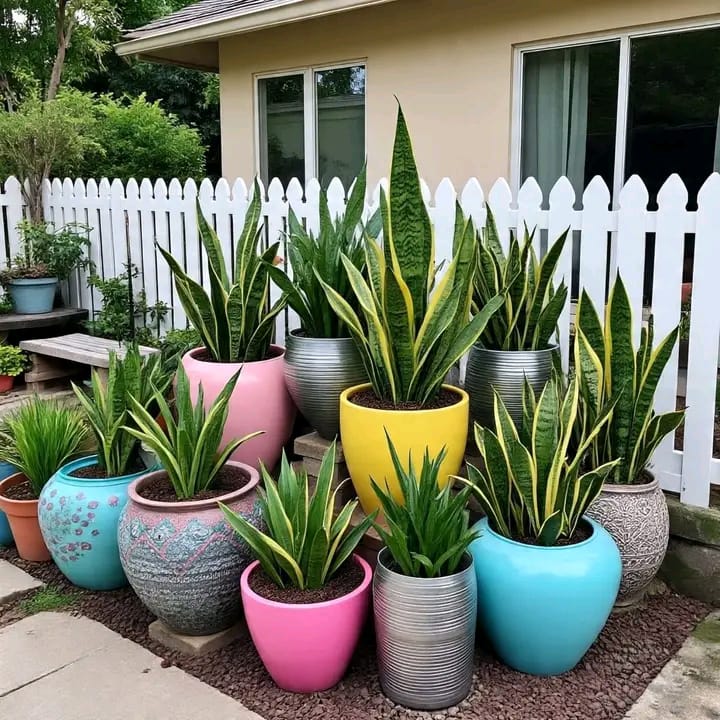
A white liquid poured into a snake plant’s pot can look like a special growth treatment—but its appearance does not reveal what it contains. Without a product label, ingredient list, or preparation method, it cannot be reliably identified.
It would be misleading to call it milk, rice water, or liquid fertilizer without that information. Before adding it to your snake plant, establish what the substance actually is and whether it is suitable for the intended use.
🔎 What Could the White Liquid Be?
Several different substances can have a white or cloudy appearance. The examples below are possibilities—not an identification of the liquid you have in mind.
| Possible substance | What it is | What to check |
|---|---|---|
| Milk or diluted milk | A dairy product mixed with varying amounts of water | Do not assume it is a suitable houseplant fertilizer |
| Rice-rinsing water | Water containing material released when rice is rinsed | Its appearance does not establish its nutrient content or suitability |
| A commercial plant product | A manufactured formulation with a specific purpose | Read the ingredients, dilution rate, and permitted uses |
| An unidentified mixture | A substance without a reliable label or recipe | Do not apply it until its contents are known |
For routine houseplant feeding, extension specialists recommend an appropriately labeled commercial fertilizer rather than improvised kitchen mixtures.[1]
🌱 If It Is Liquid Fertilizer, What Does It Do?
Fertilizer supplies nutrients. It does not replace light, correct poor drainage, or revive roots damaged by persistently wet soil.
Snake plants are light feeders and do not require frequent fertilization. Iowa State University Extension recommends an all-purpose fertilizer at half or quarter strength in spring to support healthy growth. The appropriate dilution still depends on the specific product and its instructions.[2]
Before Applying Fertilizer
- Confirm that the product is intended for houseplants.
- Check whether it is concentrated or ready to use.
- Read the recommended application rate.
- Account for fertilizer already included in the potting mix.
- Avoid repeated feeding simply because growth seems slow.
A white appearance is not evidence of a stronger, safer, or more effective fertilizer.
💧 The Main Concern: Too Much Moisture
Snake plants should be watered only after their potting mix has dried completely. Persistently wet conditions can cause root rot, followed by yellowing and collapsing leaves.[2]
Any liquid added to the pot—including a fertilizer solution—also adds moisture. Do not pour in an extra treatment without considering how wet the soil already is.
| Before adding liquid | What to check |
|---|---|
| Soil moisture | Has the potting mix dried completely? |
| Drainage holes | Can excess liquid escape? |
| Saucer or outer pot | Is water collecting around the growing pot? |
| Plant condition | Are leaves yellowing or collapsing while the soil stays wet? |
Frequent watering, containers without drainage holes, and standing water in outer pots can all create conditions that encourage root rot.[2]
☀️ Build a Better Care Routine First
Snake plants tolerate lower light but grow best in bright, indirect light. Use a well-draining potting mix, such as cactus mix or potting soil amended with perlite, and choose a container with drainage holes.[2][3]
| Care factor | Recommended starting point |
|---|---|
| Light | Bright, indirect light |
| Soil | A well-draining mix |
| Watering | Wait until the mix dries completely |
| Drainage | Allow excess water to escape fully |
| Feeding | Light, occasional feeding with a suitable product |
| Unknown white liquid | Identify it before use |
These fundamentals provide a more reliable starting point than an unexplained “growth booster.”[2]
📋 Can You Use the White Liquid?
The answer depends on its identity—not its color.
If it is a suitable commercial fertilizer, follow its label and adjust feeding to the plant’s needs. If it is a homemade mixture, do not assume that it offers balanced nutrition. If its ingredients are unknown, leave it out of the pot.
There is no responsible way to provide a recipe, dosage, or list of benefits for an unidentified liquid.
🌿 Choose Clear Ingredients Over Secret Remedies
Good snake plant care begins with knowing what you are adding and why. A labeled product gives you information to work with; an unexplained white liquid does not.
Start with suitable light, dry-down periods between waterings, and effective drainage. Add fertilizer only when appropriate—and never let a viral promise replace a clear ingredient list.
Explore our website for more practical houseplant guides and indoor gardening inspiration. Support our growing community by sharing this article with a fellow plant lover.