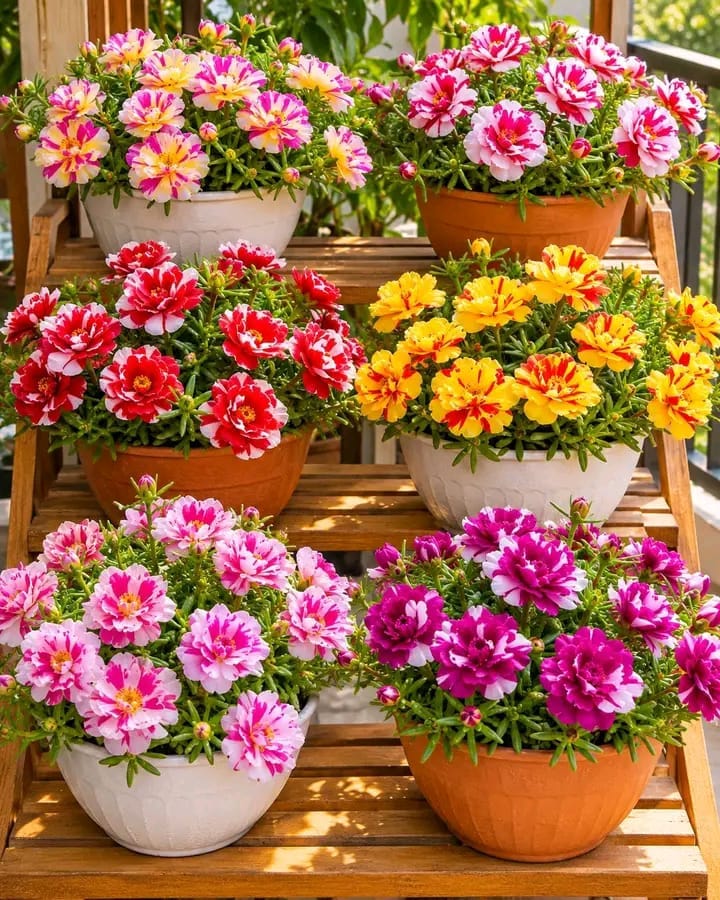
Portulaca bleu liquid
With its colorful flowers and low-growing habit, Portulaca grandiflora, commonly called moss rose, brings summer color to sunny pots, hanging baskets, and garden borders. It tolerates heat and drought, but suitable growing conditions still matter for a healthy, attractive display.[1][2]
If you are considering pouring a blue liquid into its pot, identify the product first. Color alone cannot tell you its ingredients, concentration, or purpose.
🔎 Identify the Liquid Before Using It
A blue liquid might be a prepared fertilizer, another gardening product, or an unrelated substance. Without its name and label, there is no reliable way to recommend a dose or predict its effects.
| What to check | Information you need |
|---|---|
| Product identity | The exact name and manufacturer |
| Intended use | Whether it is suitable for flowering plants such as Portulaca |
| Concentration | Whether it is ready to use or requires dilution |
| Application method | Whether it belongs on the soil or foliage |
| Application rate | The amount specified on the label |
| Repeat interval | When another application is appropriate |
Do not assume that blue coloring means “plant food.” Leave unidentified liquids out of your gardening routine until their contents and instructions are clear.
🌱 If the Blue Liquid Is Fertilizer
An appropriate water-soluble fertilizer can support Portulaca growth and flowering. Mississippi State University Extension describes using water-soluble fertilizer for flowering Portulaca, following the product label. That recommendation does not establish the suitability of an unidentified blue liquid.[3]
Before feeding:
- Check whether the potting mix already contains fertilizer.
- Confirm the correct dilution.
- Measure rather than estimating.
- Follow the application interval.
- Avoid combining several feeding products without accounting for their instructions.
The useful question is not “How blue should the water look?” It is “What concentration does this specific product require?”
☀️ Put Sunlight First
Portulaca needs full sun, generally at least six hours of direct sunlight daily. A suitable sunny position is a fundamental part of its care—not something fertilizer can replace.[1]
For moss rose, flowers may close overnight and during cloudy or rainy weather. Closed blooms do not automatically indicate a nutrient deficiency or a need for another treatment.[1]
| Observation | What to review |
|---|---|
| Limited flowering | Available direct sunlight and overall growing conditions |
| Flowers closed on a cloudy day | Normal responses to weather and light |
| Disappointing container growth | Light, moisture, drainage, and existing nutrition |
💧 Balance Watering with Drainage
Although Portulaca tolerates drought, adequate moisture can improve growth and flowering. Allow the growing medium to dry moderately between waterings rather than keeping it waterlogged.[2][3]
Any fertilizer solution also adds water to the pot. Account for that moisture instead of treating feeding and watering as completely separate activities.
A Practical Watering Routine
- Check the condition of the growing medium.
- Water when needed rather than following a rigid calendar.
- Let excess water escape through the drainage holes.
- Empty collected runoff from saucers or outer planters.
Good drainage matters: poorly drained soil can lead to crown rot in moss rose.[1]
🪴 Choose the Right Container and Growing Medium
Moss rose grows well in well-drained soil, including sandy or rocky conditions. It is suitable for containers, hanging planters, rock gardens, and sunny borders.[1][2]
| Growing factor | Recommended approach |
|---|---|
| Location | A sunny, open position |
| Soil or potting mix | Well-draining |
| Container | Drainage holes that allow excess water to escape |
| Watering | Adequate moisture without persistent saturation |
| Feeding | An identified, suitable product used as directed |
A decorative pot can enhance the display, but it should not trap water around the roots.
📋 Before You Pour: A Quick Checklist
Before applying any blue liquid to Portulaca, confirm:
- You know exactly what the product is.
- Its label permits the intended use.
- You understand whether dilution is required.
- You have measured the correct amount.
- The application fits the plant’s watering needs.
- You are not repeating a feeding earlier than directed.
If any of these details are missing, pause rather than guess.
🌿 Build Your Display on Good Growing Conditions
A colorful Portulaca display begins with sunshine, drainage, appropriate moisture, and adequate nutrition—not the color of a liquid. Identify every product before using it, and choose feeding practices that fit your growing conditions.[2][3]
Explore our website for more flowering-plant care guides and container gardening inspiration. Support our growing community by sharing this article with a fellow garden lover.