How to Make and Pour Homemade Compost Tea with Coffee Grounds and Banana Peels for Lush Houseplants
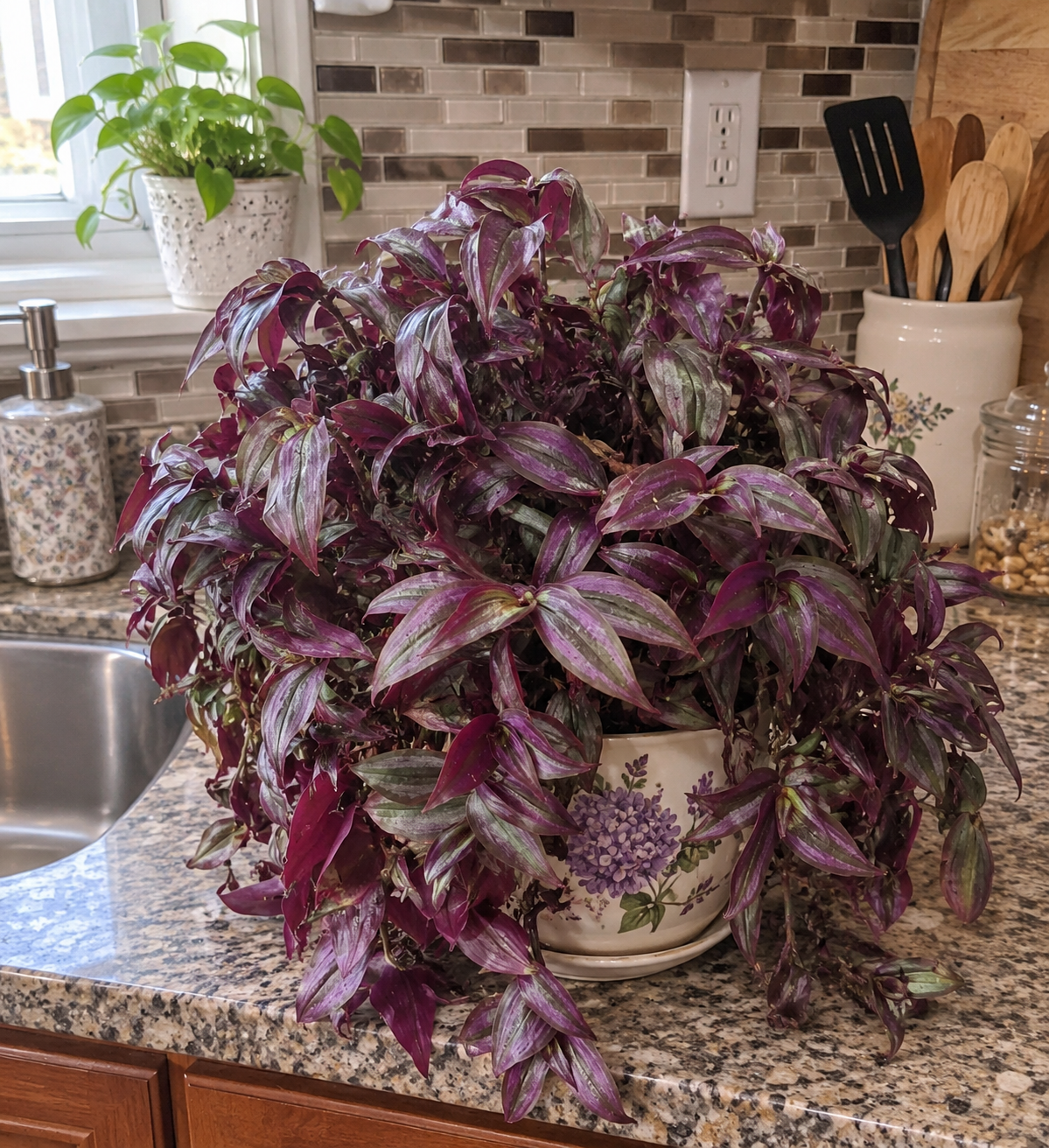
Keeping indoor plants—like the vibrant, trailing Tradescantia zebrina (Wandering Dude) shown in the pot—full, glossy, and deeply colored does not require expensive synthetic fertilizers. One of the easiest, most budget-friendly ways to nourish potted greenery is brewing a gentle, nutrient-rich compost tea using everyday kitchen scraps: used coffee grounds and banana peels.
When brewed and diluted properly, this homemade liquid tonic delivers essential minerals directly to the root zone without burning delicate foliage or upsetting indoor soil balance.
Why Coffee Grounds and Banana Peels Work Together
Instead of tossing morning scraps into the trash, combining coffee grounds and banana peels creates a well-rounded nutritional boost for potted plants:
- Used Coffee Grounds (Nitrogen & Trace Minerals): Once brewed, coffee grounds lose most of their acidity and retain slow-release nitrogen, magnesium, and small amounts of copper. Nitrogen encourages lush, full leaf production and helps keep variegated foliage—like purple and silver striped leaves—rich and vibrant.
- Banana Peels (Potassium & Phosphorus): Banana peels are packed with potassium, which strengthens plant stems, improves water regulation, and boosts overall plant resilience. They also provide phosphorus and calcium to support healthy root development.
- Beneficial Soil Microbes: Steeping organic matter in water encourages helpful microorganisms that break down nutrients so roots can absorb them quickly and efficiently.
Step-by-Step Recipe: Coffee & Banana Peel Compost Tea
Follow this simple soaking method to create a clean, odor-free liquid fertilizer safe for indoor containers.
What You Will Need
- 2 ripe banana peels (chopped into small 1-inch pieces to speed up nutrient release)
- 2 tablespoons of used, cooled coffee grounds (never use fresh, unbrewed grounds, as they are too acidic and high in caffeine)
- 1 quart (4 cups) of non-chlorinated water (rainwater, filtered water, or tap water left sitting out overnight)
- 1 large glass jar or plastic pitcher with a loose lid
- A fine-mesh strainer or cheesecloth
Brewing Instructions
- Combine the Ingredients: Place the chopped banana peels and used coffee grounds into the bottom of your glass jar.
- Add Water: Pour the quart of water over the scraps, leaving about an inch of space at the top. Stir well with a spoon.
- Steep for 48 to 72 Hours: Cover the jar loosely (so gases can escape) and set it in a cool, shaded spot out of direct sunlight. Give the mixture a quick stir once a day to keep oxygen circulating and prevent sour odors.
- Strain Thoroughly: After two to three days, the water will turn a rich, tea-like amber or light brown color. Pour the liquid through a fine-mesh strainer or cheesecloth into a clean watering can, discarding the solid scraps into your outdoor compost pile or trash. Never leave raw banana chunks or coffee grounds sitting on top of indoor potting soil, as they attract fungus gnats and mold.
How to Properly Pour Compost Tea on Your Houseplants
Even gentle organic tonics work best when applied correctly. Follow these steps when feeding dense, trailing plants like Tradescantia or pothos:
- Dilute Before Pouring: Mix your strained compost tea with plain water at a 1:1 ratio (one part compost tea to one part clean water). Dilution ensures the formula stays mild and prevents mineral buildup in small pots.
- Pre-Moisten Dry Soil: Never pour fertilizer onto bone-dry potting mix. If the soil is completely dry, water lightly with plain water first so tender roots do not absorb concentrated nutrients too rapidly.
- Pour Directly at the Soil Line: Lift trailing stems gently aside and pour the diluted tea slowly onto the soil around the base of the plant. Avoid splashing the liquid onto the leaves—especially on Tradescantia zebrina, whose foliage can develop water spots if moisture sits on the surface.
- Let Excess Drain Completely: Pour until a small amount of liquid trickles out of the bottom drainage holes into the saucer. Wait 15 minutes, then empty the saucer so the roots never sit in standing water.
Best Feeding Schedule & Pro Tips
- Frequency: Apply this diluted compost tea once every 3 to 4 weeks during spring and summer when plants are actively pushing out new growth. Cut back to once every 6 to 8 weeks during fall and winter when indoor growth naturally slows down.
- Use Immediately: Homemade compost tea is at its freshest right after straining. Avoid storing brewed liquid in sealed bottles for weeks, as stagnant organic water can ferment and smell unpleasant.
- Pair with Bright, Indirect Light: Nutrients only work as well as the light your plant receives. Keep colorful indoor plants near an east- or south-facing window filtered by a sheer curtain so they have the energy to turn those natural minerals into lush, vibrant growth.