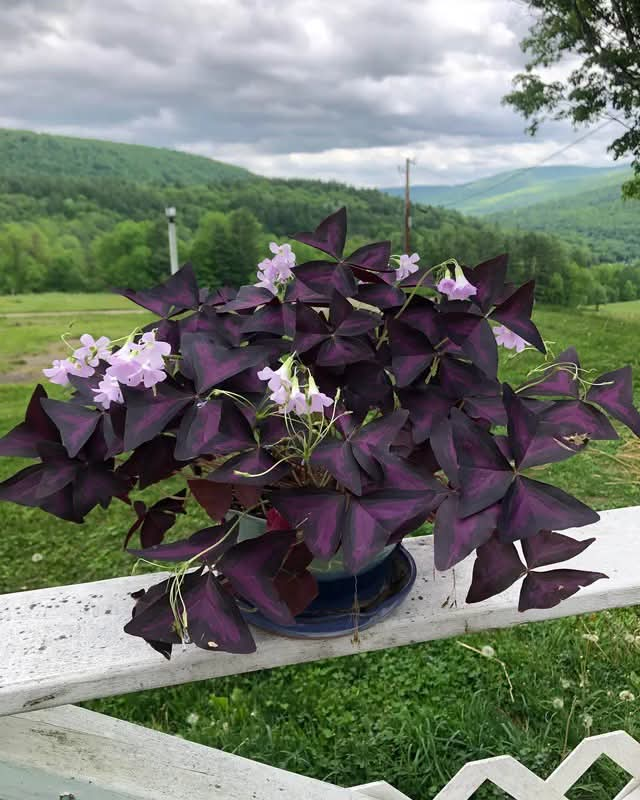
Purple Shamrock (Oxalis Triangularis):
There is something truly special about the Purple Shamrock, also known as Oxalis triangularis. With its deep purple, butterfly-shaped leaves and delicate pink or pale lavender flowers, this beautiful houseplant can turn an ordinary corner into a stunning display of natural color.
Whether you grow it on a sunny windowsill, decorate your porch with it, or keep it as part of your indoor plant collection, the Purple Shamrock has a charm that is difficult to ignore.
Its unusual leaves are what make it so recognizable. Each leaf consists of three triangular sections that open during the day and gently fold at night. This natural movement gives the plant a lively appearance and makes it especially interesting to observe.
Although it looks delicate, Purple Shamrock is relatively easy to grow when its basic needs are understood. With the right light, watering routine, soil, and occasional feeding, it can develop into a beautiful, full plant with plenty of attractive foliage and charming flowers.
If your Purple Shamrock is looking thin, producing fewer flowers, or losing some of its beautiful purple color, a few simple adjustments may help it grow more successfully.
Let’s explore how to care for this wonderful plant and encourage healthy growth.
1. Understanding the Purple Shamrock Plant
Purple Shamrock is a perennial plant that grows from underground structures called rhizomes.
Its botanical name is Oxalis triangularis, and it is native to South America.
Unlike many ordinary houseplants, its leaves respond noticeably to changes in light. They typically open when the plant receives light and fold down in the evening or during periods of darkness.
The most popular variety has rich purple foliage, sometimes with lighter pink or burgundy tones. Its small flowers grow on delicate stems above the leaves.
These flowers may appear in clusters and add a lovely contrast to the dark foliage.
One interesting feature is that the plant can experience a natural resting period. During dormancy, some or even most of its leaves may yellow and die back. This does not automatically mean the plant is dying.
With proper care and time, new growth can emerge from the underground rhizomes.
2. Provide Bright, Indirect Sunlight
Lighting plays a major role in maintaining the rich purple color and healthy growth of Oxalis triangularis.
The plant generally prefers bright, indirect sunlight.
An east-facing window is often a suitable location because it provides gentle morning sunlight. A bright south- or west-facing window may also work if the plant is protected from intense direct afternoon rays.
Insufficient light can cause several problems:
- Stems may become unusually long and weak.
- Leaves may lose some of their rich purple appearance.
- Growth may become sparse.
- Flower production may decrease.
If your plant is growing toward one side, gently rotate the pot every week or two to encourage more balanced growth.
During the hottest part of the year, protect the leaves from strong direct sunlight to reduce the risk of scorching.
A consistent lighting routine is usually more beneficial than frequently moving the plant between completely different environments.
3. Water Properly Without Overwatering
Watering is one of the most important parts of Purple Shamrock care.
Oxalis triangularis enjoys moderately moist soil during active growth, but it does not appreciate constantly wet conditions.
Before watering, check the top layer of the potting mixture. When the upper inch feels dry, water thoroughly until some moisture drains from the bottom of the pot.
Always empty the saucer afterward so that the roots and rhizomes are not left sitting in standing water.
Overwatering can create conditions that encourage root and rhizome rot.
On the other hand, allowing the soil to remain completely dry for extended periods during active growth may cause the leaves to droop and become stressed.
A simple watering routine should include:
- Check the soil before adding water.
- Water evenly around the soil surface.
- Allow excess water to drain freely.
- Empty the drainage saucer.
- Adjust watering frequency according to temperature and growth.
Remember that watering needs change with the seasons. Plants usually need less water when growth slows down.
4. Choose Light, Well-Draining Soil
Healthy roots and rhizomes need a growing medium that retains some moisture without becoming waterlogged.
A good-quality indoor potting mix can work well when combined with perlite to improve drainage and aeration.
A suitable mixture should:
- Hold enough moisture for active growth.
- Allow excess water to escape.
- Remain loose rather than becoming compacted.
- Provide enough air circulation around the roots.
Avoid using heavy garden soil in indoor pots because it may become too dense and retain excessive moisture.
Choose a container with drainage holes. A pot that is slightly larger than the root system is generally sufficient.
An oversized container can hold more moisture than the plant can use, increasing the risk of overwatering.
5. Use Organic Fertilizer Carefully
Purple Shamrock does not require heavy feeding to grow well.
During its active growing season, a balanced liquid fertilizer diluted according to the manufacturer’s instructions can help support healthy foliage and flower development.
You may also use a suitable organic fertilizer designed for potted plants.
However, moderation is important.
Too much fertilizer can cause excessive foliage growth, salt accumulation in the soil, and damage to delicate roots.
For best results:
- Feed only when the plant is actively growing.
- Use the recommended dilution.
- Avoid fertilizing dry or stressed plants.
- Reduce feeding when growth slows.
- Stop feeding during dormancy.
Organic compost can also be useful when incorporated appropriately into a suitable potting mixture, but it should not make the soil excessively dense.
There is no need to use strong homemade liquid mixtures to encourage flowering. Proper light, suitable moisture, and balanced nutrition are much more dependable.
6. Encourage Fuller Growth Through Regular Maintenance
A well-maintained Purple Shamrock can develop into a beautiful, rounded plant with plenty of purple foliage.
Remove yellow, dried, or damaged leaves using clean scissors.
You can also remove faded flower stems to keep the plant looking tidy.
Avoid cutting healthy leaves simply to make the plant appear smaller. Healthy foliage is important because it helps the plant produce energy.
If the plant becomes overcrowded, you can consider dividing the rhizomes during an appropriate repotting period.
Gently remove the plant from its container and inspect the underground rhizomes.
Separate healthy sections carefully, making sure each section has suitable growing points.
Plant the divisions in fresh, well-draining potting mix and water lightly.
This is an excellent way to propagate your Purple Shamrock and create additional plants for your home or garden collection.
7. Understand Its Natural Dormancy Period
One of the most misunderstood characteristics of Purple Shamrock is dormancy.
Sometimes, a previously healthy plant begins losing leaves, and its stems gradually dry up.
Many owners immediately assume that something is wrong.
However, Oxalis triangularis naturally experiences periods of reduced growth.
During dormancy, the plant may lose much of its above-ground foliage while its underground rhizomes remain alive.
When this happens:
- Reduce watering significantly.
- Avoid adding fertilizer.
- Keep the pot in a suitable location.
- Do not continuously disturb the rhizomes.
- Resume normal care gradually when fresh growth appears.
Dormancy may last several weeks, depending on growing conditions.
Patience is important. Do not assume that the plant has died simply because its leaves have disappeared.
8. Why Is Your Purple Shamrock Not Flowering?
Although Purple Shamrock is admired mainly for its attractive leaves, its delicate flowers are another wonderful feature.
If your plant produces plenty of foliage but very few flowers, consider the following possibilities.
Insufficient light: A plant receiving too little light may struggle to produce flowers.
Excessive watering: Constantly wet soil can stress the roots and interfere with healthy growth.
Nutrient imbalance: Too much fertilizer, particularly excessive nitrogen, may encourage foliage at the expense of flowering.
Natural dormancy: Your plant may simply be entering its resting period.
General stress: Sudden changes in temperature, lighting, or watering can affect its overall performance.
Correcting the growing conditions gradually is usually the best approach.
9. Common Pests and Problems
Like other indoor plants, Purple Shamrock can occasionally experience pest problems.
Keep an eye out for:
- Spider mites.
- Aphids.
- Whiteflies.
- Fungus gnats in consistently wet soil.
Inspect the undersides of leaves and the areas where stems meet.
If pests appear, isolate the affected plant and use an appropriate treatment labeled for indoor ornamental plants.
Good airflow, suitable watering, and regular inspections can help reduce common problems.
Yellow leaves can result from several causes, including natural dormancy, overwatering, insufficient light, or aging foliage. Always examine the overall growing conditions before deciding on a treatment.
10. Beautiful Ways to Display Purple Shamrock
One of the reasons this plant is so popular is its decorative appearance.
Its dark purple foliage looks wonderful in white, cream, blue, or terracotta pots.
You can display it:
- On a bright windowsill.
- On a covered porch.
- On a decorative plant stand.
- Alongside green foliage plants.
- In a colorful indoor plant arrangement.
Its delicate flowers and unusual leaves create an attractive contrast against almost any neutral background.
Just remember to protect the plant from harsh sunlight and extreme weather if you display it outdoors.
Final Thoughts: Enjoy the Beauty of Purple Shamrock
Purple Shamrock is a wonderful example of how a relatively simple houseplant can bring extraordinary character to a home.
Its butterfly-shaped purple leaves, delicate flowers, and natural daily movements make it a favorite among indoor gardening enthusiasts.
The secret to maintaining a healthy plant is not complicated. Provide bright indirect light, water when the soil needs it, use a well-draining potting mix, and feed moderately during active growth.
Most importantly, learn to recognize its natural resting period rather than treating every yellow leaf as a problem.
With patience and consistent care, Oxalis triangularis can reward you with a fuller appearance, attractive purple foliage, and charming little flowers season after season.
Sometimes, the most beautiful plants are the ones that simply receive the right care at the right time.