The Peace Lily Secret: ?

The Peace Lily, scientifically known as Spathiphyllum, is one of the most beloved indoor plants in American homes. With its elegant white flowers, deep green leaves, and graceful appearance, it brings a peaceful and refreshing touch to almost any room. Many plant lovers enjoy keeping this beautiful tropical plant near a bright window, where its foliage can receive gentle indirect sunlight.
However, even a healthy-looking Peace Lily sometimes needs a little extra attention to maintain its beauty. Leaves may become less vibrant, flowering may slow down, and new growth may appear less frequently. This often leads indoor gardeners to explore different feeding methods and simple ways to improve their plant-care routines.
One interesting method that catches the attention of houseplant enthusiasts is the use of small white fertilizer tablets. These tablets, when specifically formulated for houseplants, can provide nutrients that support normal plant growth and flowering.
But what do they actually do, and how should they be used?
1. Understanding What Your Peace Lily Needs
Before trying any feeding method, it is important to understand the natural needs of a Peace Lily.
Peace Lilies grow naturally in warm, humid environments, where they receive filtered light and consistent moisture. They are not plants that require constant fertilizing. In fact, giving them too much fertilizer can cause more problems than benefits.
For healthy growth, your Peace Lily generally needs:
- Bright, indirect sunlight.
- Well-draining potting soil.
- Consistent but moderate watering.
- A pot with drainage holes.
- Comfortable indoor temperatures.
- Occasional feeding during active growth.
When these basic conditions are maintained, the plant has a much better opportunity to produce healthy foliage and beautiful white flowers.
2. What Are the Small White Fertilizer Tablets?

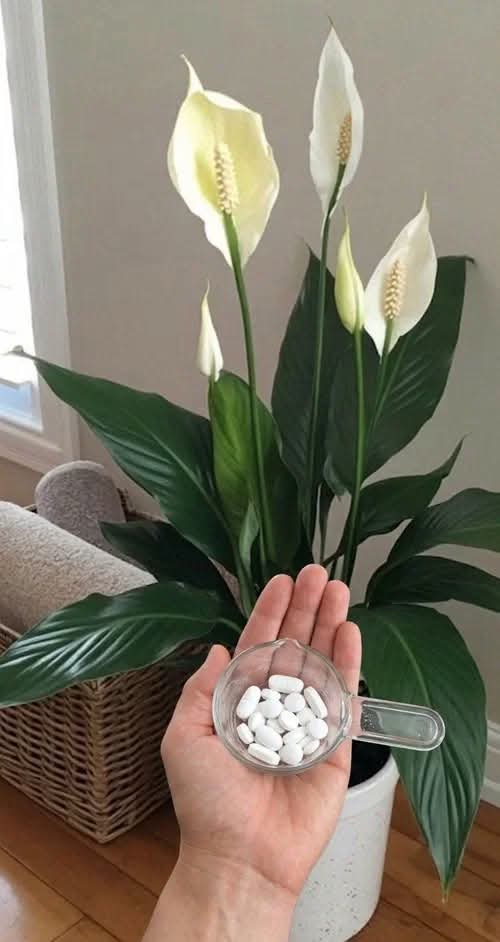
The small white tablets shown in the picture may resemble slow-release fertilizer tablets, although their exact composition cannot be identified from appearance alone.
Properly labeled houseplant fertilizer tablets may contain essential nutrients such as nitrogen, phosphorus, and potassium.
Each nutrient has a different role:
Nitrogen (N): Supports healthy green foliage and leaf development.
Phosphorus (P): Contributes to root development and several important plant processes.
Potassium (K): Helps support overall plant health and normal physiological functions.
Some fertilizer products also contain smaller quantities of nutrients such as magnesium, iron, and other trace elements.
The most important thing is to check the product label. Never use unidentified tablets or human medication as plant fertilizer. Different products have different ingredients and concentrations, and some may damage the roots.
3. How to Use Fertilizer Tablets Safely

If you have a fertilizer tablet specifically designed for indoor plants, follow the manufacturer’s instructions carefully.
Here is a simple approach:
- Check the recommended dosage for the size of your Peace Lily.
- Make sure the soil is not completely dry before applying fertilizer.
- Apply the tablet according to its instructions.
- Avoid placing concentrated fertilizer directly against the plant’s stem or roots.
- Water appropriately if the product directions recommend it.
- Monitor the plant for any signs of fertilizer stress.
Avoid adding extra tablets simply because you want faster results. Excessive fertilizer can cause salt buildup in the soil, brown leaf tips, and root damage.
4. Why Healthy Roots Matter More Than Extra Fertilizer

One of the biggest mistakes indoor gardeners make is focusing only on the leaves and flowers.
The roots are equally important.
A Peace Lily with healthy roots can absorb water and nutrients more effectively. However, roots that remain in constantly wet soil may become damaged.
To help maintain a healthy root system:
- Use a loose, well-draining potting mix.
- Choose a container with drainage holes.
- Empty excess water from the saucer.
- Avoid watering while the soil is still excessively wet.
- Check the roots if the plant develops persistent yellowing or wilting.
Remember that adding fertilizer cannot repair damaged roots or compensate for poor drainage.
5. The Importance of Proper Watering
Peace Lilies appreciate evenly moist soil, but they do not enjoy sitting in water.
A good watering routine begins with checking the top layer of soil. When the upper portion feels slightly dry, water thoroughly until excess moisture drains from the bottom.
Do not follow a rigid watering schedule without checking the soil. Indoor temperature, humidity, pot size, and lighting can all influence how quickly the soil dries.
Another useful tip is to use room-temperature water. This helps avoid exposing the roots to sudden temperature changes.
If the leaves begin drooping, check the soil before adding more water. Drooping can happen because of both underwatering and overwatering.
6. Give Your Peace Lily the Right Light

Light is another important factor in maintaining a beautiful Peace Lily.
Although this plant tolerates relatively low-light conditions, it generally grows better with bright, indirect light.
A location near a window with filtered sunlight can be an excellent choice.
Avoid placing the plant in strong direct afternoon sunlight, which may scorch its leaves.
If your Peace Lily produces plenty of green foliage but very few flowers, consider whether its lighting conditions are suitable. Insufficient light can limit flowering, even when the plant receives adequate water and nutrients.
Moving it gradually to a brighter location may help, provided the sunlight remains indirect.
7. How to Encourage More White Flowers

The elegant white flowers are one of the main reasons people love Peace Lilies.
However, flowering depends on several conditions working together. Fertilizer alone cannot guarantee more blooms.
For better flowering potential, focus on:
- Providing sufficient bright, indirect light.
- Maintaining healthy roots.
- Avoiding excessive watering.
- Feeding moderately during active growth.
- Keeping the plant away from cold drafts.
- Removing old flowers when they begin to fade.
A balanced indoor plant fertilizer used according to its label can help support healthy growth. Too much nitrogen, however, may encourage leafy growth without necessarily improving flowering.
Patience is important. Some Peace Lilies naturally flower more frequently than others, and flowering patterns can change with the seasons.
8. Common Mistakes to Avoid
Even experienced houseplant owners sometimes make mistakes when caring for their Peace Lilies.
Here are a few things to watch out for:
Using too much fertilizer: More nutrients do not automatically mean better growth.
Using unidentified tablets: Never assume that a white tablet is suitable for plants based on its appearance.
Keeping the soil constantly wet: Poor drainage can lead to root problems.
Ignoring lighting conditions: A dark corner may keep the plant alive but limit its flowering potential.
Applying fertilizer to stressed plants: A plant suffering from root damage or severe dehydration should be stabilized before receiving additional fertilizer.
Ignoring drainage: Decorative pots without drainage require special attention to prevent water from accumulating around the roots.
9. A Simple Peace Lily Care Routine
You do not need complicated treatments to maintain a beautiful indoor Peace Lily. A consistent routine is often more useful than experimenting with multiple homemade mixtures.
Try this simple approach:
Weekly: Check soil moisture, inspect the leaves, and look for signs of pests.
Every few weeks: Remove yellow or damaged leaves using clean scissors and wipe dusty foliage gently.
During active growth: Apply a suitable houseplant fertilizer according to its recommended frequency and dosage.
Throughout the year: Maintain bright, indirect light and good drainage.
Occasionally: Check whether the plant has outgrown its container or whether the potting mix needs refreshing.
Small, consistent care steps can make a meaningful difference over time.
Final Thoughts: A Little Attention Goes a Long Way
A beautiful Peace Lily is not the result of one magic ingredient or a handful of white tablets. It comes from understanding what the plant needs and providing the right balance of light, water, healthy soil, and nutrients.
Fertilizer tablets specifically formulated for houseplants can be a convenient feeding option when used correctly. However, they should always be applied according to their instructions, and unidentified tablets should never be used.
Whether your Peace Lily is already covered in elegant white flowers or you are patiently waiting for its next bloom, remember that healthy roots and good growing conditions are the foundation of successful indoor gardening.
Sometimes, the best gardening secret is simply knowing what your plant needs and giving it the right care at the right time. 🌿
SEO Keywords: Peace Lily care, Peace Lily fertilizer, white fertilizer tablets for plants, how to encourage Peace Lily flowers, indoor plant feeding, Peace Lily blooming tips, houseplant fertilizer guide, Peace Lily root health, indoor gardening tips, healthy Peace Lily leaves.