[Houseplant Care 🪴] [Snake Plant Revival 🌿] [Plant Rescue 🚑] [Natural Care 💧]
🟢Snake plants (Sansevieria trifasciata) are celebrated as some of the most resilient, beginner-friendly houseplants in the world. With their sleek, architectural leaves and remarkable ability to purify indoor air, they make a stunning addition to any home or office space. However, even these hardy succulents can run into trouble when their bright green and yellow variegated foliage begins turning pale, yellow, or soft and mushy.
🟢If you have noticed your snake plant losing its vibrant color, yellowing at the tips, or drooping unexpectedly, do not panic! Experienced gardeners and plant parents rely on a simple, highly effective liquid treatment solution to revive yellowing snake plants and restore lush, healthy growth. In this comprehensive, SEO-optimized guide, we will explore the root causes of yellowing leaves, the exact miracle liquid remedy to fix them, step-by-step restoration procedures, and crucial long-term care techniques to keep your plant thriving for years to come.
Why Is Your Snake Plant Turning Yellow? 🔍
[Troubleshooting 🩺] [Plant Health 🌿]
🟢Before applying any remedy, it is vital to diagnose why your snake plant’s leaves are turning yellow or losing their sharp, structural vibrancy. Here are the primary culprits behind yellowing foliage:
- Overwatering & Root Rot 💧: The single most common cause! Excessive moisture suffocates the root system, preventing the absorption of nutrients and causing the leaves to turn yellow, translucent, and soft.
- Severe Nutrient Deficiency 🌾: Over time, potting soil loses essential minerals like nitrogen, iron, and magnesium, leading to pale, yellowing leaves.
- Underwatering & Dehydration 🌵: While snake plants are drought-tolerant, prolonged neglect causes leaves to curl, dry out, turn light yellow, and lose their plump texture.
- Inappropriate Lighting ☀️: Too little light slows photosynthesis, while direct, harsh sunlight can burn delicate leaf tissue, causing bleached yellow or brown patches.
- Hard Water Mineral Buildup 🚰: Tap water containing high levels of chlorine, fluoride, or heavy salts can build up in the soil, stressing the roots and discoloring the leaves.
The Secret “Simple Solution” Experienced Plant Owners Use 🧪
[Miracle Liquid 💧] [Natural Fix 🌿] [Home Remedies 🏡]
When experienced plant owners spot yellowing foliage or nutrient shock, they use a mild Hydrogen Peroxide (3%) & Distilled Water Soil Flush combined with gentle organic nutrients to oxygenate the root zone and stop fungal rot in its tracks.
🧪 1. Hydrogen Peroxide (3%) Soil Oxygenator Solution
- Why It Works: Adding 3% hydrogen peroxide (H₂O₂) to distilled water releases an extra oxygen molecule directly into the root soil. This instantly kills anaerobic fungal bacteria responsible for root rot, aerates compacted soil, and stimulates healthy new root hair development.
- The Formula: Mix 1 tablespoon of 3% household Hydrogen Peroxide into 1 quart (4 cups) of distilled or filtered water.
🍌 2. Diluted Banana Peel Tea (Potassium & Magnesium Boost)
- Why It Works: Yellowing leaves often suffer from a lack of potassium and magnesium. Steeping banana peels releases these vital minerals, encouraging chlorophyll production and vibrant green variegation.
- The Formula: Steep 2 fresh banana peels in 1 quart of warm water for 48 hours. Strain out the liquid and dilute 1:1 with distilled water.
Step-by-Step Snake Plant Revival Guide 👩🌾
[Step-by-Step 📖] [Revival Process 🚑] [Soil Treatment 🪴]
Follow these fail-proof steps to treat yellowing foliage and restore healthy root health:
Step 1: Inspect the Soil & Root Health 🩺
- Gently feel the potting soil around the base of your snake plant.
- If the soil is soggy, waterlogged, or smells sour, inspect the base of the yellowing leaves. Trim away any completely mushy or decaying leaves using sanitized shears.
Step 2: Prepare the Cleansing Solution 🥣
- Fill a glass jug or measuring cup with 1 quart of lukewarm distilled or rain water.
- Add 1 tablespoon of 3% hydrogen peroxide. Stir gently to blend.
Step 3: Apply the Liquid Treatment 🚿
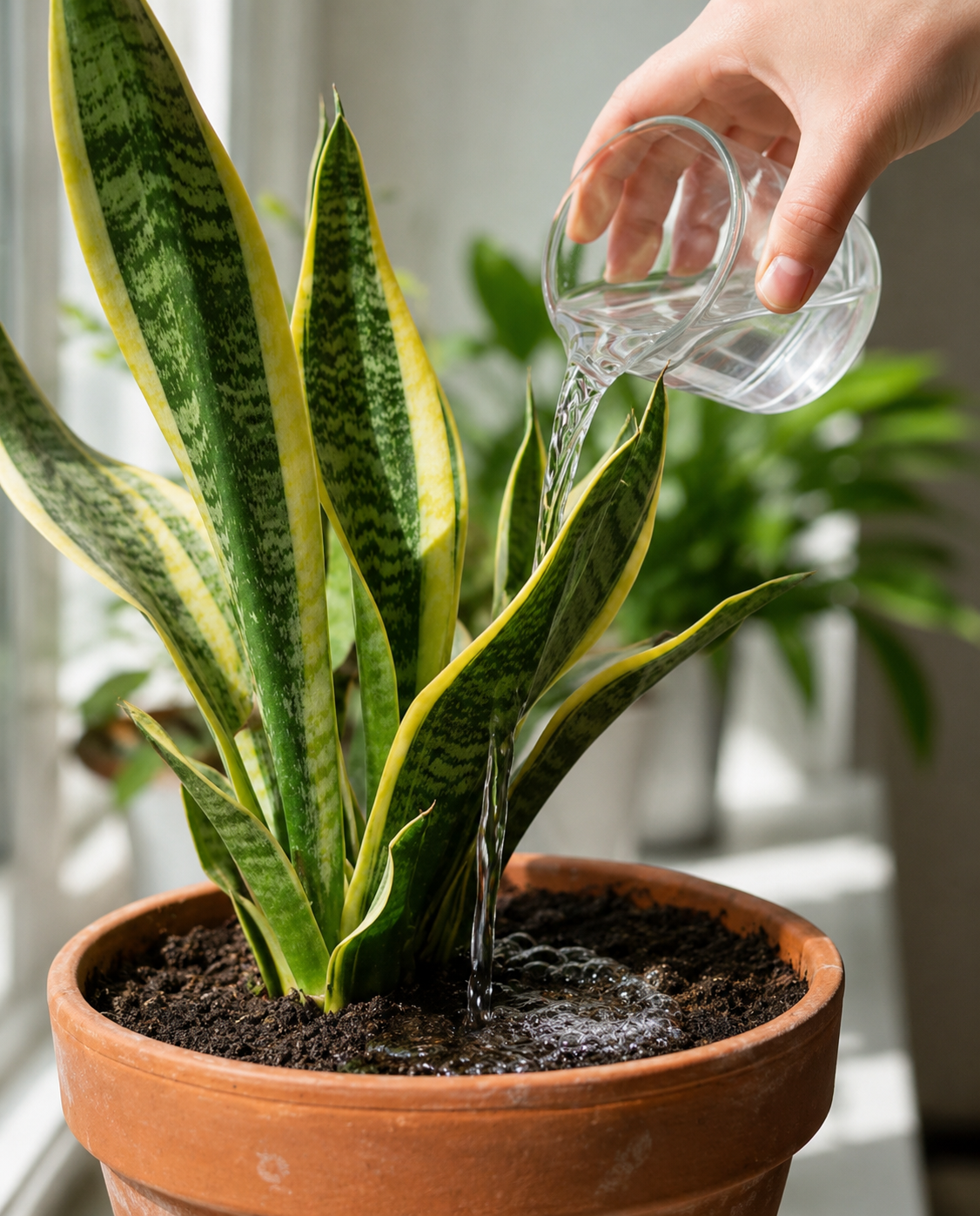
- Pour the prepared liquid solution slowly around the base of the plant directly onto the potting soil, avoiding pooling water inside the central leaf rosette.
- Allow the liquid to penetrate deep into the root zone until excess solution drains freely out of the bottom drainage holes of your terracotta pot.
- Empty the drainage saucer immediately—never leave your snake plant sitting in stagnant water!
Step 4: Allow the Soil to Dry Completely ☀️
- Move the plant to a well-ventilated spot with warm temperatures and bright, indirect sunlight.
- Hold off on all further watering until the top 2 to 3 inches of soil are completely bone-dry to the touch.
Complete Environmental Care Checklist 📊
[Care Requirements ☀️] [Healthy Growth 🪴]
Maintaining proper environmental conditions ensures your snake plant remains green, vibrant, and disease-free:
| Care Factor | Ideal Setting | What to Avoid |
|---|---|---|
| Light [Bright Indirect ☀️] | Bright, indirect sunlight near an east/south window. | Total darkness or intense, burning midday direct sun. |
| Watering [Drought Tolerant 💧] | Water only when soil is 100% dry (every 2–4 weeks). | Daily or weekly fixed watering schedules without checking soil. |
| Soil Mix [Well-Draining 🪵] | Cactus/succulent mix with perlite or coarse sand. | Heavy, moisture-retaining potting soil without drainage. |
| Pot Type [Terra Cotta 🧱] | Unglazed terracotta pots with bottom drainage. | Plastic or ceramic pots lacking drainage holes. |
Pro Tips for Preventing Future Yellowing 💡
[Pro Gardening 🧑🌾] [Kitchen Hacks 🪄]
- Always Use Drainage: Ensure your pot has at least one large drainage hole. Terracotta pots are superior because their porous walls allow soil moisture to evaporate naturally.
- Switch to Filtered or Distilled Water: If your tap water contains heavy minerals, let it sit uncovered for 24 hours to dissipate chlorine before watering your plants.
- Prune Damaged Leaves: Severely yellow or soft leaves will not turn green again. Prune them at the soil line with clean scissors to redirect the plant’s energy toward fresh, green shoots (pups).
Frequently Asked Questions (FAQs) ❓
Q: Will yellow snake plant leaves turn green again?
A: Slightly pale or dehydrated leaves can recover their green color once treated. However, fully yellowed, soft, or brown mushy leaves should be cleanly cut away.
Q: How often should I use the hydrogen peroxide flush?
A: Use the hydrogen peroxide solution only once or twice when treating root issues or overwatered soil. For regular maintenance, stick to plain distilled water and organic feeding during spring and summer.
Final Thoughts 🌟
[Happy Gardening 🪴] [Share The Guide 📲]
🟢Catching yellowing leaves early and applying this simple oxygenating liquid solution can easily save your favorite snake plant from root rot and nutrient loss. With proper light, breathable soil, and balanced watering, your plant will quickly regain its bold, upright structure and vibrant variegated patterns!
🟢Try this simple rescue method today, share your results, and enjoy watching your indoor garden thrive! Happy growing! 🌿✨