[Snake Plant Care 🪴] [Natural Fertilizer 🌾] [Bloom Secrets 🌸] [Houseplant Tips 💚]
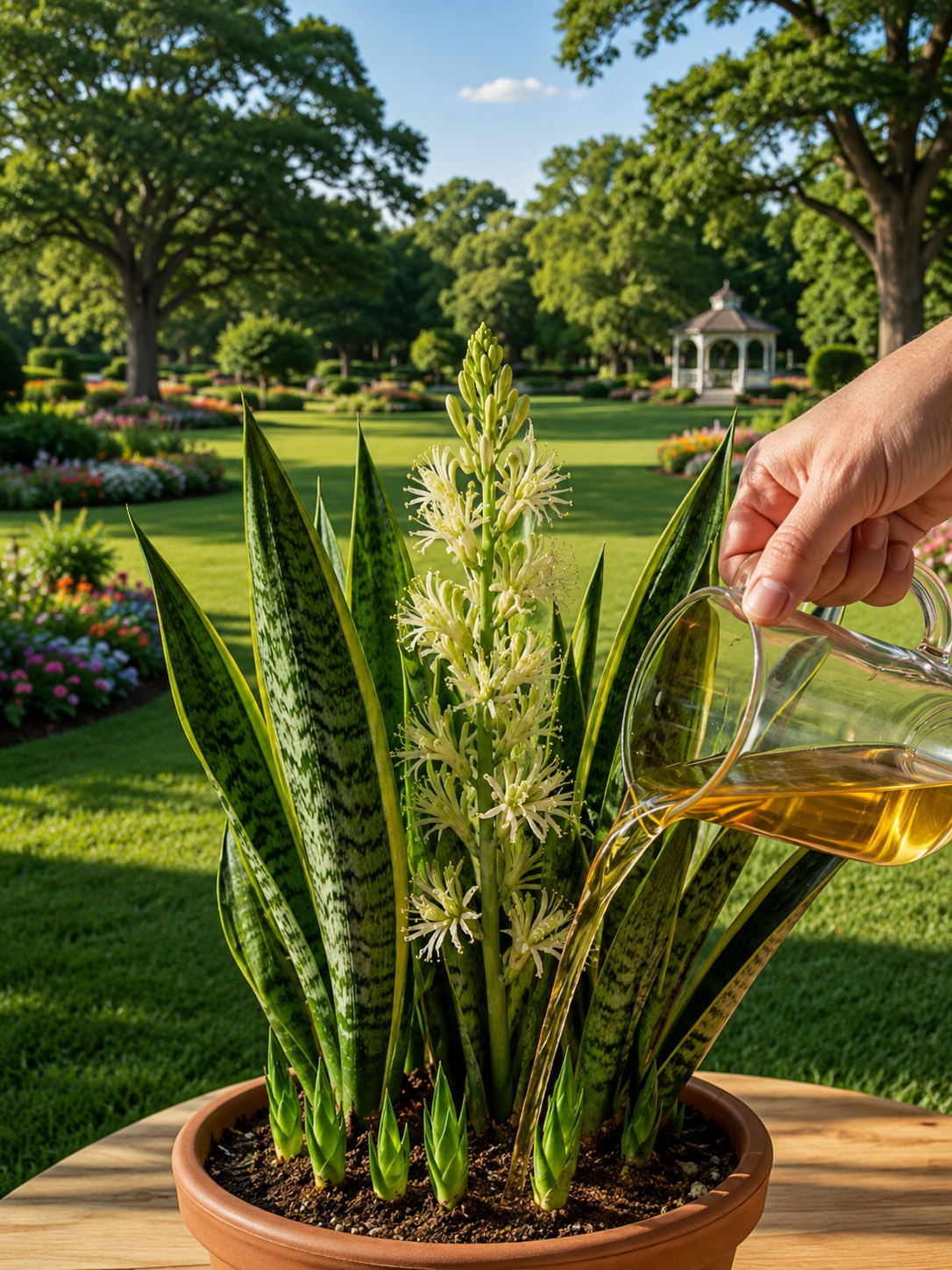
🟢Snake plants (Sansevieria trifasciata) are widely recognized as some of the most resilient, air-purifying indoor plants you can grow. Known for their striking vertical foliage and tolerance to low light, these hardy succulents can thrive for years with minimal intervention. However, many plant enthusiasts are surprised to learn that snake plants can actually bloom delicate, fragrant flower stalks and produce rapid new growth under the right conditions!
🟢If your snake plant’s leaves are rolling up, losing their vibrant green patterns, or stalling in growth, it is often a cry for nutrient enrichment and optimal care. In this complete guide, we will explore the natural “golden liquid” organic fertilizing methods, key indoor plant remedies, and step-by-step techniques to keep your snake plant healthy, vibrant, and thriving.
Why Your Snake Plant Needs Natural Fertilizer 🌿
[Nutrient Boost ⚡] [Vibrant Green Leaves 🍃] [Strong Roots 🪵]
🟢While snake plants require very little water and fertilizer compared to tropical foliage plants, soil nutrients degrade over time. Feeding your snake plant with organic, liquid nutrients offers several essential benefits:
- Restores Leaf Color & Structure: Fixes yellowing, pale patches, or curling leaves caused by severe nutrient deficiencies.
- Encourages Rare Flowering: Nutrient-balanced soil creates the ideal conditions for snake plants to send up tall, fragrant white flower spikes.
- Promotes New Shoots (Pups): Boosts root vigor, triggering fresh green shoots to sprout around the base of the main plant.
- Prevents Root Shock: Natural liquid fertilizers deliver micro-nutrients gently without burning sensitive roots like synthetic products can.
Natural “Golden Liquid” Fertilizer Options 🌾
[Organic Gardening 🧑🌾] [Homemade Fertilizer 🥛] [Eco-Friendly 🌎]
🟢You don’t need expensive chemical fertilizers to revive your plants. Here are three effective, natural liquid fertilizers often called liquid gold by indoor gardeners:
🌾 1. Liquid Kelp & Seaweed Extract
- Why It Works: Naturally rich in potassium, nitrogen, trace minerals, and growth hormones.
- How to Prepare: Mix 1/2 teaspoon of liquid kelp concentrate into 1 quart of room-temperature water.
- Appearance: A rich, amber-golden liquid solution ideal for monthly watering.
🍌 2. Banana Peel Water (Potassium Boost)
- Why It Works: Banana peels release potassium, phosphorus, and calcium into water, encouraging root strength and potential flower blooms.
- How to Prepare: Steep 2 fresh banana peels in a jar of water for 48 hours. Strain out the peels and dilute the golden liquid 1:1 with fresh water.
🍵 3. Weak Compost Tea or Worm Casting Extract
- Why It Works: Delivers beneficial soil microbes and balanced nitrogen to strengthen upright sword-like leaves.
- How to Prepare: Steep 1 cup of organic compost or worm castings in a mesh bag inside 1 gallon of water for 24 hours until golden-brown.
Step-by-Step Liquid Fertilizing Guide 👩🌾
[Step-by-Step 📖] [Watering Method 💧] [Healthy Plants 🪴]
Follow these simple steps to safely feed your snake plant without overwatering or nutrient burn:
Step 1: Check the Soil Moisture 🪴
- Always test the soil before applying liquid fertilizer.
- Insert your finger 2 inches into the pot. If the soil is completely dry, your snake plant is ready for watering and feeding.
Step 2: Prepare the Golden Liquid Solution 💧
- Mix your chosen natural liquid fertilizer (kelp extract, compost tea, or banana peel liquid) with lukewarm water.
- Ensure the solution is diluted to half-strength to avoid salt buildup in pot soil.
Step 3: Apply Around the Base 🚿
- Gently pour the golden fertilizer liquid around the base of the plant, avoiding pooling liquid directly inside the central leaf rosette.
- Allow the excess liquid to drain thoroughly out of the bottom drainage holes. Never let the pot sit in standing water.
Step 4: Maintenance Frequency 🗓️
- Apply natural liquid fertilizer only during the active growing season (Spring and Summer).
- Feed once every 4 to 6 weeks. Reduce watering and stop fertilizing entirely during late autumn and winter months when the plant is dormant.
Why Are Snake Plant Leaves Rolling Up or Fading? ❓
[Troubleshooting 🔍] [Plant Health 🩺]
If you notice your snake plant leaves curling, rolling, or losing color, check these common causes:
- Underwatering & Low Humidity: When dehydrated, the leaves roll inward to conserve moisture. Give the plant a thorough soak.
- Overwatering & Root Rot: Yellowing, soft, or mushy leaves indicate soggy soil. Let the soil dry completely between waterings.
- Insufficient Light: While snake plants tolerate low light, vibrant color patterns and dark green bands require bright, indirect sunlight.
- Nutrient Depletion: Pale or dull foliage often means the potting soil has run out of essential minerals and needs a gentle feeding.
Essential Care Requirements for Snake Plants ☀️
[Lighting ☀️] [Soil Choice 🪴] [Watering Rules 💧]
To keep your snake plant thriving alongside regular feedings, maintain these ideal environmental conditions:
| Care Aspect | Ideal Condition |
|---|---|
| Light [Bright Indirect ☀️] | Bright, indirect sunlight (tolerates low light). |
| Watering [Drought Tolerant 💧] | Water only when soil is 100% dry (every 2-3 weeks). |
| Soil Mix [Well-Draining 🪵] | Well-draining cactus or succulent potting soil. |
| Temperature [Warm Climate 🌡️] | 65°F – 85°F (18°C – 29°C); keep away from cold drafts. |
| Pot Type [Terra Cotta 🧱] | Breathable terracotta pots with drainage holes. |
Pro Tips for Triggering Snake Plant Blooms 🌸
[Blooms & Flowers 🌸] [Indoor Gardening 🏡]
- Provide Bright Indirect Light: Move your plant near an east-facing window to receive gentle morning sun.
- Slight Root-Bound Conditions: Snake plants are more likely to send up flower stalks when their roots are comfortably tight in the pot.
- Maintain Seasonal Resting Periods: Reduce watering during winter to simulate its natural environment.
Storage & Fertilizer Safety Tips 💡
[Safety First ⚠️] [Keep Fresh 🌿]
- Store Concentrates Safely: Keep organic liquid fertilizers sealed in a cool, dark place away from direct sunlight.
- Avoid Over-Fertilizing: More is not better! Excessive fertilizer causes leaf tips to turn brown and burn.
- Flush Soil Yearly: Once a year, flush the potting soil thoroughly with plain water to remove any accumulated mineral salts.
Frequently Asked Questions (FAQs) ❓
Q: Can a snake plant grow in water without soil?
A: Yes, snake plant cuttings can root in clear water for propagation, but long-term healthy growth and blooming require nutrient-dense soil.
Q: How long does a snake plant flower last?
A: Snake plant flower spikes usually bloom for 2 to 3 weeks, producing a sweet, honey-like fragrance, especially in the evening!
Final Thoughts 🌟
[Happy Gardening 🪴] [Share The Guide 📲]
🟢With proper light, minimal watering, and a monthly feed of natural “golden liquid” fertilizer, your snake plant will reward you with rich green foliage, healthy new shoots, and perhaps even fragrant blooms!
🟢Give this natural fertilizing method a try this spring or summer, and enjoy watching your houseplant thrive! Happy growing! 🌿✨