Can Pouring White Milk Liquid Help This Plant Grow Fuller? The Truth About Milk, Succulent Care, and Healthy New Growth
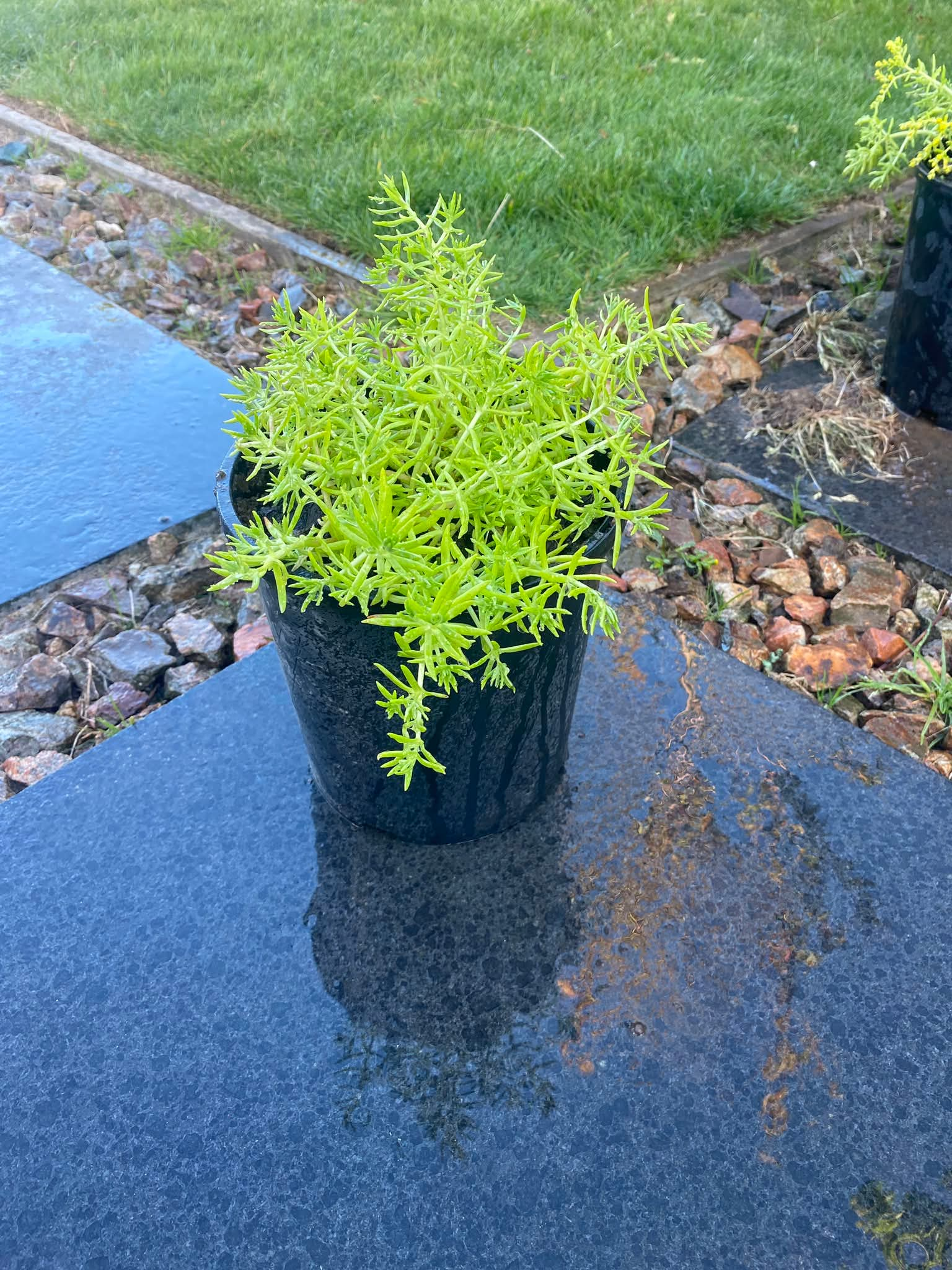
A healthy plant with bright green foliage can bring a beautiful, fresh look to any garden. The plant in the picture has delicate, narrow leaves and a naturally spreading growth habit, making it an attractive choice for outdoor containers, rock gardens, and decorative arrangements.
But what happens when someone pours a white, milk-like liquid around its base? Many gardeners are curious about homemade plant treatments and natural ingredients that might encourage stronger roots, greener foliage, and fuller growth. Milk is one of the household ingredients often discussed in gardening communities.
Before trying this method, however, it is important to understand what milk actually does in soil, whether it is suitable for this type of plant, and which care practices are more reliable for maintaining healthy growth.
1. Understanding the Plant in the Picture
The plant shown has fine, needle-like foliage and a dense, spreading appearance. It resembles certain ornamental succulents and ground-cover plants, although an exact identification would require a closer look at its leaves and growth pattern.
Plants with this appearance are often appreciated for their bright foliage, compact shape, and ability to fill containers or garden spaces. Depending on the exact species, they may prefer plenty of light, well-draining soil, and careful watering.
One of the most important things to remember is that not every plant needs the same care routine. A treatment that works for one plant may cause problems for another. That is especially important when experimenting with homemade liquids.
2. What Is the White Milk-Like Liquid?
Milk is sometimes promoted online as a natural gardening ingredient. It contains water, proteins, sugars, fats, and small amounts of minerals such as calcium and potassium.
Because plants need minerals to grow, some people assume that pouring milk directly into the soil will provide extra nutrition. However, the presence of nutrients in a household ingredient does not automatically make it a suitable plant fertilizer.
Plants absorb most of their essential nutrients through their roots in specific chemical forms. The nutrient content of milk is not balanced for plant requirements, and it does not replace a properly formulated fertilizer.
For that reason, ordinary milk should not be considered a reliable way to feed this plant.
3. What Can Happen If You Pour Milk Into the Soil?
Pouring milk into a plant pot may seem harmless, especially when only a small amount is used. However, repeated applications can create unwanted conditions.
Unpleasant odors: As milk breaks down, organic matter can produce unpleasant smells, particularly in warm, damp soil.
Mold and microbial growth: Milk residues may encourage the growth of microorganisms on the soil surface. This can create an unsuitable environment around the plant’s base.
Pest attraction: Sugary and organic residues may attract insects and other unwanted visitors.
Soil imbalance: Repeatedly adding milk can change the conditions in the potting mix without providing the balanced nutrition the plant needs.
Root problems: If milk is added frequently to already wet soil, it can contribute to an unhealthy growing environment. Roots need both moisture and oxygen, and poorly drained soil can increase the risk of root damage.
The safest approach is to avoid using ordinary milk as a regular soil treatment.
4. Why Healthy Roots Matter More Than Homemade Tricks
Strong roots are the foundation of healthy foliage. When roots have enough oxygen, appropriate moisture, and access to essential nutrients, they can support steady growth.
For a compact ornamental plant like the one pictured, the goal should be to maintain a healthy root system rather than repeatedly adding untested liquids.
Start by checking the drainage holes in the container. Excess water must be able to escape freely. A pot without proper drainage can hold too much moisture, especially when the plant is grown outdoors and exposed to rain.
Choose a suitable growing medium that drains well. If the plant is confirmed to be a succulent, use a mix designed for succulents and cacti rather than heavy garden soil.
Healthy roots also depend on the right watering routine. Water thoroughly when the plant’s needs indicate that it is time, then allow excess water to drain away. Avoid keeping the soil constantly saturated.
5. The Best Way to Water This Plant
Watering is one of the most important parts of container gardening, but there is no universal schedule that works for every plant.
Before watering, check the soil rather than relying only on the appearance of the leaves. The correct frequency depends on the plant species, pot size, soil mixture, temperature, sunlight, wind, and season.
If this is a succulent, allow the growing medium to dry appropriately between waterings. Succulents generally store water in their leaves or stems, so they can be more sensitive to constantly wet soil than many ordinary garden plants.
When watering:
- Check the moisture level of the soil.
- Water the growing medium rather than repeatedly soaking the foliage.
- Allow excess water to escape through the drainage holes.
- Empty any saucer holding standing water.
- Adjust the frequency during cooler weather or periods of slower growth.
The objective is to provide enough water without leaving the roots in soggy conditions.
6. Choose the Right Soil for Fuller Growth
A beautiful, full-looking plant begins with a suitable growing medium. Soil that stays wet for too long can restrict oxygen around the roots, while soil that drains too quickly may require more frequent watering.
The ideal mixture depends on the plant’s exact identity.
For a confirmed succulent, a loose, porous mix containing suitable potting material and mineral components such as perlite or pumice can improve drainage and airflow. Avoid compacting the mixture too tightly around the roots.
For other ornamental plants with similar-looking foliage, follow the requirements of the identified species. Do not assume that every fine-leaved plant is a succulent.
A well-chosen growing medium supports healthy roots and makes watering much easier to manage.
7. How Much Sunlight Does It Need?
Light plays a major role in the color, shape, and density of ornamental foliage.
Some bright-green ground-cover plants grow best in full sunlight, while others appreciate partial shade during the hottest part of the day. The exact requirement depends on the species.
If a plant receives too little light, its growth may become stretched or less compact. If it receives intense sunlight suddenly after growing in shade, its foliage may become stressed or scorched.
A gradual adjustment is usually safer than moving a plant directly from a sheltered location into strong afternoon sunlight.
Observe the foliage regularly. Healthy growth, stable color, and compact development can help indicate whether the lighting conditions are suitable.
8. Should You Use Fertilizer?
Plants need essential nutrients, but more fertilizer does not necessarily mean better growth.
If the plant is actively growing and requires additional nutrition, use a suitable commercial fertilizer according to the product label and the plant’s species. For a confirmed succulent, choose a fertilizer formulated for succulents or use an appropriate balanced fertilizer at the recommended dilution.
Avoid applying concentrated fertilizer to dry roots or using several homemade treatments at the same time.
Overfertilizing can damage roots and may encourage weak, excessive growth. A consistent, moderate approach is usually better than frequent applications of untested mixtures.
Remember that fertilizer cannot correct problems caused by poor drainage, insufficient light, or overwatering.
9. Simple Pruning Tips for a Fuller Appearance
Pruning can help some spreading ornamental plants maintain a compact and attractive shape.
Remove dead, damaged, or unhealthy growth using clean gardening scissors. If the plant has become uneven, light trimming may help encourage a more balanced appearance, depending on the species.
Do not remove large amounts of healthy foliage at once. Heavy pruning can stress a plant, particularly during very hot or cold weather.
If you want to propagate the plant, first identify the species and check whether it can be propagated successfully from stem cuttings or divisions. Different plants require different methods.
10. Common Mistakes That Can Damage Container Plants
Even experienced gardeners sometimes make small mistakes that affect plant health. Avoid these common problems:
- Overwatering: Constantly wet soil can deprive roots of oxygen.
- Poor drainage: Water trapped inside a container can contribute to root damage.
- Too much fertilizer: Excess nutrients can harm roots and foliage.
- Untested homemade mixtures: Milk, sugar water, and other kitchen ingredients are not substitutes for proper plant nutrition.
- Sudden sunlight changes: Moving a plant directly into intense sunlight can cause stress.
- Ignoring pests: Check the stems, leaves, and soil regularly for signs of insects or disease.
- Using the wrong soil: A dense mixture may retain more water than the plant can tolerate.
Small improvements in everyday care often make a greater difference than complicated homemade recipes.
11. What Should You Do If You Have Already Poured Milk Into the Pot?
If you have already added a small amount of milk, do not panic. A single application does not automatically mean the plant will be damaged.
Stop adding more milk and inspect the soil. If there is a noticeable residue, unpleasant smell, or mold developing on the surface, remove the affected material carefully.
If the container has excellent drainage and the growing medium is not waterlogged, allow it to return to the appropriate moisture level before watering again.
For a significant amount of milk or repeated applications, replacing the affected growing medium may be a better option, depending on the condition of the roots and the plant.
Avoid adding another homemade mixture in an attempt to neutralize the milk. The priority is to restore healthy soil conditions.
12. A Simple Routine for Maintaining Healthy Green Foliage
A good plant-care routine does not need to be complicated. Consistency is more important than constantly changing treatments.
Weekly: Inspect the foliage, check for pests, and assess soil moisture.
When needed: Water according to the plant’s species and growing conditions. Never follow a fixed schedule without checking the soil.
During active growth: Monitor the plant for signs that it needs nutrients. Use an appropriate fertilizer only when necessary.
Throughout the growing season: Remove dead growth, maintain good drainage, and provide suitable light.
During seasonal changes: Adjust watering and protection according to temperature and the plant’s natural growth cycle.
By following a routine based on the plant’s actual needs, you can help maintain attractive foliage and encourage healthy development over time.
Final Thoughts: Healthy Plant Growth Starts With the Right Care
Pouring a white, milk-like liquid around a plant may look like an interesting gardening experiment, but ordinary milk is not a proven, balanced fertilizer for container plants. Repeated applications can create odors, encourage unwanted microbial growth, attract pests, and interfere with healthy soil conditions.
For the bright-green plant shown in the picture, the best starting point is to identify the exact species, provide suitable light, use well-draining soil, water appropriately, and choose fertilizer only when the plant needs it.
Sometimes the most effective gardening secret is not an unusual kitchen ingredient. It is understanding what your plant needs and giving it the right conditions to grow.
Healthy roots, suitable soil, proper watering, and the right amount of light are the foundation of a beautiful, thriving plant. 🌿