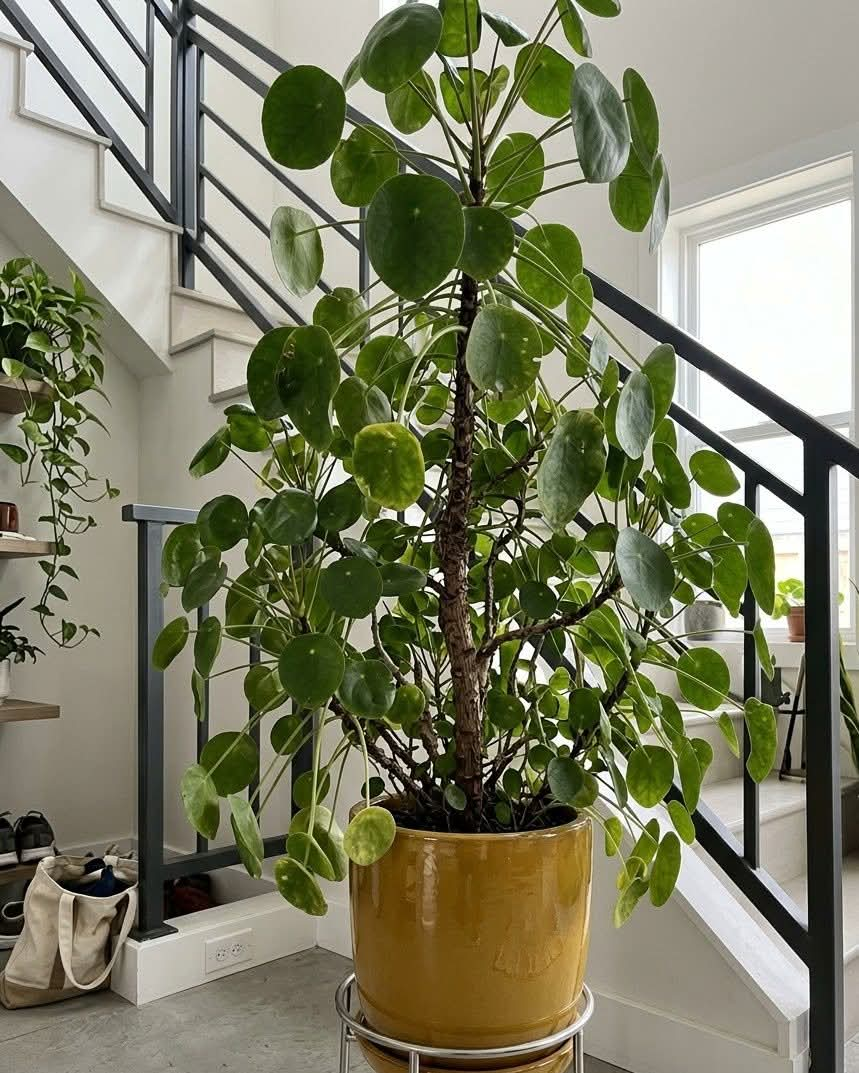
Honey and Compost Tea for Chinese Money Plants: A Natural Gardening Method for Healthier Soil and Stronger Growth
The Chinese Money Plant, scientifically known as Pilea peperomioides, is one of the most charming and recognizable indoor plants. Its beautiful round leaves, elegant upright stems, and fresh green appearance make it a favorite among houseplant lovers. Whether displayed in a bright living room, beside a staircase, or near a sunny window, this plant can bring a wonderful natural touch to almost any indoor space.
Many plant owners dream of seeing their Chinese Money Plant grow taller, produce more healthy leaves, develop strong stems, and maintain its beautiful green appearance throughout the year. However, achieving consistent growth requires more than simply watering the plant whenever the soil looks dry. Healthy roots, suitable light, good drainage, and balanced nutrition all play important roles.
One gardening idea that attracts attention is using compost tea as part of a soil-care routine, sometimes combined with a small amount of honey. This combination is often discussed by gardening enthusiasts who enjoy experimenting with homemade plant-care methods. But what does compost tea actually do? Is honey beneficial for indoor plants? And how can you care for a Chinese Money Plant to encourage healthy, attractive growth?
Let’s explore the method, its potential benefits, its limitations, and the most important care practices for keeping your plant looking its best.
1. Understanding the Chinese Money Plant
Before experimenting with any gardening method, it is important to understand the plant itself.
The Chinese Money Plant is native to parts of southern China. It is easily recognized by its distinctive round, coin-shaped leaves that grow on long, slender leaf stems. Its unusual appearance makes it a popular decorative houseplant, especially in modern homes.
Under suitable conditions, a Chinese Money Plant can produce new leaves from its central growing point and develop small baby plants, often called offsets or pups, around the base of the mother plant.
A healthy specimen typically has:
- Firm, upright stems.
- Round, green leaves with a fresh appearance.
- New leaves emerging from the center.
- Healthy roots without unpleasant odors.
- A growing medium that drains properly.
- A balanced shape with leaves distributed around the plant.
If your plant has become leggy, stopped producing new leaves, or developed yellowing foliage, it may be responding to environmental conditions rather than lacking a homemade fertilizer.
Understanding these basic needs is the first step toward better plant care.
2. What Is Compost Tea?
Compost tea is a liquid prepared by steeping mature compost in water. Depending on the preparation method and the quality of the compost, the resulting liquid may contain soluble nutrients and microorganisms.
Some gardeners use compost tea as an optional addition to their soil-care routine. They believe it can help introduce organic compounds and microbial life into the growing medium.
However, compost tea is not a standardized fertilizer. Its nutrient content varies considerably depending on the materials used, preparation conditions, water quality, and storage.
This means that two batches of compost tea may have very different properties.
For indoor plants such as Pilea peperomioides, it is especially important to avoid excessive moisture and poorly prepared mixtures. The roots need oxygen as well as water, and constantly wet soil can create conditions that encourage root problems.
A healthy plant-care routine should always begin with good soil, appropriate watering, and suitable lighting.
3. Why Do Gardeners Experiment With Honey and Compost Tea?
Honey is sometimes included in homemade gardening recipes because it contains natural sugars. Some gardening enthusiasts experiment with adding small amounts to water-based plant mixtures.
The idea is that sugars may provide an energy source for certain microorganisms. However, this does not mean honey is a proven plant fertilizer or that it directly makes roots stronger, leaves larger, or stems taller.
Plants produce their own sugars through photosynthesis. Adding honey to potting soil is not a substitute for the nutrients plants need.
In fact, excessive sugar in the growing medium may encourage unwanted microbial activity, attract insects, or contribute to unpleasant conditions around the roots.
For this reason, honey should not be considered an essential ingredient in compost tea. There is limited reliable evidence that adding honey improves the growth of Chinese Money Plants.
If you want to experiment with compost tea, using a properly prepared product without unnecessary additives is the more cautious approach.
4. How to Prepare Compost Tea More Carefully
The quality and safety of compost tea depend heavily on the compost and preparation process.
If you decide to use compost tea, begin with mature, fully finished compost from a reliable source. Avoid fresh manure, unfinished compost, or materials that have a rotten smell.
A few important precautions include:
Choose mature compost: Fully decomposed compost is more suitable than fresh organic waste.
Use clean equipment: Containers and tools should be clean to reduce contamination.
Use suitable water: Clean water is essential. Avoid water that may contain harmful chemicals or contaminants.
Avoid unnecessary additives: Honey, sugar, and other kitchen ingredients are not required for compost tea.
Do not store mixtures indefinitely: Homemade liquid preparations can change over time. Discard anything with an unpleasant odor or visible signs of spoilage.
Use caution indoors: Poorly prepared compost tea may introduce unwanted organisms into an indoor growing environment.
For many houseplant owners, a reputable, commercially prepared fertilizer with clear instructions is a more predictable option.
5. The Best Way to Apply a Soil-Care Liquid
When using any liquid product on a Chinese Money Plant, the first priority should be protecting the roots.
The plant should never be kept in constantly saturated soil. Pilea roots need both moisture and air, so drainage is essential.
A careful application routine should follow these principles:
- Check the soil before watering.
- Make sure the pot has drainage holes.
- Avoid applying liquid to already saturated soil.
- Follow the product’s dilution instructions when using a commercial plant-care product.
- Never combine unknown household ingredients with fertilizer.
- Stop using a product if you notice unusual odors, insects, or signs of root stress.
If you are using homemade compost tea, remember that its nutrient concentration is unknown unless it has been properly tested. Do not assume that a particular quantity is safe or beneficial for every plant.
The goal is to maintain a healthy root environment, not to add as much liquid as possible.
6. Why Healthy Roots Matter More Than Quick Growth
Beautiful leaves begin with healthy roots.
The root system absorbs water and essential nutrients while anchoring the plant in the growing medium. If roots become damaged, the plant may struggle to maintain its leaves even when the upper portion appears healthy.
Common signs of possible root problems include:
- Yellowing leaves.
- Soft or mushy stems near the soil.
- Soil that remains wet for an unusually long time.
- A sour or unpleasant smell from the pot.
- Leaves dropping without an obvious reason.
- Slow or stalled growth.
Overwatering is one of the most common problems affecting indoor Pilea plants.
If the soil stays wet for too long, oxygen becomes limited around the roots. This can create conditions that favor root rot.
To reduce the risk, choose a light, well-draining potting mix and a container with drainage holes. Never leave the plant sitting in standing water inside a decorative pot or saucer.
A good root environment is far more important than any homemade growth mixture.
7. Choosing the Right Soil for Chinese Money Plants
Chinese Money Plants prefer a growing medium that holds some moisture but drains freely.
A dense soil that remains wet for long periods can cause problems. On the other hand, an extremely dry and compacted growing medium may prevent roots from accessing water properly.
A suitable indoor potting mix should provide:
- Good drainage.
- Enough structure to support the plant.
- Space for air to reach the roots.
- Moderate moisture retention.
- A suitable environment for healthy root development.
Many houseplant growers use a quality indoor potting mix amended with materials such as perlite or fine orchid bark to improve aeration and drainage.
The ideal combination depends on the indoor environment, watering habits, pot size, and climate.
If your plant has been growing in the same compacted soil for several years, repotting may be more helpful than repeatedly adding homemade liquids.
8. How Much Light Does a Chinese Money Plant Need?
Lighting is one of the most important factors influencing the appearance and growth of Pilea peperomioides.
These plants generally perform best in bright, indirect light.
A position near a window with filtered daylight can encourage compact growth and healthy leaf development.
However, very strong direct sunlight, particularly through hot windows during the afternoon, may scorch the leaves.
Signs that lighting conditions may need adjustment include:
Long, weak stems: The plant may be stretching toward available light.
Small new leaves: Insufficient light or other environmental stress may be contributing.
Uneven growth: The plant may be receiving light mainly from one direction.
Pale or damaged leaves: Excessive direct sunlight may be a factor.
Rotating the pot occasionally can help the plant receive more even light and maintain a balanced shape.
Remember that light is essential for photosynthesis. No liquid treatment can replace the energy a plant receives from suitable lighting.
9. How to Water a Chinese Money Plant Correctly
Watering should be based on the condition of the soil rather than a fixed calendar.
The upper portion of the growing medium should be allowed to dry before watering again. The exact interval depends on the season, temperature, humidity, pot size, and light exposure.
During warmer months, the plant may use water more quickly. During cooler periods, growth may slow and the soil may remain moist for longer.
A practical watering routine includes:
- Check the upper layer of soil with your finger.
- If it still feels wet, wait before watering.
- When the upper portion has dried, water thoroughly.
- Allow excess water to escape through the drainage holes.
- Empty the saucer after watering.
- Avoid leaving the roots submerged in water.
Both overwatering and prolonged underwatering can affect leaf quality.
The best approach is to observe the plant and the growing medium rather than following a strict daily watering schedule.
10. How to Encourage Larger, Healthier Leaves
The round leaves are the main attraction of the Chinese Money Plant.
To maintain attractive foliage, focus on consistent growing conditions.
Provide sufficient indirect light. Good lighting supports photosynthesis and healthy leaf development.
Maintain suitable watering. Avoid both waterlogged soil and severe dryness.
Use balanced nutrition. During active growth, a suitable houseplant fertilizer can provide essential nutrients when applied according to its label.
Keep leaves clean. Dust can accumulate on the broad leaf surfaces. Gently wipe them with a soft, damp cloth.
Avoid sudden environmental changes. Frequent movement, cold drafts, and sudden temperature changes may stress the plant.
Inspect regularly. Check both sides of the leaves for pests and unusual discoloration.
A healthy plant generally produces new leaves gradually. Do not expect an overnight transformation from a liquid application.
11. How to Make Your Chinese Money Plant Look Fuller
A fuller appearance is one of the most common goals among Pilea owners.
Some plants naturally develop a single central stem, while others produce several offsets around the base.
If you want a fuller-looking display, you can allow healthy offsets to grow around the mother plant. Alternatively, suitable offsets can be separated and planted in their own containers once they have developed enough roots.
Here are some useful practices:
- Keep the plant in an appropriate light position.
- Avoid excessive fertilizer.
- Maintain healthy roots.
- Remove dead or damaged leaves with clean tools.
- Allow healthy offsets to develop.
- Repot when the plant has genuinely outgrown its container.
Do not remove too many leaves at once. The plant needs healthy foliage to produce energy through photosynthesis.
Patience is important. A fuller plant develops through steady growth and appropriate care.
12. Common Mistakes to Avoid
Even experienced houseplant owners sometimes make mistakes when trying to encourage faster growth.
Here are several problems worth avoiding.
Using too much homemade fertilizer: Excessive nutrients can damage roots and create an unhealthy growing environment.
Adding honey directly to potting soil: Honey is not a proven plant fertilizer, and its sugars may encourage unwanted microbial activity or attract insects.
Watering too frequently: Constantly wet soil can deprive roots of oxygen.
Using a pot without drainage: Excess water needs somewhere to escape.
Placing the plant in harsh direct sunlight: Strong sunlight may damage foliage.
Changing several care conditions at once: If the plant improves or declines, it becomes difficult to identify the cause.
Expecting instant results: Plants need time to produce new leaves and develop stronger stems.
A consistent routine is usually more effective than constantly trying new homemade treatments.
13. Can Compost Tea Replace Regular Houseplant Fertilizer?
No. Compost tea should not automatically be considered a complete fertilizer.
Its nutrient content is variable, and it may not provide all the essential nutrients a growing plant needs in suitable proportions.
A balanced houseplant fertilizer is generally more predictable because its nutrient composition and application instructions are provided by the manufacturer.
During active growth, use a fertilizer specifically intended for indoor foliage plants and follow the label carefully.
Avoid applying fertilizer to a severely stressed plant or using stronger concentrations in the hope of producing faster results.
More fertilizer does not necessarily mean more growth.
14. What About Yellow Leaves?
Yellow leaves can have several possible causes.
Before adding any soil treatment, examine the plant’s environment.
Possible causes include:
- Overwatering.
- Underwatering.
- Poor drainage.
- Insufficient light.
- Nutrient imbalance.
- Natural aging of older leaves.
- Temperature stress.
- Root damage or pests.
If only one of the oldest leaves turns yellow while the rest of the plant looks healthy, it may simply be part of the plant’s natural growth cycle.
However, if several leaves become yellow at the same time, inspect the soil and roots and review your watering routine.
Do not assume that every yellow leaf indicates a need for more fertilizer.
15. How to Maintain a Beautiful Indoor Pilea Throughout the Year
Seasonal changes can affect the plant’s water requirements and growth rate.
During spring and summer, many indoor Pilea plants produce new growth more actively. This is generally the period when appropriate watering and balanced feeding are most important.
During autumn and winter, growth may slow depending on available daylight and indoor temperatures.
A year-round care routine should include:
Spring: Check whether the plant needs repotting, remove damaged leaves, and resume suitable feeding if active growth begins.
Summer: Monitor soil moisture more frequently, protect the plant from harsh direct sunlight, and inspect for pests.
Autumn: Gradually adjust watering as growth slows and daylight changes.
Winter: Avoid overwatering, protect the plant from cold drafts, and keep it in a bright indoor location.
The most important thing is to respond to the plant’s actual condition rather than applying the same schedule throughout the year.
16. A Simple and Practical Plant-Care Routine
If you want to keep your Chinese Money Plant healthy without making plant care complicated, follow this basic routine.
Every few days: Look at the leaves and check whether the soil appears unusually wet or dry.
Once a week: Inspect the plant for pests, remove fallen leaves, and rotate the pot if necessary.
When the soil begins to dry: Water thoroughly and allow excess water to drain.
During active growth: Apply a suitable houseplant fertilizer according to the manufacturer’s instructions.
Every few months: Check whether the roots have enough space and whether the growing medium still drains properly.
Whenever problems appear: Investigate light, watering, drainage, and pests before introducing a new treatment.
Small, consistent actions can make a meaningful difference to the long-term appearance of your indoor plants.
17. Final Thoughts: Healthy Soil, Healthy Roots, Beautiful Leaves
The Chinese Money Plant is a wonderful indoor plant that can reward its owner with beautiful round leaves and fresh new growth.
Compost tea is an interesting topic in organic gardening, and some growers experiment with it as part of their soil-care routine. However, its quality and effects can vary. Adding honey is not a scientifically established way to improve plant growth, and excessive sugar in potting soil may create unwanted problems.
For the best results, concentrate on the fundamentals: bright indirect light, well-draining soil, careful watering, suitable nutrition, and regular observation.
A strong root system and a healthy growing environment are the real foundation of a beautiful plant.
Whether your goal is to encourage new leaves, maintain a fuller shape, or simply keep your Chinese Money Plant looking fresh and vibrant, remember that successful gardening is built on patience and consistency.
Save this guide for your next indoor gardening day, share it with another plant lover, and keep discovering practical ways to care for your favorite houseplants!
Frequently Asked Questions
Can I pour honey and compost tea onto my Chinese Money Plant?
Compost tea may be used by some gardeners as an optional soil-care product, but adding honey is not recommended as a proven growth treatment. Honey is unnecessary and may encourage unwanted microbial activity or attract insects.
Does compost tea make Pilea grow faster?
There is no guarantee that compost tea will increase growth. Results depend on its composition and the plant’s growing conditions. Proper lighting, watering, drainage, and balanced nutrition remain more important.
How often should I water a Chinese Money Plant?
Water when the upper portion of the soil has dried. The frequency depends on the temperature, season, light, humidity, and pot size.
Why are my Chinese Money Plant leaves turning yellow?
Possible causes include overwatering, poor drainage, insufficient light, nutrient problems, pests, and natural aging. Check the soil and roots before choosing a treatment.
How can I encourage more leaves?
Provide bright indirect light, maintain healthy roots, use suitable nutrition, and avoid excessive watering. New leaves develop gradually under favorable conditions.
Can I use ordinary honey as plant fertilizer?
Honey is not a complete fertilizer and should not be relied upon to feed houseplants. Use a fertilizer formulated for indoor plants instead.
What is the best soil for a Chinese Money Plant?
A light, well-draining indoor potting mix is generally suitable. Adding perlite or another appropriate aeration material can help improve drainage.
Chinese Money Plant care, Pilea peperomioides care, compost tea for houseplants, honey and compost tea gardening, natural soil care, indoor plant growth, healthy houseplant roots, how to grow Chinese Money Plant, Pilea yellow leaves, indoor gardening tips, houseplant fertilizer, Pilea watering guide, healthy green leaves, organic gardening ideas.