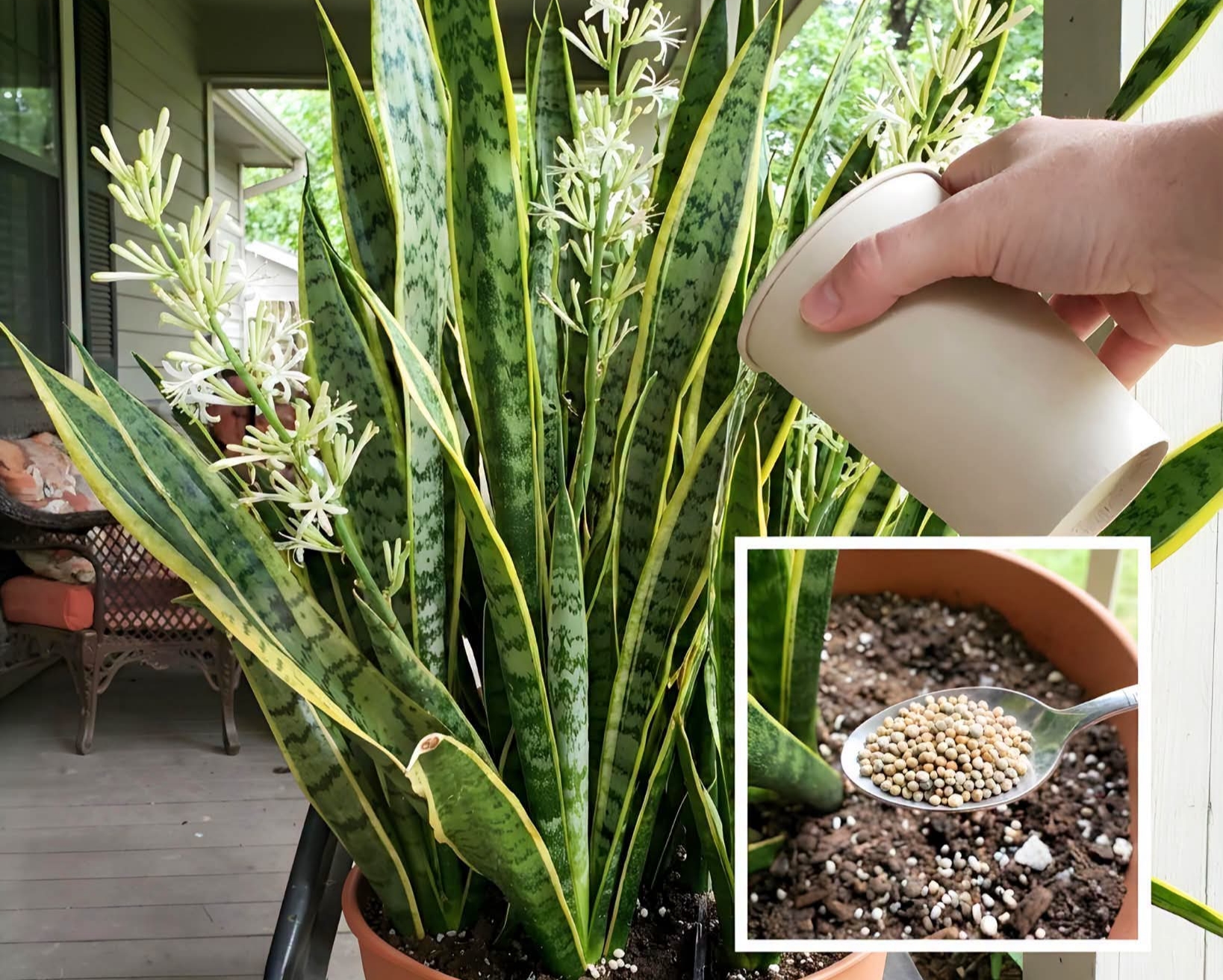
The Snake Plant (scientifically known as Sansevieria or Dracaena trifasciata) is one of the most popular, resilient, and air-purifying houseplants in the world. When provided with optimal conditions, it can even reward you with delicate, fragrant white floral stalks. However, maintaining its long-term health requires a delicate balance—especially regarding fertilization. Over-fertilizing can severely damage its root system, making a simple, controlled feeding routine essential for thriving growth.
What Are the White Granules Shown in the Image?
The small white and tan beads shown on the spoon are Controlled-Release / Slow-Release Fertilizer granules (often referred to commercially as Osmocote or PRILLED fertilizer).
How They Work:
- Micro-Encapsulation: Each granule consists of concentrated plant nutrients enclosed in a semi-permeable resin or polymer coating.
- Gradual Release: Moisture from watering penetrates the coating, dissolving the nutrients inside and slowly releasing them into the surrounding soil over 3 to 6 months.
- Root Safety: Unlike liquid fertilizers—which deliver a heavy, immediate dose of chemicals—slow-release granules provide a steady, low-concentration trickle of nutrients with every watering. This prevents root shock and fertilizer burn.
Why Over-Fertilizing Harms Snake Plant Roots
- Sensitive, Compact Root Systems: Snake plants have relatively shallow rhizomes and root networks adapted to arid environments with nutrient-poor soil.
- Salt Accumulation & Chemical Burn: Unused fertilizer minerals build up as chemical salts in the soil. High salt concentrations draw moisture out of the roots through osmosis, burning the root tips and causing foliage to turn yellow, soft, or brown.
- Root Rot Vulnerability: Damaged, burned roots are highly susceptible to fungal pathogens, leading to rapid root rot and plant decay.
Simple & Safe Snake Plant Feeding Routine
To encourage strong vertical leaf growth and potential blooming without risking root damage, follow this easy routine:
- Feed Only During Active Growth: Apply fertilizer only during spring and summer when the plant is actively growing. Do not fertilize during autumn or winter when the plant goes semi-dormant.
- Use a Light Dose: Measure a small spoonful of slow-release granules (as pictured) and sprinkle them evenly around the base of the plant.
- Water Normally: Water the plant gently after applying the granules to settle them into the soil mix.
Essential Snake Plant Care Tips
- Watering: Allow the soil to dry out completely (100%) between waterings. Overwatering causes far more damage than under-watering.
- Lighting: While snake plants tolerate low light, they thrive best in bright, indirect sunlight, which promotes dense growth and blooming.
- Soil & Drainage: Always use a well-draining cactus/succulent potting mix in a pot equipped with drainage holes to keep moisture from pooling at the roots.