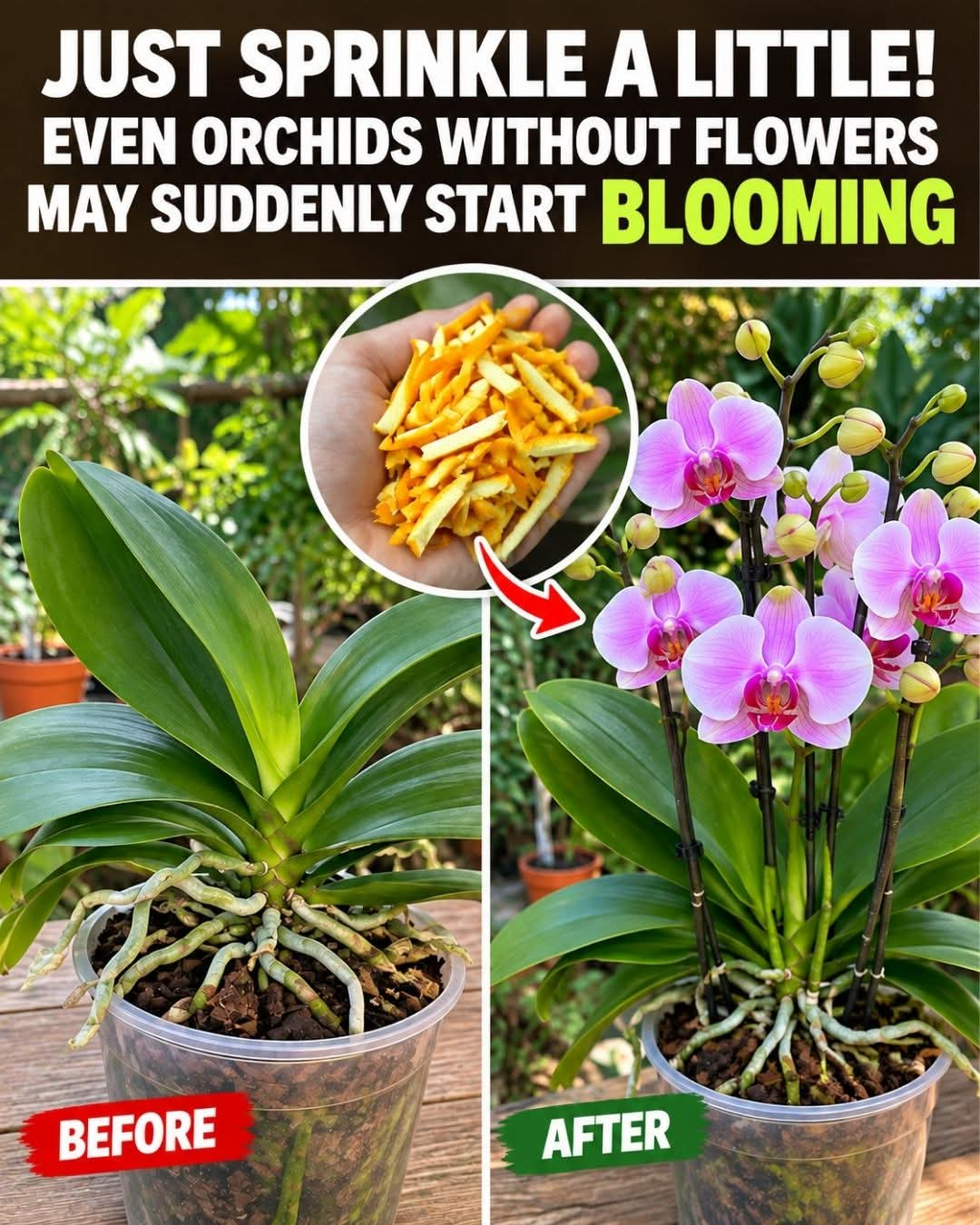
Orchids—particularly the Phalaenopsis (Moth Orchid)—are beloved for their elegant flowers and long blooming cycles. However, getting a non-blooming, foliage-only orchid to send out fresh flower spikes can sometimes take months of waiting.
As shown in the before-and-after image, sprinkling a small amount of dried, shredded citrus peels (such as orange or lemon peels) into the potting medium can act as a natural blooming catalyst, transforming a flowerless orchid into a plant bursting with vibrant pink blossoms.
📋 Quick Recipe & Overview
| Feature | Details |
|---|---|
| Target Plant | Phalaenopsis & epiphytic orchids |
| Main Ingredient | Dried orange/citrus peels (shredded or ground) |
| Application Method | Top-dressing or liquid tea infusion |
| Frequency | Once every 3 to 4 weeks during early spring/growth phase |
| Primary Effect | Triggers flower spike formation and enhances root health |
🔬 The Science Behind Citrus Peels for Orchids
Citrus peels contain a rich blend of natural organic compounds, essential minerals, and mild acids that create an optimal environment for orchid flowering:
- Rich in Potassium (K) & Phosphorus (P): Citrus peels are naturally high in potassium and phosphorus—the two primary macronutrients required for flower bud initiation and spike development.
- Mild Soil Acidifier: Orchids prefer a slightly acidic root environment (pH 5.5 to 6.5). The natural citric acid in the peels balances the pH of the potting bark, improving nutrient absorption.
- Natural Antifungal & Antibacterial Properties: Citrus oils (d-limonene) protect delicate root systems from fungal spores and rot, ensuring the aerial roots remain healthy and firm.
- Bio-Stimulants & Micronutrients: Loaded with Vitamin C, magnesium, and calcium, citrus peels help stressed orchids recover quickly and build energy for blooming.
🛠️ Step-by-Step Instructions
Method 1: The Sprinkle Method (Top-Dressing)
- Prepare the Peels: Save peels from fresh oranges, mandarins, or lemons.
- Dry Completely: Allow the peels to air-dry completely in the sun for 2–3 days until they become brittle.
- Chop or Blend: Cut the dried peels into thin strips or grind them into a coarse powder.
- Apply to Pot: Sprinkle 1 to 2 teaspoons evenly over the surface of the orchid bark. As you water normally, nutrients will slowly dissolve into the root zone.
Method 2: Citrus Peel Tea Infusion (Liquid Soak)
- Steep a handful of dried citrus peels in 1 liter of boiling water.
- Let the mixture cool completely to room temperature (overnight is ideal).
- Strain out the solid peels.
- Use the amber-tinted liquid to water your orchid once a month as a gentle root drench.
💡 Key Tips for Maximum Blooms
- Bright Indirect Light: Citrus peel fertilizer works best when paired with ample bright, indirect sunlight. Place your orchid near an east or south-facing window.
- Avoid Fresh Moist Peels: Always dry the peels before placing them directly into the pot to prevent attracting fruit flies or mold.
- Proper Drainage: Ensure your orchid pot has clear drainage holes so the roots never stay waterlogged.