🌿 🌿 Reviving the Prayer Plant (Maranta): How a Diluted Milk & Water Mixture Saves Dying Houseplants
The Prayer Plant (Maranta leuconeura) is revered for its striking foliage pattern, but it is notoriously sensitive to environmental changes and moisture levels. When neglected or underwatered, it can suffer severe foliage crisping and dieback as seen in dramatic “before & after” plant rescues. Fortunately, Marantas possess incredible resilient power when provided with corrective pruning and gentle natural nutrients like diluted milk and water.
Here is the complete guide on saving a dying Prayer Plant and properly utilizing diluted milk to support lush green growth.
📋 Care & Treatment Overview
| Metric | Essential Guideline |
|---|---|
| Plant Type | Prayer Plant (Maranta leuconeura) |
| Natural Supplement | Skim or Low-Fat Milk diluted with water (1:4 or 1:5 ratio) |
| Key Nutrients | Calcium, Whey Proteins, Potassium, Micronutrients |
| Soil Medium | Well-draining, moisture-retentive indoor potting mix |
| Application Frequency | Once every 4 to 6 weeks during active growth |
| 🔬 The Science: Why Diluted Milk Works for Houseplants |
- Bioavailable Calcium Source
Milk is rich in calcium, a structural element crucial for cell wall development. Supplying calcium ensures that new emerging leaves unroll strong, firm, and resistant to tip browning. - Natural Antifungal & Antibacterial Properties
The proteins in light milk contain natural enzymes that help suppress certain soil-borne fungi and microbes when applied in heavily diluted concentrations. - Soil Microbiome Activation
Beneficial soil bacteria digest the amino acids and sugars present in trace amounts of milk, promoting a vibrant microbiome that breaks down organic matter into accessible plant nutrients.
🛠️ Step-by-Step Revival & Feeding Process
Step 1: Emergency Pruning & Clean-up
- Cut Back Dead Stems: Use sterilized pruning shears to cut away all brown, crispy, and dried stems down to the base. Removing dead biomass allows the plant to redirect its energy entirely toward root recovery and fresh bud production.
Step 2: Applying the Milk & Water Solution - Mix: Combine 1 part low-fat or skim milk with 4 to 5 parts room-temperature water. Never use full-strength milk.
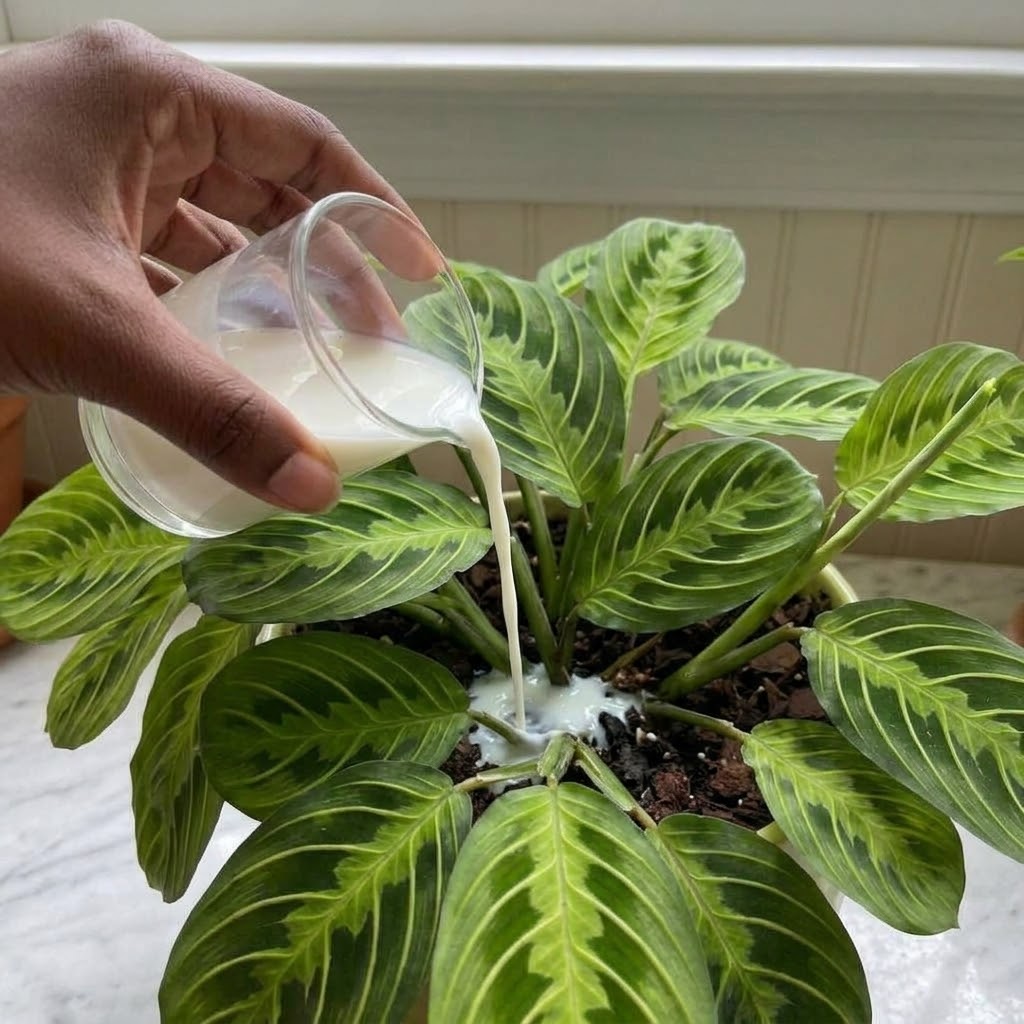
- Water: Pour the white diluted mixture directly onto the soil around the base of the plant until the top layer is evenly moist.
Step 3: Optimal Environment for Recovery - Light: Place the pot in bright, indirect sunlight (avoid direct harsh rays that scorch leaves).
- Humidity: Keep humidity levels elevated around the plant using a humidifier or pebble tray to encourage new leaf shoots to unfurl cleanly.
⚠️ Common Pitfalls to Avoid - Never Use Undiluted Milk: Pure milk rots in the soil, producing foul odors, souring the substrate, and attracting fungus gnats and mold.
- Avoid Over-application: Treat diluted milk as an occasional booster, not a daily replacement for standard clean water.
- Clean the Foliage: If the liquid touches the leaves, gently wipe them clean with a damp cloth to prevent blocked leaf stomata.
💡 Plant Rescue Pro Tip
Patience is Key: After cutting back dead foliage and drenching the soil with the nutrient mix, it may take 2 to 3 weeks before you see results. Watch closely at the soil surface—vibrant green “horns” (rolled young leaves) will soon shoot up from the root crown! the Prayer Plant (Maranta): How a Diluted Milk & Water Mixture Saves Dying HouseplantsThe Prayer Plant (Maranta leuconeura) is revered for its striking foliage pattern, but it is notoriously sensitive to environmental changes and moisture levels. When neglected or underwatered, it can suffer severe foliage crisping and dieback as seen in dramatic “before & after” plant rescues. Fortunately, Marantas possess incredible resilient power when provided with corrective pruning and gentle natural nutrients like diluted milk and water.Here is the complete guide on saving a dying Prayer Plant and properly utilizing diluted milk to support lush green growth.📋 Care & Treatment Overview| Metric | Essential Guideline ||—|—|| Plant Type | Prayer Plant (Maranta leuconeura) || Natural Supplement | Skim or Low-Fat Milk diluted with water (1:4 or 1:5 ratio) || Key Nutrients | Calcium, Whey Proteins, Potassium, Micronutrients || Soil Medium | Well-draining, moisture-retentive indoor potting mix || Application Frequency | Once every 4 to 6 weeks during active growth |🔬 The Science: Why Diluted Milk Works for Houseplants1. Bioavailable Calcium SourceMilk is rich in calcium, a structural element crucial for cell wall development. Supplying calcium ensures that new emerging leaves unroll strong, firm, and resistant to tip browning.2. Natural Antifungal & Antibacterial PropertiesThe proteins in light milk contain natural enzymes that help suppress certain soil-borne fungi and microbes when applied in heavily diluted concentrations.3. Soil Microbiome ActivationBeneficial soil bacteria digest the amino acids and sugars present in trace amounts of milk, promoting a vibrant microbiome that breaks down organic matter into accessible plant nutrients.🛠️ Step-by-Step Revival & Feeding ProcessStep 1: Emergency Pruning & Clean-up * Cut Back Dead Stems: Use sterilized pruning shears to cut away all brown, crispy, and dried stems down to the base. Removing dead biomass allows the plant to redirect its energy entirely toward root recovery and fresh bud production.Step 2: Applying the Milk & Water Solution * Mix: Combine 1 part low-fat or skim milk with 4 to 5 parts room-temperature water. Never use full-strength milk. * Water: Pour the white diluted mixture directly onto the soil around the base of the plant until the top layer is evenly moist.Step 3: Optimal Environment for Recovery * Light: Place the pot in bright, indirect sunlight (avoid direct harsh rays that scorch leaves). * Humidity: Keep humidity levels elevated around the plant using a humidifier or pebble tray to encourage new leaf shoots to unfurl cleanly.⚠️ Common Pitfalls to Avoid * Never Use Undiluted Milk: Pure milk rots in the soil, producing foul odors, souring the substrate, and attracting fungus gnats and mold. * Avoid Over-application: Treat diluted milk as an occasional booster, not a daily replacement for standard clean water. * Clean the Foliage: If the liquid touches the leaves, gently wipe them clean with a damp cloth to prevent blocked leaf stomata.💡 Plant Rescue Pro Tip> Patience is Key: After cutting back dead foliage and drenching the soil with the nutrient mix, it may take 2 to 3 weeks before you see results. Watch closely at the soil surface—vibrant green “horns” (rolled young leaves) will soon shoot up from the root crown!>