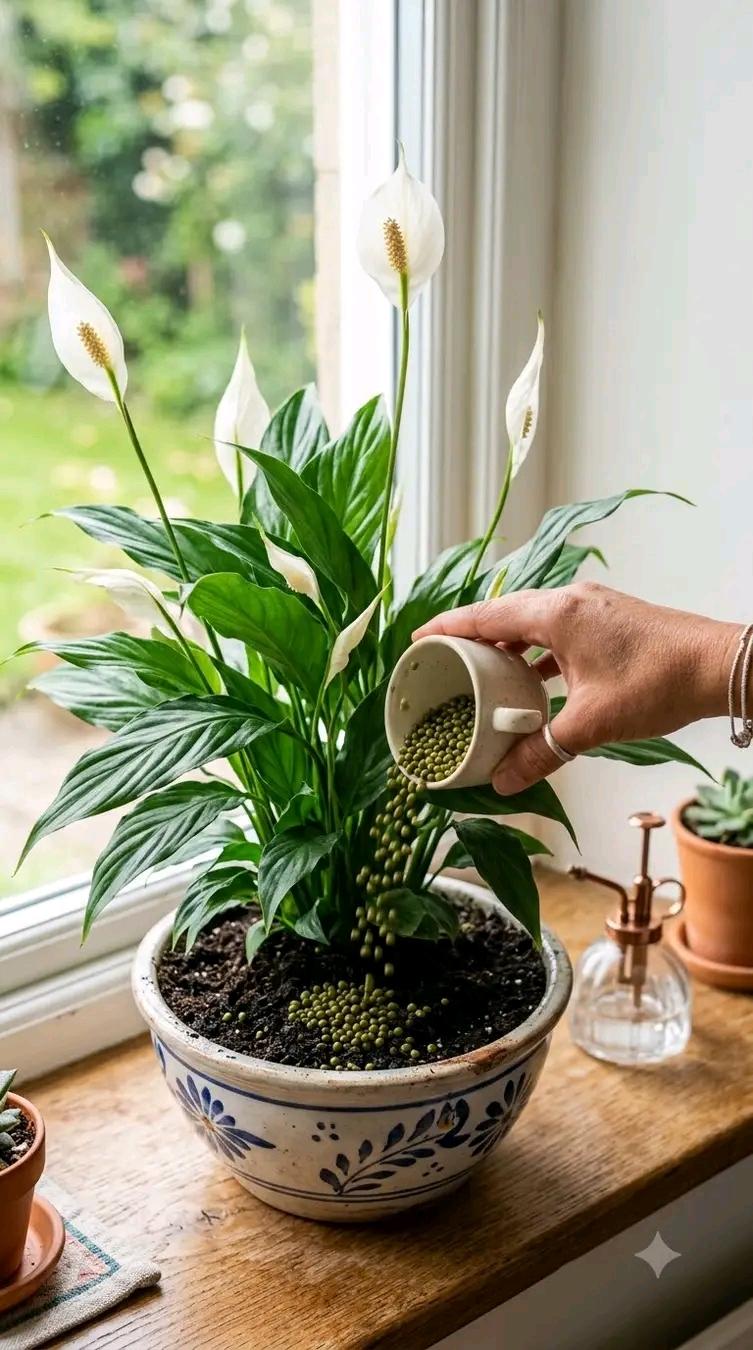
🟢The Peace Lily (Spathiphyllum) is one of the most popular and elegant indoor houseplants in the world. Renowned for its glossy dark green foliage and striking white spathes (which resemble delicate white flags), this tropical beauty instantly elevates any interior space. Beyond its aesthetic charm, the Peace Lily is celebrated for its air-purifying qualities, filtering common household toxins to create a healthier home environment. 🪴
🟢However, many indoor gardeners encounter a common frustration: after the initial flowers fade, their Peace Lily stops producing those iconic white blooms and turns into a foliage-only plant. 🌸
🟢If you want your Peace Lily to flourish, produce continuous elegant blooms, and maintain deep green leaves, proper nutrient care—such as applying organic fertilizer granules or slow-release plant food—is the secret. In this comprehensive guide, we will walk through every aspect of feeding, watering, lighting, and troubleshooting your Peace Lily for long-term success! 🌟
🎯 Why Organic Fertilization is Essential for Peace Lilies
🟢Peace lilies are tropical understory plants native to warm rainforest floors. In their natural habitat, they constantly receive a slow, steady drip of organic nutrients from decomposing leaf litter and forest soil. 🍃
🟢Applying organic plant food pellets, slow-release granules, or seed meal amendments directly to the soil surface (as shown in the image above) mimics this natural rainforest ecosystem:
- Encourages Continuous Flowering 🕊️: High-phosphorus organic amendments trigger the plant to produce spathes rather than focusing solely on leafy growth.
- Prevents Yellowing Leaves 🌿: Nitrogen and magnesium support healthy chlorophyll production, keeping the leaves lush, dark green, and vibrant.
- Protects Sensitive Roots 🪴: Synthetic chemical fertilizers can easily burn the delicate, fleshy root system of a Peace Lily. Natural slow-release granules release nutrients gently without causing fertilizer burn.
🛒 The Best Fertilizers for Peace Lilies
🟢To keep your plant healthy without overloading the soil with salts, choose one of these ideal fertilizer options:
1. Organic Slow-Release Granules 🟢
🟢Applying organic slow-release pellets (such as dried legume meal, organic plant food granules, or slow-acting compost pellets) onto the soil surface provides a steady supply of nutrients every time you water. Sprinkle 1 to 2 tablespoons over the topsoil and lightly scratch it into the top inch.
2. Balanced Liquid Houseplant Food (20-20-20 diluted) 🧪
🟢During the spring and summer active growth seasons, feed your Peace Lily every 4 to 6 weeks with a balanced liquid fertilizer diluted to half or quarter strength.
3. Bloom Booster Formula 🌸
🟢If your plant is healthy but refusing to bloom, switch to a water-soluble fertilizer with a higher middle number (phosphorus) during early spring to stimulate spathe production.
👩🌾 Step-by-Step Care & Maintenance Guide
Step 1: Soil Application & Top-Dressing 🪴
🟢Scatter your fertilizer granules evenly across the soil surface, keeping them slightly away from the main stems. Water the plant thoroughly immediately after application so moisture can dissolve the outer layer of the granules and transport nutrients down to the root zone.
Step 2: Ideal Lighting Conditions ☀️
🟢Lighting is crucial for bloom production!
- Bright, Indirect Light: Place your Peace Lily near an East-facing window or a few feet away from a South or West-facing window.
- Avoid Direct Sun: Direct, harsh sunlight will scorch the glossy leaves, turning them yellow or brown with dry burnt patches.
- Low Light Reality: While Peace Lilies can survive in low light, they will rarely flower without sufficient indirect brightness.
Step 3: Mastering the Watering Schedule 💧
🟢Peace Lilies are famous for being dramatic—their leaves droop visibly when they need water! However, it is best to establish a consistent routine before severe drooping occurs.
- Watering Frequency: Water when the top 1 inch of soil feels dry to the touch.
- Water Quality: Peace Lilies are sensitive to fluoride and chlorine found in tap water, which causes brown leaf tips. Use filtered water, rainwater, or let tap water sit out overnight before watering.
- Humidity: Mist the leaves occasionally with a fine mister (as shown by the copper mister in the image) or place the pot on a pebble tray filled with water to boost room humidity.
💡 How to Trigger Blooms: The Secret Factors
🟢If your Peace Lily is growing plenty of leaves but zero white flowers, evaluate these key blooming triggers:
- Light Levels ☀️: Move the plant to a brighter location with filtered, indirect light. Lack of light is the #1 reason Peace Lilies stop blooming.
- Pot Size 🏺: Peace Lilies actually bloom best when they are slightly root-bound! If planted in a pot that is too large, the plant will spend all its energy filling the soil with roots instead of producing flowers.
- Gibberellic Acid (Pro Tip) 🧪: Commercial growers often treat Peace Lilies with gibberellic acid (a natural plant hormone) to encourage synchronous flowering. At home, mimicking natural light variations and feeding phosphorus in spring creates the same effect naturally.
📋 Common Peace Lily Problems & Solutions
| Symptom | Cause | Easy Solution |
|---|---|---|
| Brown Leaf Tips 🍂 | Tap water minerals (fluoride/chlorine) or low humidity | Switch to filtered water; mist regularly or use a humidifier. |
| Yellowing Leaves 🍃 | Overwatering or nutrient deficiency | Allow topsoil to dry before watering; apply organic fertilizer granules. |
| Drooping Stems 🥀 | Underwatering (dry soil) or root rot (soggy soil) | Check soil moisture; if bone dry, soak thoroughly; if wet, inspect roots. |
| Greenish Flowers 🍏 | Too much fertilizer or aging spathe | Reduce fertilizer strength; trim fading spathes at the base. |
🌿 Pruning & Repotting Tips
- Pruning Dead Spathes ✂️: When the white spathes begin turning green or brown, cut the entire flower stalk off at the base using clean, sharp pruning shears. This directs energy back into producing new growth and fresh flowers.
- Repotting 🪴: Repot every 1.5 to 2 years during spring. Choose a pot that is only 1 to 2 inches larger in diameter than the current container, using a well-draining indoor potting mix rich in peat moss and perlite.
🌟 Final Thoughts
🟢The Peace Lily is a timeless indoor classic that rewards simple care with elegant white blooms and lush foliage. By top-dressing the soil with organic fertilizer granules, providing soft indirect sunlight, and using filtered water, you can keep your Peace Lily thriving and blooming for years to come! ❤️