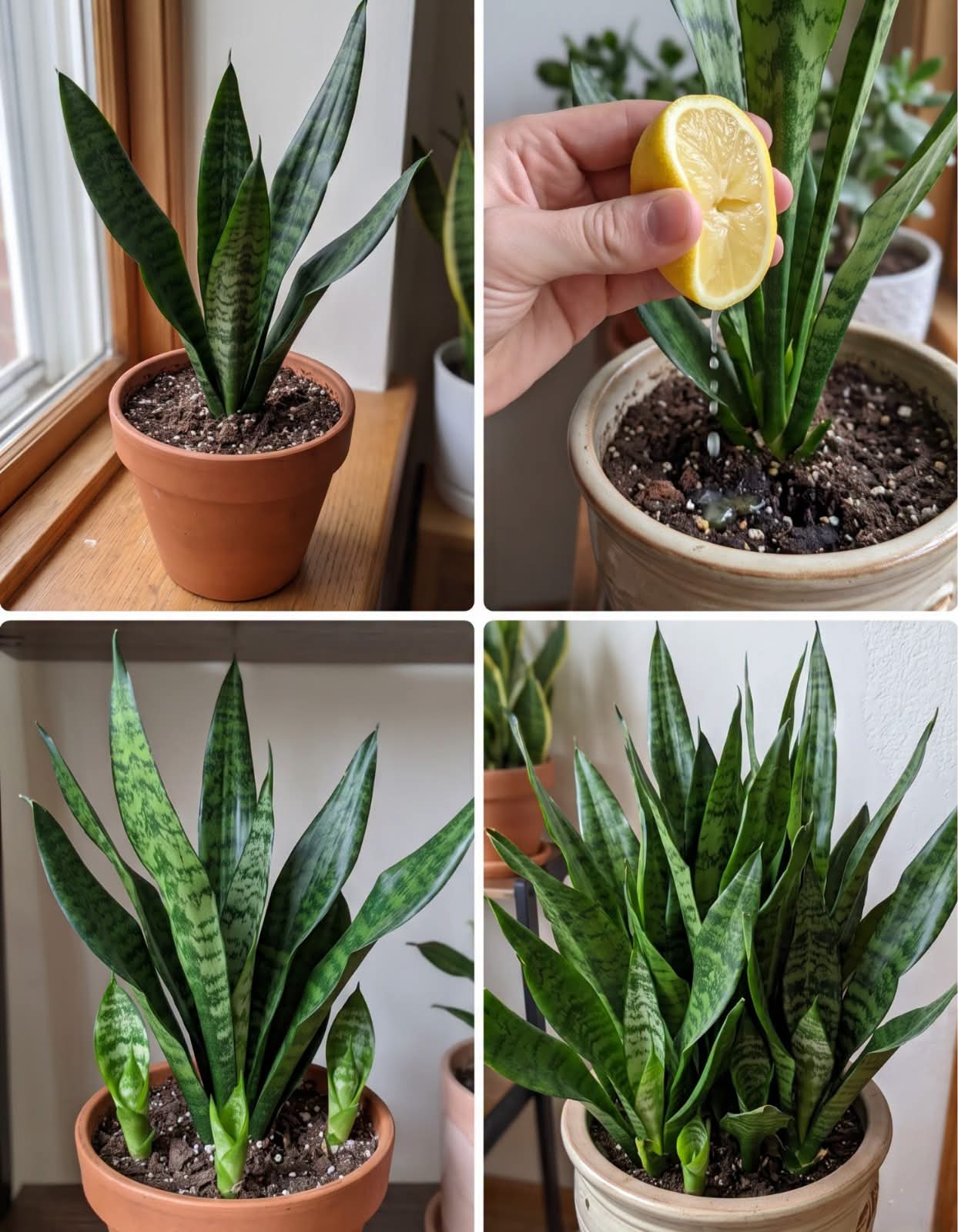
Every indoor plant parent knows the unique satisfaction of seeing fresh, vibrant shoots emerge from a potted snake plant (Sansevieria). 🪴✨ Celebrated for their striking upright sword-like leaves, air-purifying capabilities, and extreme durability, snake plants are a staple in modern home decor. 🏠🌱 However, despite their tough reputation, these architectural succulents can sometimes sit dormant for months or even years without producing new growth. Commercial fertilizers promise quick growth spurts, but they often lead to chemical salt buildup, root burn, and damaged foliage over time. 🌾⚠️
What if the ultimate secret to unlocking rapid leaf multiplication, robust root structures, and dense growth clusters was already sitting right inside your kitchen fruit bowl? 🍋✨ In this complete plant care guide, we will explore an extraordinarily simple, natural citrus trick—squeezing fresh lemon juice into the soil—that acts as a powerful soil activator for snake plants! 🛡️🌿 Discover the science behind this home remedy, how to apply it safely step-by-step, and how to maintain a dense indoor jungle. 🧪🍋✨
Why Snake Plants Respond to Citrus Acidification 🍋🛡️
Snake plants are native to tropical regions of West Africa, where they naturally thrive in slightly acidic, well-draining soils rich in organic matter. 🌍✨ In a potted home environment, tap water and synthetic fertilizers can gradually raise the soil pH, making it alkaline and locking away essential soil nutrients. Adding diluted fresh citrus juice introduces natural citric acid, which gently lowers the soil pH back to its optimal range (around 6.0 to 6.5). 🧪🌱
- Nutrient Unlocking 🔓✨: Citric acid helps break down bound-up minerals in the potting soil—such as iron, zinc, and magnesium—making them readily available for root absorption.
- Natural Pest & Mold Barrier 🛡️🐜: Fresh lemon juice possesses natural antibacterial and antifungal properties that prevent soil mold, fungus gnats, and root rot pathogens.
- Rapid Pup Stimulation 🌿⚡: Balancing the soil environment stimulates the underground rhizome system, prompting the plant to produce multiple new shoots (pups) around the mother plant.
- Budget-Friendly Care 💰👍: Using a few drops of natural lemon juice offers an ultra-low-cost, zero-chemical alternative to expensive commercial fertilizers.
📊 Comprehensive Comparison: Citrus Treatment vs. Synthetic Fertilizer
To help you understand how this natural soil-balancing method compares to traditional store-bought plant foods, explore the detailed breakdown below:
| Care Aspect & Feature 🏷️ | Natural Citrus Soil Activator 🍋✨ | Synthetic Commercial Fertilizer 🧪⚠️ |
|---|---|---|
| Primary Mechanism | Optimizes soil pH & unlocks native nutrients 🧪 | Supplies concentrated chemical N-P-K salts ⚡ |
| Pest & Mold Defense | High (Citric acid repels soil gnats & controls mold) 🛡️ | None (Requires separate chemical treatments) 🚫 |
| Risk of Leaf/Root Burn | Low (When properly diluted with water) 🛡️ | High (If over-applied or under-diluted) ⚠️ |
| Soil Health Impact | Feeds beneficial acid-loving soil microbes 🦠🌾 | Degrades natural soil structure over time 📉 |
| Pup Production Speed | Rapid rhizome activation in 2 to 4 weeks 🌿⚡ | Moderate (Often forces tall, weak growth) 🍃 |
| Environmental Safety | 100% Organic, non-toxic & eco-friendly ♻️🐶 | Synthetic chemical manufacturing process 🏭 |
🛠️ Tools & Supplies Checklist
Gather these simple items before preparing your natural snake plant treatment:
- Fresh Lemon 🍋: Use real, organic lemons rather than bottled lemon juice concentrates, which may contain unwanted preservatives or added sodium.
- Filtered Water 💧: Room-temperature water to avoid shocking the plant’s sensitive root system.
- Measuring Spoon 🥄: For precise, safe application without over-acidifying the potting mix.
- Healthy Snake Plant 🐍🪴: Potted in a container equipped with functional bottom drainage holes.
- Small Watering Vessel 🫙: To mix and distribute the liquid evenly around the soil perimeter.
✂️ Step-by-Step Guide: How to Apply the Citrus Treatment
Step 1: Pre-Watering Soil Check 🪴🔍
Before applying any acidic solution to your snake plant, always check the moisture condition of the potting medium:
- Insert your finger 1 to 2 inches deep into the potting mix.
- Ensure the top layer is completely dry to the touch. Applying acidic juice to overly wet soil can trap excess moisture and harm root hairs.
- Gently loosen the top layer of soil with a small wooden stick or fork to improve absorption.
Step 2: Preparing & Applying the Citrus Blend 🍋💧
Directly squeezing pure, undiluted lemon juice onto dry soil can be too harsh. Proper dilution ensures a gentle, highly effective application:
- Squeeze fresh lemon juice to yield 1 teaspoon (about 5 ml) of fresh liquid.
- Mix the teaspoon of lemon juice into 2 cups (about 500 ml) of room-temperature filtered water.
- Slowly pour the diluted mixture around the inner rim of the pot as shown in the visual sequence, avoiding direct contact with the base of the fleshy leaves.
- Allow the liquid to penetrate the soil matrix thoroughly until a small amount trickles out of the bottom drainage holes.
Step 3: Optimizing Light & Environmental Factors ☀️🌡️
A soil activator works best when paired with ideal growing conditions that encourage active photosynthesis:
- Bright Indirect Sunlight ☀️: Place your snake plant near an east- or west-facing window. Bright, indirect light fuels the energy needed to push new pups through the soil surface.
- Warm Ambient Temperature 🌡️: Keep room temperatures between 70°F and 85°F (21°C – 29°C) to maintain active rhizome activity.
- Drainage Verification 🫗: Empty any excess drained water from the saucer beneath the pot within 15 minutes to prevent wet feet.
Step 4: Tracking New Shoot Growth & Seasonal Care 🌿✨
Within 2 to 4 weeks of treatment under warm, bright conditions, you will begin seeing tiny green shoots popping out from the soil around the parent plant!
- Application Frequency 🗓️: Repeat this gentle citrus watering process once every 4 to 6 weeks during the spring and summer active growing season.
- Winter Pause 🛑: Stop applying citrus juice during late autumn and winter when the plant enters its natural resting phase. Water sparingly with plain water only.
🛡️ Pro Troubleshooting & Care Tips
- Yellowing or Soft Leaf Base 💛: A sign of over-watering, not the citrus itself. Allow the soil to dry out completely before watering again, and ensure your pot drains freely.
- Brown Leaf Tips 🍂: Indicates low humidity or tap water fluoride accumulation. Trim the brown tips cleanly at an angle and switch to filtered water.
- No New Shoots Emerging ⏳: If your plant remains stagnant, it may be receiving insufficient light. Move it closer to a bright light source to trigger rhizome activity.
By incorporating this simple, natural citrus trick into your regular care routine, you will transform a single snake plant into a dense, thriving green centerpiece packed with fresh new leaves! Happy growing! 🐍✨💚