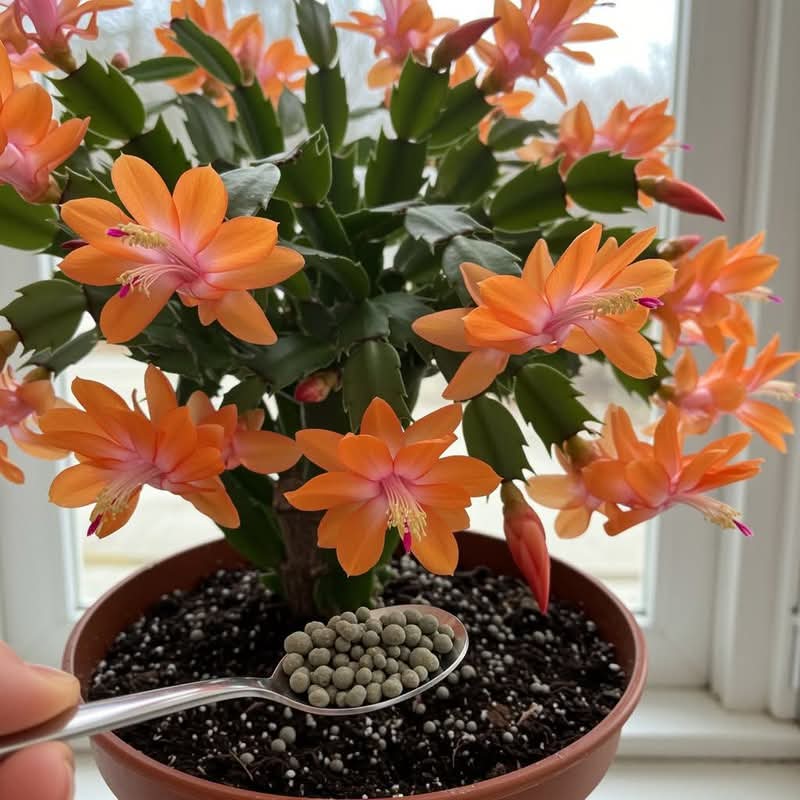
Every indoor plant parent knows the unique delight of watching a holiday cactus (Schlumbergera) transform from a simple green succulent vine into a breathtaking display of vivid orange, salmon, and peach-colored flowers. 🪴✨ Celebrated for their segmented stems (phylloclades) and stunning seasonal blooms, these tropical forest cacti bring warmth and beauty into any home during late autumn and winter. 🏡🌺 However, despite your best intentions, these epiphytic beauties can sometimes refuse to set flower buds, remaining stubborn, dormant, and dull year after year. 🌾😔
While chemical plant foods promise quick flower bursts, they often leave harsh mineral salt residues, burn delicate root systems, or cause sudden flower bud drop. ⚠️🌾 What if the ultimate secret to non-stop blooming, thick stem segments, and lush root development was a gentle, eco-friendly nutrient boost? 🥄🌱 In this complete blog post, we will explore an extraordinary organic feeding approach using natural, slow-release nutrient granules—such as bio-fertilizer pellets, organic bone meal, or mineralized volcanic ash granules—that acts as a powerful flowering catalyst for holiday cacti! 🛡️🍊✨ Discover the science behind this gentle treatment, how to apply it safely step-by-step, and how to maintain an indoor display bursting with flowers. 🧪🌺✨
Why Holiday Cacti Demand Gentle, Specialized Care 🌺🛡️
Holiday cacti are distinctly different from traditional desert succulents. Native to the humid rainforests of Brazil, they grow naturally as epiphytes nestled in tree forks and rocky crevices filled with decomposing organic matter. 🌴🌧️ Their delicate, fibrous root systems require balanced, slow-release nutrition rather than heavy doses of synthetic chemicals:
- Phosphorus & Potassium Surge 🧡 Boost: Natural mineral granules gradually release vital phosphorus and potassium, which are essential nutrients responsible for triggering bud initiation, stem strength, and intense floral coloration.
- Gentle Root Protection 🛡️🌾: Slow-release organic granules release nutrients gradually each time you water, eliminating the risk of root burn or chemical shock.
- Long-Lasting Flower Duration 🌸✨: Steady, continuous nutrition ensures that opened flowers remain fresh and vibrant on the stems for weeks instead of dropping prematurely.
- Eco-Friendly Soil Biome 🪱🪴: Natural organic pellets enrich the potting mix, nourishing beneficial soil microbes that maintain ideal soil aeration and root health.
📊 Comprehensive Comparison: Slow-Release Granules vs. Chemical Liquid Fertilizers
To help you understand why slow-release organic feeding outperforms conventional synthetic products, explore the detailed breakdown below:
| Feature & Care Aspect 🏷️ | Organic Slow-Release Granules 🥄✨ | Synthetic Liquid Fertilizers 🧪⚠️ |
|---|---|---|
| Nutrient Delivery Method | Gradual, continuous micro-feeding over weeks 🗓️ | Sudden, highly concentrated mineral surge ⚡ |
| Risk of Fertilizer Burn | Extremely Low (Gentle, organic bio-release) 🛡️ | High (If improperly measured or over-applied) ⚠️ |
| Bud Triggering Efficiency | Exceptional (Sustained phosphorus supply) 🌺 | Moderate (Can trigger excess foliage instead) 🍃 |
| Soil Microbe Impact | Feeds beneficial soil bacteria & keeps soil healthy 🦠🌾 | Leaves chemical salt residues over time 📉 |
| Application Frequency | Once every 6 to 8 weeks during active growth 🗓️ | Bi-weekly or monthly liquid applications 🗓️ |
| Environmental Safety | 100% Organic, non-toxic & home-safe ♻️🐶 | Synthetic manufacturing footprint 🏭 |
🛠️ Tools & Supplies Checklist
Gather these simple items before treating your holiday cactus to its seasonal feeding:
- Slow-Release Organic Granules 🥄: High-phosphorus organic pellets (such as organic bone meal granules, bio-fermented compost granules, or slow-release mineral pellets).
- Teaspoon 🥄: For precise, controlled measurement.
- Room-Temperature Water 🚿: Filtered or settled tap water to avoid thermal shock to tropical root systems.
- Potted Holiday Cactus 🪴: A healthy Thanksgiving or Christmas cactus with firm, deep-green stem segments.
- Wooden Skewer or Fork 🪵: To gently incorporate granules into the topsoil layer.
✂️ Step-by-Step Guide: How to Apply the Organic Nutrient Granules
Step 1: Evaluating Soil & Root Moisture 🪴🔍
Before adding any nutrient treatment, ensure your plant’s root environment is prepared for proper absorption:
- Check the moisture level by inserting your finger 1 inch into the potting medium.
- Ensure the top soil layer is slightly dry to the touch, as applying amendments to soggy soil can invite root rot.
- Gently loosen the top 0.5 inch of soil around the inner rim of the pot with a small wooden stick or spoon, taking care not to disturb delicate surface roots.
Step 2: Measuring & Applying the Granules 🥄🌱
Precision ensures your cactus reaps the maximum flower-boosting benefits without overcrowding the pot:
- Measure out 1 level teaspoon of slow-release organic granules for a standard 6-inch pot.
- Evenly sprinkle the granules over the loose topsoil surface surrounding the plant, as demonstrated in the visual guide.
- Keep the granules slightly away from the central main stem base to encourage outward root extension.
- Work the pellets gently into the top layer of soil so they are lightly covered by the potting mix.
Step 3: Water Activation & Light Management 🚿☀️
To start the slow-release nourishment process, activate the organic granules with a careful watering session:
- Controlled Hydration: Pour room-temperature water slowly around the pot perimeter until moisture begins to seep lightly from the bottom drainage holes.
- Bright Indirect Sunlight ☀️: Place your holiday cactus near a bright east- or north-facing window where it receives soft morning sun and plenty of indirect light.
- Cool Night Temperatures 🌙: To encourage dense bud formation during autumn, ensure nighttime room temperatures drop between 55°F and 65°F (13°C – 18°C).
Step 4: Tracking Flower Bud Development & Seasonal Care 🌸✨
With proper nutrition, light, and temperature management, tiny orange or pink buds will begin forming at the tips of the stem segments within 3 to 4 weeks!
- Feeding Schedule 🗓️: Reapply organic granules once in late summer and once in early autumn to fuel the blooming cycle.
- Post-Bloom Rest Period 🛑: Pause feeding completely after the plant finishes flowering in winter to allow it to enter its natural resting phase.
- Moisture Balance: Keep the soil lightly moist while buds are developing, but never let the pot sit in standing drainage water.
🛡️ Pro Troubleshooting & Care Tips
- Premature Bud Drop 🌸❌: Usually caused by sudden temperature drafts, dry air, over-watering, or moving the pot while buds are forming. Keep conditions stable!
- Shriveled Stem Segments 🍂: Indicates underwatering or root stress. Ensure your potting mix stays evenly moist and drainage holes remain clear.
- Red or Purple Stem Discoloration 🟣: A sign of excessive direct sunlight exposure. Move your plant slightly back from hot windows to maintain lush green stems.
By adding this easy, natural feeding routine to your plant care toolkit, your holiday cactus will reward you every season with an overwhelming explosion of vibrant, long-lasting blossoms! Happy growing! 🎃🌺✨💚