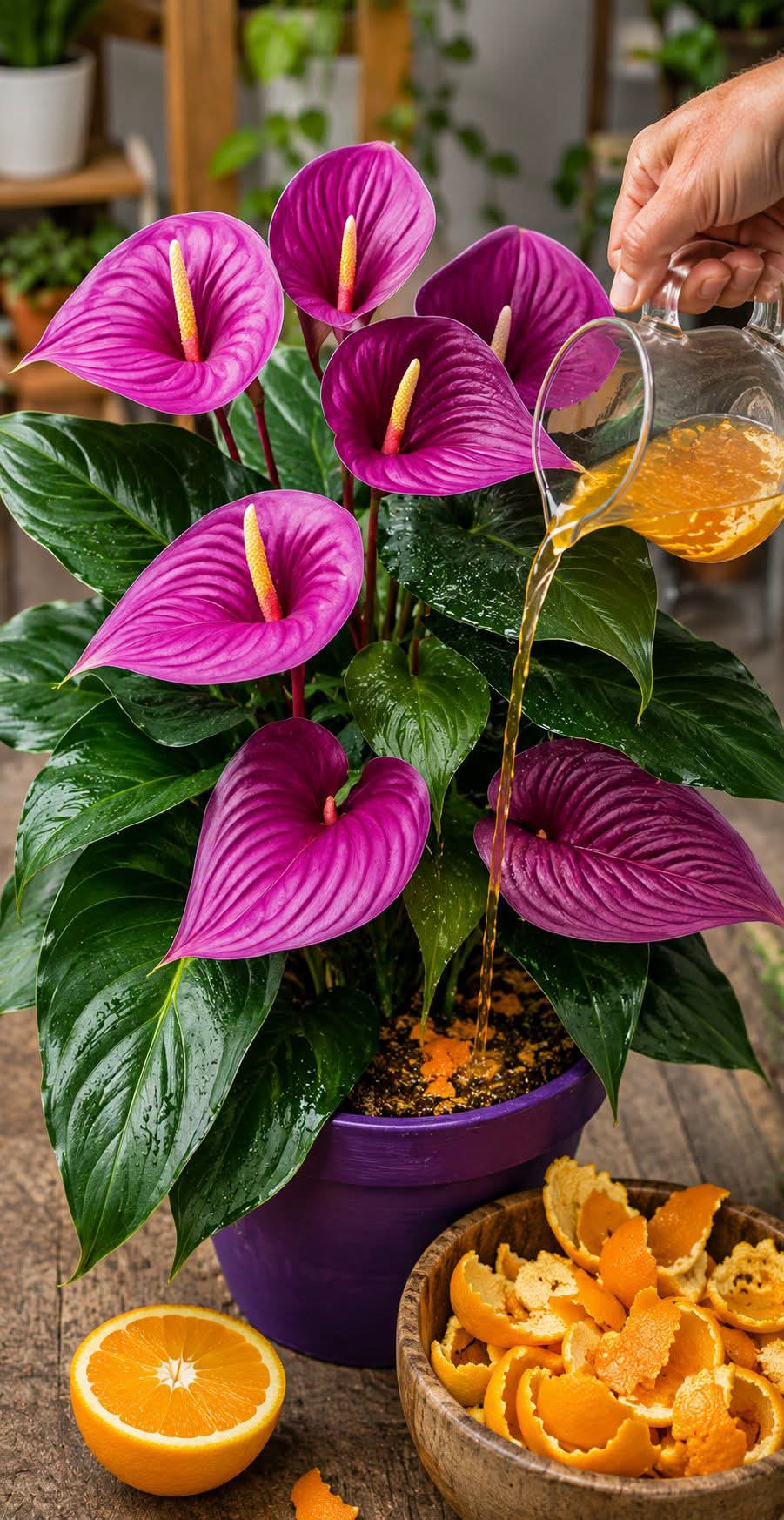
Every indoor plant lover knows the disappointing feeling of watching a stunning flowering plant turn dull, stop producing blooms, or develop faded spathes. 🪴😔 Tropical beauties like purple Anthurium and Peace Lilies are famous for their brilliant heart-shaped floral displays, but keeping them blooming continuously indoors can feel like an impossible challenge. Commercial synthetic fertilizers promise instant results, but they often lead to chemical salt buildup, root burn, and acidified potting soil over time. 🌾⚠️
What if the ultimate secret to non-stop floral blooms, rich deep-green leaves, and robust root vitality was hiding right inside your kitchen fruit bowl? 🍊✨ In this ultimate plant care masterclass, we will explore a natural, homemade liquid nutrient feed—crafted from citrus peels—that acts as a powerful bio-stimulant for indoor flowering plants! 🌸🛡️ Discover why this organic infusion works wonders, how each nutrient enriches tropical potting soil, and how to prepare and apply it step-by-step. 🧪🍹✨
Why Tropical Flowering Plants Need Citrus-Infused Care 🌺🛡️
Tropical epiphytes and understory plants originate from rainforest environments where soil is naturally acidic, rich in bio-decomposed fruit matter, and packed with trace minerals. 🌍✨ A citrus-derived organic tea perfectly replicates these natural conditions by delivering essential bio-available nutrients directly to the root system:
- Potassium & Phosphorus Boost 🍊 Boost: Citrus peels release high concentrations of potassium and phosphorus, which are the two vital minerals responsible for triggering flower bud formation and enhancing bloom color intensity.
- Natural Soil Acidification 🍋🛡️: Tropical plants thrive in slightly acidic soil (pH 5.5–6.5). Gentle organic citric acid unlocks trapped soil nutrients like iron and magnesium.
- Zero-Waste Household Care 💰✨: Upcycling citrus peels reduces kitchen waste while providing a cost-free, high-performance substitute for expensive commercial fertilizers.
- Natural Pest Repellent Properties 🛡️🐜: D-limonene, a natural compound found in citrus oils, deters common soil pests like fungus gnats, aphids, and soil mites without harsh chemicals.
📊 Detailed Comparison: Citrus Infusion vs. Commercial Fertilizer
To help you understand how this natural liquid tea compares to traditional synthetic options, explore the comprehensive breakdown below:
| Feature & Care Aspect 🏷️ | Citrus-Infused Liquid Tea 🍊✨ | Standard Chemical Fertilizer 🧪⚠️ |
|---|---|---|
| Primary Nutrients Delivered | Potassium, Phosphorus, Vitamin C & Micronutrients 🍊 | Highly Concentrated Chemical N-P-K Salts ⚡ |
| Pest Protection Benefit | High (D-limonene repels gnats & soil pests) 🛡️ | None (Requires added chemical pesticides) 🚫 |
| Risk of Fertilizer Burn | Extremely Low (Gentle, bio-available infusion) 🛡️ | High (If improperly diluted or over-applied) ⚠️ |
| Soil Microbe Enhancement | Feeds beneficial soil bacteria & fungi 🦠🌾 | Disrupts soil microbiome over time 📉 |
| Environmental Impact | 100% Organic, eco-friendly & sustainable ♻️ | Chemical manufacturing footprint 🏭 |
| Recommended Frequency | Once every 2 to 3 weeks during blooming 🗓️ | Monthly during active spring/summer growth 🗓️ |
🛠️ Ingredients & Preparation Checklist
Before preparing your natural plant feed, gather these simple items from your kitchen:
- Fresh Citrus Peels 🍊: Orange, mandarin, or lemon peels (preferably organic to avoid synthetic waxes).
- Filtered Water 💧: Room-temperature, non-chlorinated water.
- Glass Container or Jar 🫙: For steeping the peels safely.
- Strainer & Pitcher 🍹: To separate the liquid tea from organic peel solids.
- Flowering Indoor Plant 🌺: Potted in a container with functioning drainage holes.
✂️ Step-by-Step Guide: How to Prepare & Apply the Golden Liquid Feed
Step 1: Steeping the Citrus Peel Infusion 🍊🫙
Creating this nutrient-rich liquid booster takes minimal effort but requires patience for full nutrient extraction:
- Chop fresh orange peels into small, 1-inch pieces to maximize surface area contact.
- Place 1 cup of chopped peels into a clean glass jar and pour 2 cups of warm filtered water over them.
- Seal the jar loosely and let it steep in a dark, room-temperature corner for 24 to 48 hours.
- Strain the liquid through a fine mesh sieve into a clean pouring pitcher. Dilute the resulting golden tea with equal parts fresh water until it turns a light amber shade.
Step 2: Soil Inspection & Application Technique 🪴🍹
Applying the liquid feed at the right time ensures optimal absorption without suffocating root hair zones:
- Check the top 1 inch of potting soil to confirm it is dry to the touch before feeding.
- Slowly pour 30 to 50 ml of diluted citrus tea near the main root base using a small pouring vessel or glass jug.
- Allow the liquid to absorb fully into the soil matrix, ensuring it drenches the root zone evenly without pooling excessively at the top.
Step 3: Sunlight & Temperature Optimization ☀️🌡️
Nourishment works best when combined with ideal tropical growing parameters:
- Bright Indirect Sun ☀️: Place your plant near an east- or west-facing window protected by thin sheer curtains to stimulate photosynthesis.
- Warm Ambient Temperature 🌡️: Maintain indoor temperatures between 68°F and 80°F (20°C – 27°C) to encourage continuous flower spike development.
- Humidity Control 💨: Mist foliage weekly or place a pebble tray beneath the pot to maintain 50%+ relative humidity.
Step 4: Ongoing Seasonal Maintenance Schedule 🗓️✨
Consistency keeps spathes large, vibrant, and long-lasting:
- Active Season Feeding: Apply this organic tea once every 2 to 3 weeks during spring, summer, and autumn flowering periods.
- Winter Pause: Reduce application to once every 6 to 8 weeks during late winter when plant metabolic activity slows down.
- Drainage Management: Always allow excess liquid to drain into the saucer, emptying it immediately to prevent standing water accumulation.
🛡️ Pro Troubleshooting & Care Tips
- Yellow Leaf Tips 🟡: Indicates over-application or undiluted tea. Dilute the mixture further with plain water and reduce feeding frequency.
- Brown, Crisp Leaf Edges 🍂: A clear sign of dry ambient air or low humidity. Increase misting and move the plant away from AC or heating vents.
- Pale or Green Faded Blooms 🌺❌: Signals insufficient light or low potassium levels. Move the plant to a brighter spot and continue your bi-weekly citrus feedings.
By incorporating this simple, eco-friendly liquid booster into your regular care routine, you will keep your indoor flowering plants loaded with breathtaking, vibrant blooms all year round! Happy growing! 🌺✨💚