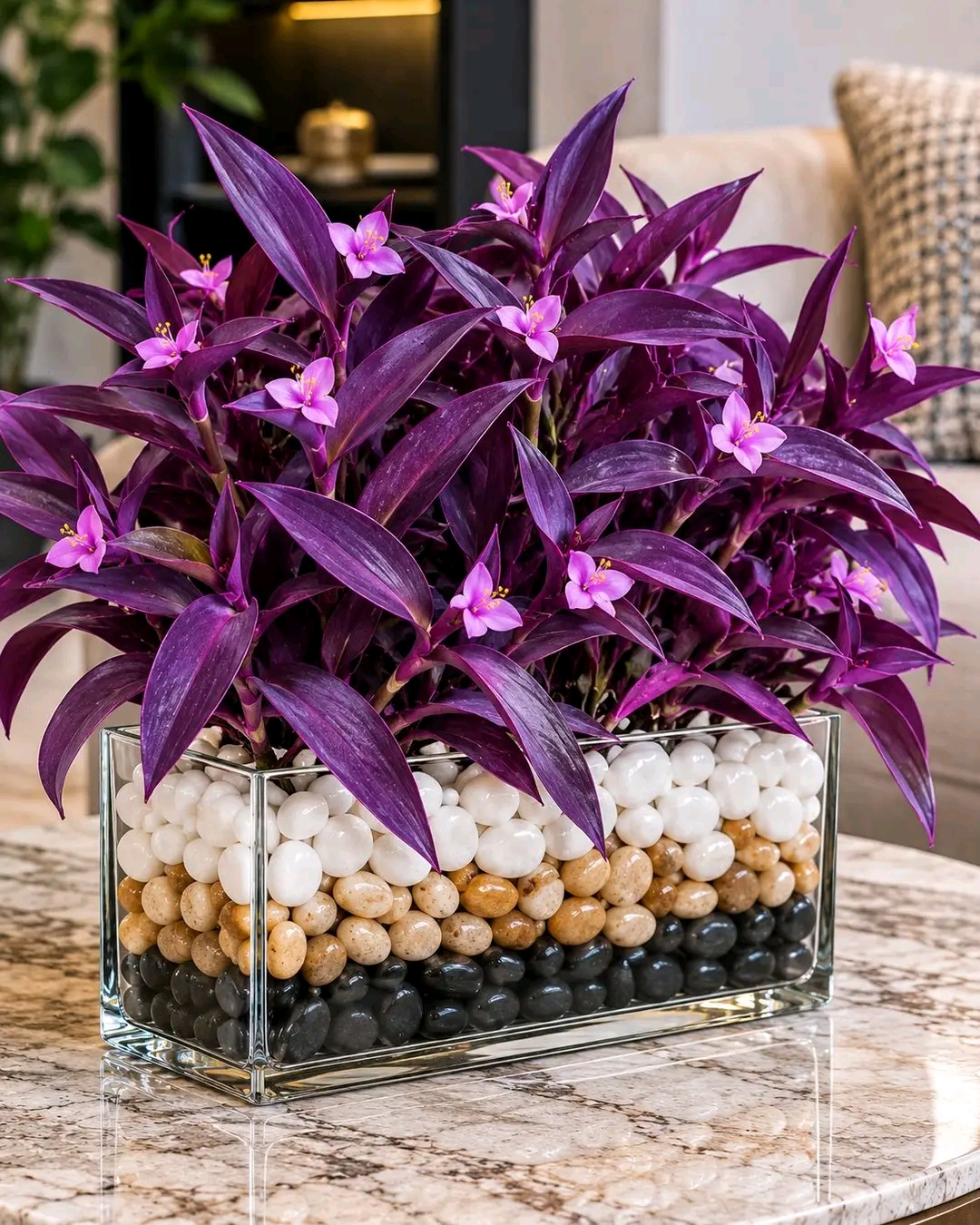
The Purple Heart plant (Tradescantia pallida), also famously known as Purple Queen or Wandering Jew, is one of the most eye-catching, vibrant, and resilient indoor trailing plants in the botanical world 🪴💜. Celebrated for its deep violet-purple foliage, lance-shaped leaves, and delicate three-petaled pink flowers, it brings an extraordinary pop of color to modern home interiors, office desks, and coffee tables 🏠🌸.
Growing a Purple Heart inside a clear glass container using decorative stone layers—as shown in the featured photo—creates a breathtaking visual display 💎. However, glass planters lack bottom drainage holes! To keep your plant thriving without risking root rot, you need a specialized soil-less layer system using charcoal and pebbles 🪨🛡️.
In this detailed blog guide, we will break down the exact step-by-step process to grow Purple Heart in a glass vessel, explore the science of drainage layering, compare glass planter methods, and share key care tips for vibrant purple leaves 💜🛡️✨!
💜 The Science Behind Growing Plants in Glass Containers 🧪✨
Growing plants inside a non-draining glass planter requires constructing a false bottom drainage system (often referred to as an indoor terrarium layer system) 🔬🧬.
Key Functional Layers inside the Glass Vessel:
- Bottom Drainage Layer (Pebbles & Stones) 🪨: Creates a physical reservoir at the bottom where excess runoff water settles below the root system. This keeps delicate roots elevated above standing water.
- Activated Charcoal Filter 🪵🛡️: Placed between or above the stone layers to adsorb impurities, neutralize anaerobic bacteria, and prevent stagnant, smelly water odors.
- Root Anchor Substrate (Upper Layer) ⚪: White river stones or lightweight expanded clay pebbles (LECA) secure the plant stems upright while allowing oxygen to circulate freely around expanding root nodes.
Because glass allows light to penetrate directly to the root zone, managing water levels and avoiding direct scorching sunlight is essential to prevent algae growth and root overheating ☀️💧.
📊 Comprehensive Comparison: Glass Pebble Planter vs. Traditional Clay Pot
To help you decide if glass vessel growing is right for your space, let’s compare a clear glass pebble planter with a traditional terracotta drainage pot 📋👇:
| Feature / Aspect 🛡️ | Clear Glass Pebble Planter 💎✨ | Traditional Terracotta Pot 🏺 |
|---|---|---|
| Aesthetic Impact | Modern, elegant, visible layered stone design | Classic, rustic, opaque appearance |
| Drainage System | Closed system (requires careful water layering) | Active drainage holes at the base |
| Risk of Root Rot | Moderate (if over-watered without charcoal) | Very Low (excess water flows out) |
| Algae Growth Potential | High (if exposed to direct bright sun) | Zero (opaque walls block light) |
| Soil Mess & Dust | Clean, soil-less pebble/LECA environment | Can create potting mix dust & runoff stains |
| Root Visibilty | 100% visible root progress monitoring | Root |
🛡️ Top Benefits of Growing Purple Heart in Glass Vessels 🪴✨
1. High Aesthetic Elegance & Visual Appeal 💎💜
The contrast between black, tan, and white river pebbles paired with deep violet foliage and soft pink blossoms turns a simple houseplant into an artistic centerpiece for your living room 🌸.
2. Clean, Soil-Less Indoor Gardening 🧼🌱
Using decorative pebbles, expanded clay, and horticultural charcoal eliminates dirty potting soil, making it ideal for clean kitchen counters, office desks, and dining tables.
3. Extremely Easy Propagation from Cuttings ✂️🚀
Purple Heart stems produce roots rapidly when anchored in moist pebble layers or water. You can turn fresh stem cuttings into a full, bushy arrangement in just 2 to 3 weeks!
4. Effortless Water Level Monitoring 💧👁️
Because the glass container is transparent, you never have to guess whether your plant needs water! You can see the water level at the bottom layer with a quick glance.
💎 Step-by-Step Guide: How to Plant Purple Heart in Glass 📝👇
Follow this step-by-step layering technique to build a healthy, rot-resistant glass display 📋✨:
🧺 Materials & Supplies Needed:
- Clear Rectangular Glass Planter 💎
- Purple Heart Stems / Cuttings (Tradescantia pallida) 💜
- Black Pebbles or Charcoal Chunks (Bottom Layer) 🪵🖤
- Tan / Brown Smooth Pebbles (Middle Layer) 🪨
- White Polished River Stones (Top Anchor Layer) ⚪
- Filtered Water 🚰
👩🌾 Step-by-Step Planting Instructions:
- Prepare Your Stems ✂️💜: Cut 5 to 8 healthy Purple Heart stem cuttings (4 to 6 inches long). Strip off the bottom leaves, leaving 2 to 3 leaf nodes bare at the stem base.
- Add Layer 1 – Black Charcoal & Pebbles 🪵🖤: Fill the bottom 1 to 2 inches of the glass vessel with coarse horticultural charcoal chunks mixed with black pebbles. This forms the filter and excess drainage reservoir.
- Add Layer 2 – Tan Decorative Pebbles 🪨: Add a 1 to 2-inch middle layer of tan or smooth brown pebbles. This creates a striking color contrast and elevates the plant base.
- Add Layer 3 & Anchor Stems – White Stones ⚪: Place a top layer of smooth white river stones. Gently insert the bare stems of your Purple Heart cuttings down through the white stones into the middle layer so they stand firm and upright.
- Add Water Carefully 💧🚰: Slowly pour filtered room-temperature water into the planter until the water level reaches halfway up the middle pebble layer. Never fill water all the way to the top rim!
🗓️ Essential Care Rules & Pro-Tips for Long-Term Success 💡🛡️
To maintain rich purple foliage and avoid common glass planter problems, follow these golden care guidelines 🌟:
- Sunlight for Deep Purple Color ☀️💜: Purple Heart requires bright, indirect sunlight to maintain its intense violet hue. In low light, the leaves turn dull green! Place near an east or west-facing window.
- Control Water Levels strictly 💧⚠️: Maintain the water line within the middle pebble layer. If water rises too high, tilt the vessel carefully to pour out excess liquid.
- Prevent Algae Growth 🧽🚫: Keep the glass container away from harsh, direct afternoon sun, which triggers green algae growth on inner glass walls. Flush the pebbles with fresh water every 3 to 4 weeks.
- Fertilize Lightly 🧪✨: Add 2 drops of liquid houseplant food or a pinch of Epsom salt to the water once a month during spring and summer to boost pink blooms 🌸.
- Prune for Fullness ✂️🌿: Pinch off stem tips regularly to encourage lateral branching, creating a thick, bushy display in your glass vessel!
🌟 Final Thoughts
Growing a Purple Heart plant in a glass container with layered pebbles combines nature and interior design into a stunning living masterpiece 💎💜. By utilizing activated charcoal and managing water levels correctly, you can enjoy rich violet foliage and delicate pink flowers year-round without dirty potting soil 🪴🛡️✨! Try this clean, modern planting technique today and elevate your indoor space! 🚀🌸