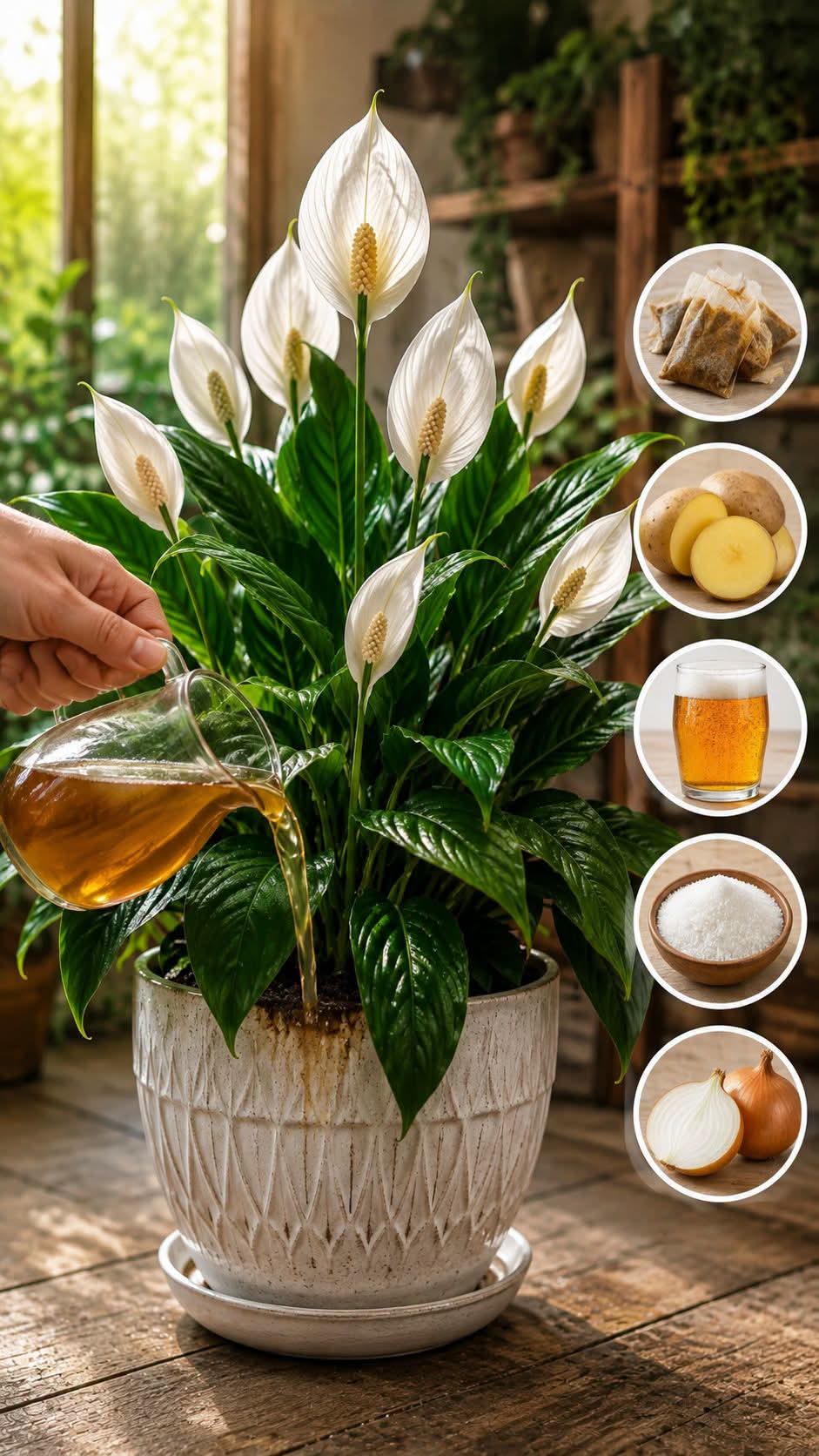
The Peace Lily (Spathiphyllum) is celebrated worldwide as one of the most elegant, timeless, and air-purifying indoor houseplants 🪴💖. With its dark green foliage and serene white spathe blossoms, this tropical favorite brings effortless grace into living rooms, offices, and indoor gardens 🏠💫.
However, many indoor gardeners encounter common frustrations with Peace Lilies: stubborn leaves that fade to pale green, slow growth rates, or a complete absence of new blooms 🥀🍂. While commercial liquid fertilizers are easily available, they often contain concentrated synthetic chemical salts that can burn sensitive root tips and accumulate in potting mix over time 🧪⚠️.
Luckily, your kitchen holds a treasure trove of gentle, eco-friendly organic ingredients! From nutrient-packed tea bags to potato starch infusions and onion peel tonics, natural kitchen remedies provide safe, bioavailable nourishment 🧄🥔🍵.
In this ultimate blog guide, we will explore the science behind five powerful household elixirs for Peace Lilies, compare their unique benefits, and detail step-by-step recipes to ensure your plant produces continuous, breathtaking white blooms year-round 🌿🛡️✨!
🍵 The Science Behind Natural Kitchen Fertilizers 🧪✨
Peace Lilies require a steady balance of primary nutrients (Nitrogen, Phosphorus, Potassium) and essential micronutrients (Magnesium, Calcium, Iron) to build strong cellular structures and manufacture flower enzymes 🔬🧬. Household organic waste contains bioavailable minerals and natural growth-stimulating compounds that breakdown smoothly in soil without shocking plant roots.
Key Nutrients Found in Kitchen Remedies:
- Organic Nitrogen (N) 💚: Essential for chlorophyll synthesis, promoting deep emerald green foliage and vigorous stem elongation.
- Phosphorus (P) 🌸: Stimulates healthy root architecture and triggers abundant, upright white spathe blooms.
- Potassium (K) & Starch 🥔: Regulates water movement within plant cells, increases resistance to environmental stress, and provides metabolic energy.
- Flavonoids & Sulfur Compounds 🧅🛡️: Natural organic compounds in onion peels act as mild bio-fungicides, protecting soil microbes and repelling pests naturally.
📊 Comprehensive Comparison: The 5 Secret Kitchen Elixirs
To help you choose the best natural tonic for your Peace Lily’s specific needs, let’s examine how these five household remedies compare side-by-side 📋👇:
| Kitchen Elixir 🛡️ | Primary Nutrient / Active Component | Best For 🎯 | Key Benefit for Peace Lilies ✨ |
|---|---|---|---|
| Used Tea Bags 🍵 | Tannic acid, Nitrogen, & Potassium | Soil conditioning & leaf greening | Slightly acidifies soil to match rainforest conditions 🌧️ |
| Potato Water 🥔 | Soluble Starch, Potassium, & B-Vitamins | Energy boost & robust growth | Feeds beneficial soil microbes and strengthens stems 🌾 |
| Fermented Yeast / Beer 🍺 | Yeast proteins, Amino acids, & B-complex | Rapid microbial stimulation | Accelerates soil nutrient breakdown and root absorption 🚀 |
| Epsom Salt 🤍 | Pure Magnesium Sulfate (MgSO_4) | Correcting yellow leaves & boosting chlorophyll | Restores deep dark green pigment to faded leaves 🍃 |
| Onion Peel Tea 🧅 | Quercetin, Potassium, & Natural Sulfur | Disease defense & flower blooming | Shields |
🛡️ Top Benefits of Using Household Tonics on Peace Lilies 🪴✨
1. Recreates Tropical Rainforest Soil Chemistry 🌧️🍂
In their native habitats of Central and South American rainforests, Peace Lilies thrive in rich organic leaf litter that naturally acidifies soil. Organic kitchen brews like tea and onion infusions naturally mimic this acidic pH (5.8–6.5), unlocking trapped soil minerals!
2. Boosts Continuous & Frequent Flowering 🤍🌸
To form those iconic white spathes, Peace Lilies require steady potassium and phosphorus energy. Liquid starch from potato water combined with potassium-rich onion peel tea supplies the perfect natural boost required to trigger floral buds 🚀.
3. Natural Protection Against Root Diseases 🛡️🦠
Onion peels and tea tannins contain natural antioxidant and anti-fungal properties. Regular application creates a protective microbial shield around delicate root systems, reducing the risk of fungal root rot caused by accidental overwatering.
4. Zero Chemical Build-Up & Eco-Friendly Care 💰🌱
Unlike synthetic chemical fertilizers that leave crusty white mineral deposits on topsoil, these natural remedies are completely biodegradable, non-toxic around family and pets, and virtually free to prepare!
🍵 Step-by-Step Recipes: How to Prepare & Apply Each Elixir 📝💦
Pro-Tip: Always allow homemade liquid brews to cool down to room temperature before watering your Peace Lily! Hot liquids will harm fragile root tissue.
1. Used Tea Bag Infusion 🍵🍃
- How to Prepare: Steep 2 used black or green tea bags in 1 liter of warm filtered water for 2 to 3 hours until translucent light brown. Ensure tea is 100% natural without artificial flavorings or added sugars!
- Application: Drench the potting soil once every 3 weeks during spring and summer.
2. Nutrient-Rich Potato Water 🥔🌾
- How to Prepare: Save the unsalted water used after boiling potatoes (or soak raw potato slices in water overnight). Allow the cloudy, starch-rich liquid to cool completely.
- Application: Pour directly onto the potting mix once a month as a metabolic energy boost.
3. Diluted Fermented Beer / Yeast Water 🍺⚡
- How to Prepare: Mix 1 part flat, stale beer (or 1/2 teaspoon dry active yeast dissolved in warm water) with 10 parts clean water.
- Application: Water the soil sparingly once every 6 weeks. The yeast proteins awaken beneficial soil biology instantly!
4. Magnesium Epsom Salt Drench 🤍✨
- How to Prepare: Dissolve 1 teaspoon of pure magnesium sulfate crystals into 1 liter of warm water.
- Application: Use as a monthly soil drench or spray lightly as a foliar mist to reverse yellowing leaves.
5. Bio-Protective Onion Peel Tea 🧅🛡️
- How to Prepare: Collect a handful of dry outer onion skins and soak them in 1 liter of warm water for 24 hours until the liquid turns a rich golden amber color. Strain out all solid skins thoroughly.
- Application: Apply to soil every 3 to 4 weeks to fortify root systems and trigger vibrant new flower spikes!
🗓️ Application Schedule & Pro-Tips for Success 💡🛡️
To maximize health without over-saturating your plant, follow these essential care rules 🌟:
- Rotate Your Elixirs 🔄: Alternate between these organic remedies rather than using all of them at once! For example, use Onion Peel Tea in week one and Potato Water in week four.
- Check Moisture Before Watering ☝️🤎: Always check that the top 1 inch of potting mix feels dry before applying any liquid remedy. Peace Lilies like moist soil, but never soggy conditions!
- Ensure Drainage Holes 🪴🕳️: Use ceramic or terracotta pots with working bottom drainage holes so excess liquid drains out freely.
- Provide Filtered Light ☀️🛋️: Place your Peace Lily in a bright spot with indirect, filtered sunlight (such as near an east-facing window) to facilitate efficient photosynthesis and bloom development.
🌟 Final Thoughts
Achieving a lush, vibrant Peace Lily overflowing with deep green leaves and continuous white blooms does not require costly store-bought chemicals 🌿✨. By utilizing simple, nutrient-dense kitchen ingredients like tea, potato water, onion peels, and Epsom salts, you provide your plant with organic, bio-protective nutrients that ensure long-term health and breathtaking beauty 🤍🌸🛡️. Try brewing one of these simple natural tonics today, and watch your Spathiphyllum flourish like never before! 🪴🚀✨