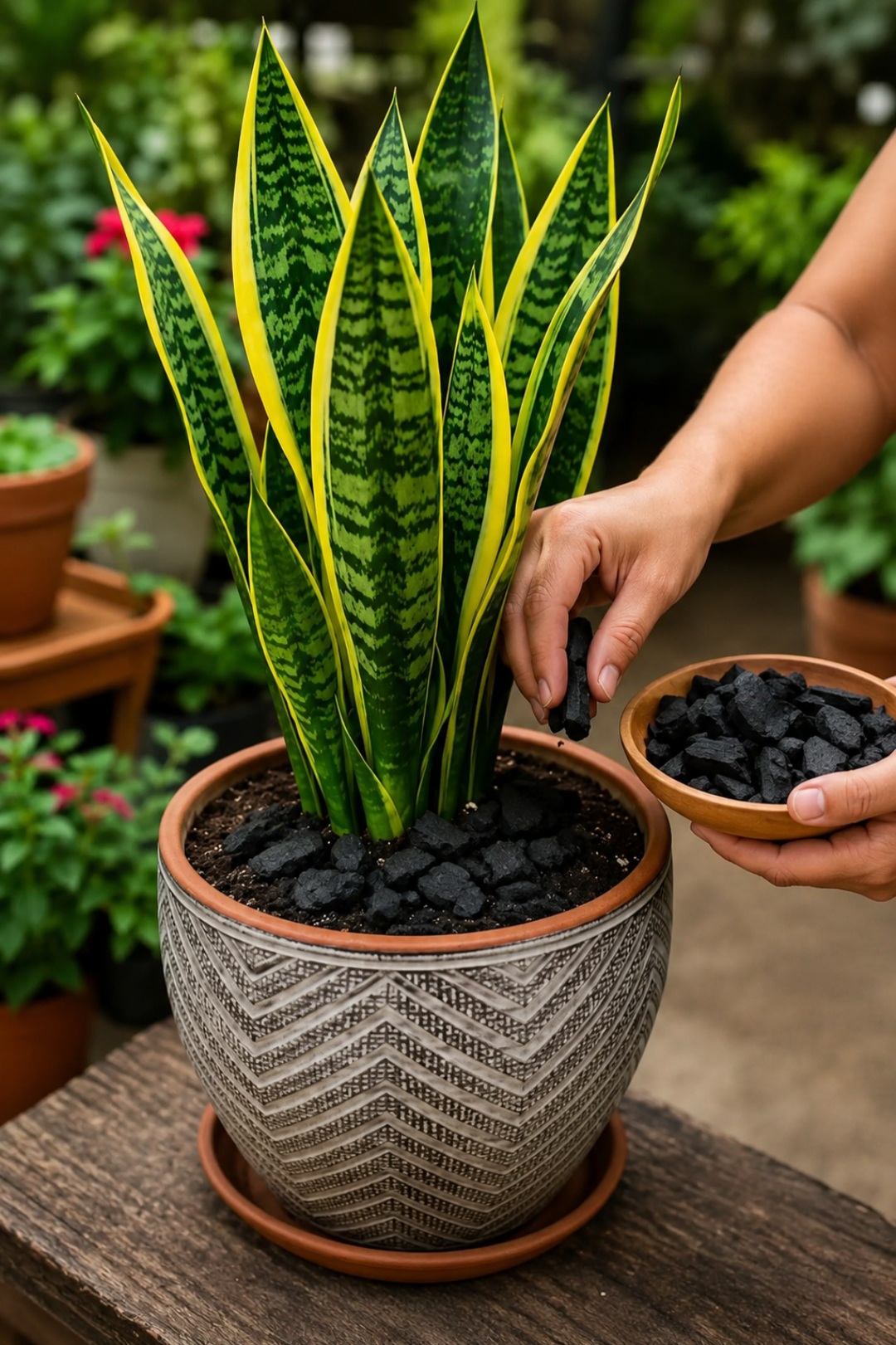
The Snake Plant (Sansevieria trifasciata), fondly called Mother-in-Law’s Tongue, is globally celebrated as one of the most stunning, durable, and low-maintenance indoor foliage plants 🪴💚. Featuring upright, sword-like leaves with striking golden edges and deep emerald patterning, this structural beauty brightens up modern living rooms, offices, and bedrooms alike 🏠💫.
Despite its reputation for being nearly indestructible, the Snake Plant has one major vulnerability: overwatering and root rot 🥀💧. Because it is a succulent plant originating from dry tropical regions, its roots are highly sensitive to soggy, compacted soil that lacks proper air exchange. When soil holds excess moisture for too long, opportunistic anaerobic bacteria and fungi attack the root system, causing leaves to turn mushy and collapse ⚡.
While many plant parents rely on traditional perlite or sand to improve soil drainage, smart plant enthusiasts are turning to a powerful game-changing natural additive: Horticultural Charcoal (Activated Carbon) 🪵🛡️!
In this ultimate blog guide, we will explore why adding natural charcoal chunks to your snake plant pot creates the perfect root ecosystem, purifies soil, eliminates foul odors, and protects your plant against fungal diseases ✨🚀!
🪵 The Science Behind Charcoal in Plant Care 🧪✨
Horticultural charcoal is produced through pyrolysis—burning organic matter, such as wood, at high temperatures in low-oxygen environments. This process creates an extremely porous carbon structure filled with millions of microscopic cavities 🔬🧬.
Key Bio-Properties of Charcoal for Houseplants:
- High Porosity & Aeration 💨: The porous structure acts like a natural sponge that traps trapped air while allowing excess water to flow through freely, preventing soil compaction.
- Adsorption Capacity 🛡️: Unlike absorption (which soaks up water), adsorption allows carbon to chemically bind toxins, heavy metals, harmful synthetic fertilizer salts, and impurities, keeping them away from fragile plant roots.
- pH Buffering & Odor Elimination 🌬️: Natural charcoal neutralizes soil acidity over time and absorbs stagnant water odors caused by rotting organic matter.
- Microbial Shelter 🦠: The tiny crevices inside charcoal chunks offer ideal habitats for beneficial soil micro-organisms that support organic nutrient cycles.
📊 Comprehensive Comparison: Soil with Charcoal vs. Regular Soil Mix
To understand why incorporating charcoal chunks changes the game for indoor succulents, let’s look at a detailed side-by-side comparison 📋👇:
| Aspect / Benefit 🛡️ | Regular Potting Mix 🏺 | Potting Mix Enriched with Charcoal 🪵✨ |
|---|---|---|
| Drainage Speed | Moderate to slow (can retain excess water) | Fast & efficient (prevents standing water) |
| Root Rot Defense | Low protection during accidental overwatering | High protection (absorbs moisture & pathogens) |
| Soil Aeration Level | Tends to compact over several months | Remains loose, airy, and oxygenated |
| Toxin & Salt Filtration | Accumulates fertilizer salts over time | Adsorbs harmful salts & chemical impurities |
| Odor Prevention | Can develop sour, damp soil smells | Neutralizes stagnant odors naturally |
| Microbial Support | Variable depending on moisture levels | Provides permanent shelter for beneficial |
🛡️ Top Benefits of Adding Charcoal to Your Snake Plant Pot 🪴✨
1. Ultimate Shield Against Root Rot 🛡️🦠
Root rot is the leading cause of snake plant loss 🥀. Charcoal acts as an emergency cushion when you accidentally overwater your pot. It pulls excess moisture out of saturated soil particles and slowly releases it back only when needed, keeping the root environment damp rather than waterlogged.
2. Purifies Soil & Filters Tap Water Impurities 🚰✨
Tap water often contains chlorine, fluoride, and dissolved minerals that accumulate in pot soil over time, leaving white crusty deposits and stressing roots. Activated carbon binds these minerals and organic chemicals, purifying the root zone naturally.
3. Improves Oxygen Flow to Rhizomes 💨🌱
Snake plant roots grow from underground rhizomes that require plenty of oxygen to push out new vertical foliage pups. Mixing coarse charcoal chunks into the soil creates permanent micro-tunnels that allow oxygen to circulate freely around the rhizomes 🚀.
4. Deters Pests & Prevents Mold Growth 🐜🚫
Fungus gnats and mold spores thrive in damp, stagnant soil conditions. By regulating humidity and neutralizing decomposing matter within the pot, charcoal removes the primary breeding conditions required by soil pests and surface molds.
🪵 Step-by-Step Guide: How to Apply Charcoal to Snake Plants 📝👇
Using charcoal for your indoor snake plant is simple, clean, and highly effective. Here are the two best ways to incorporate it into your routine 📋✨:
Method 1: The Potting Substrate Blend (Best for Repotting) 🏺🌾
- Select the Right Charcoal 🪵: Choose natural, unflavored horticultural charcoal or lump hardwood charcoal. Never use barbecue briquettes treated with lighter fluids or chemicals!
- Break into Coarse Chunks 🔨: Crush larger pieces into small chunks ranging from 0.5 cm to 1.5 cm in size.
- Mix with Potting Soil 🥣: Combine 70% standard potting soil or succulent mix, 15% perlite, and 15% charcoal chunks in a bucket. Mix thoroughly to distribute the carbon throughout the substrate.
- Plant Your Snake Plant 🪴: Place a layer of soil mix in the container, position the snake plant upright, and fill around the root ball with the charcoal-enriched soil. Firm gently and water lightly!
Method 2: The Top-Dressing & Drainage Layer Strategy 🪵💧
- Drainage Base Layer 🕳️: When potting without drainage holes or in deep containers, place a 1 to 2-inch layer of pure charcoal chunks at the very bottom of the pot before adding soil. This creates a sweetening drainage layer that catches excess runoff water.
- Top-Dressing Mulch ✨: Spread a clean 1-inch layer of decorative charcoal chunks directly onto the soil surface around the base of the plant leaves (as shown in the featured photo). This acts as a decorative top mulch that reduces soil evaporation and prevents surface mold!
🗓️ Expert Pro-Tips for Long-Term Success 💡🛡️
- Use Pots with Drainage 🪴🕳️: While charcoal helps manage excess moisture, always use a terracotta or ceramic pot with bottom drainage holes for optimal root health.
- Watering Strategy 💧: Water your snake plant only when the top 2 to 3 inches of soil feel completely dry to the touch. In winter, reduce watering to once every 4 to 6 weeks.
- Sunlight Conditions ☀️🛋️: Snake plants adapt well to low light, but thrive best in bright, indirect light where they absorb nutrients and water efficiently.
- Re-use with Confidence 🔄: Charcoal does not break down or decompose like bark or moss! It remains active in the soil substrate for years without needing frequent replacement.
🌟 Final Thoughts
Protecting your snake plant doesn’t require complex chemical treatments or constant stress over watering schedules 🌿✨. By incorporating natural horticultural charcoal into your potting strategy, you create a self-purifying, highly oxygenated soil environment that guards against root rot and keeps leaves standing tall, green, and vibrant year-round 🪵🛡️. Upgrade your potting mix today and watch your Sansevieria thrive for years to come! 🪴🚀✨