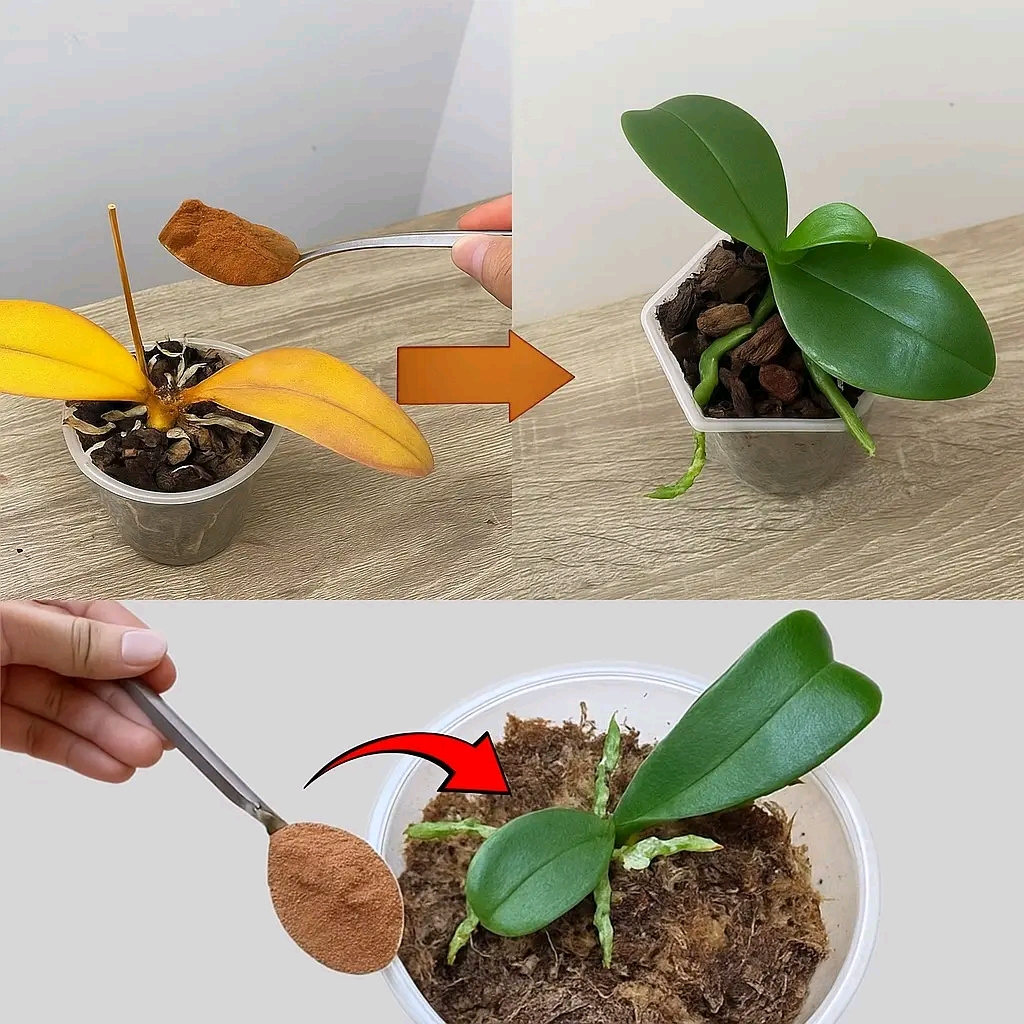
If you are an indoor plant parent, houseplant enthusiast, or green thumb struggling with yellowing leaves, crown rot, or damaged roots on your Phalaenopsis Orchid, look no further 🌸✨! Orchids are world-renowned for their breathtaking blooms, sleek leaves, and delicate epiphytic nature. However, overwatering, fungal infections, and poor substrate ventilation can quickly turn vibrant green leaves completely yellow and bring the plant to the brink of decay. Treating struggling orchids with natural antifungal bio-agents—specifically pure ground cinnamon powder—delivers a powerful, natural fungicide directly to vulnerable plant tissues without the harsh side effects of synthetic chemicals 🛡️🌿.
By dusting natural cinnamon powder onto trimmed stems, root wounds, and crown bases, you seal open plant tissue against pathogens, dry out fungal rot, and stimulate vigorous new green leaf and aerial root development. Let’s break down the complete material matrix, step-by-step 4-stage rehabilitation guide, substrate specifications, and professional orchid recovery secrets for guaranteed houseplant success!
🛒 Master Ingredient Matrix & Botanical Recovery Specifications
Rescuing a dying orchid with yellowed leaves requires balancing natural antifungal treatments, airy epiphytic media, clear plastic pots with proper ventilation, and soft indirect lighting 🌸🛡️. Here is your master specifications breakdown 📋✨:
| Care Component | Material & Tool Specifications | Botanical Function & Horticultural Impact | Recommended Natural Alternatives |
|---|---|---|---|
| Plant Specimen 🌸 | Yellowing Phalaenopsis Orchid | Primary epiphyte suffering from leaf yellowing, stem rot, or root damage (pictured top-left). | Dendrobium, Cattleya, or Vanda Orchid. |
| Natural Fungicide 🥄 | Pure Cinnamon Powder (Ceylon/Cassia) | Natural antifungal agent that seals wounds, stops rot, and prevents bacterial infections (pictured). | Activated Charcoal Powder or Sulphur Powder. |
| Applicator Tool 🥄 | Metal Spoon / Fine Soft Brush | Allows targeted application of cinnamon powder directly onto cut surfaces or crown rot (pictured). | Cotton Swab, Pipette, or Fingertips. |
| Clear Container 🏺 | Clear Plastic Nursery Pot with Holes | Holds orchid bark and sphagnum moss while allowing visual monitoring of root growth (pictured). | Slotted Orchid Pot or Glass Jar setup. |
| Aerated Substrate 🪵 | Pine Bark Chips + Sphagnum Moss | Coarse, highly porous epiphytic mix that provides air circulation around roots while retaining light moisture. | Coconut Husk Chips mixed with Perlite. |
| Light Environment ☀️ | Bright, Indirect Window Light | Drives active photosynthesis to energize new leaf production and root tip expansion (pictured). | Diffused |
👩🌾 Step-by-Step Orchid Cinnamon Rehabilitation Guide
Follow this simple 4-stage botanical recovery guide to inspect your yellowing orchid, trim damaged tissues, apply natural cinnamon treatment, and repot for rapid root and foliage revival, exactly as featured in the step-by-step showcase image 🌸✨!
Step 1: Unpot Specimen & Clean Damaged Tissues 🛠️✂️
- Carefully remove your struggling orchid from its existing container to examine the root system and crown (as shown in the top-left image).
- Gently shake off old, decayed bark pieces and decomposing moss from around the roots.
- Take a pair of pruning shears sterilized with rubbing alcohol and carefully trim away completely yellowed, dying leaves near the main stem base.
- Snip away mushy, brown, hollow, or rotten roots until only firm, healthy root tissue remains.
- Botanical Secret: Never leave mushy or black root tissue behind! Removing decaying organic matter stops fungal pathogens from spreading to healthy stems.
Step 2: Apply Cinnamon Powder Target-wise to Wounds 🥄🛡️
- Take a spoon filled with pure ground cinnamon powder (as demonstrated in the action shots).
- Dust a generous layer of cinnamon powder directly over cut stem surfaces, open leaf bases, trimmed root ends, and central crown crevices.
- Horticultural Science: Cinnamon contains cinnamaldehyde, a potent natural antifungal and antibacterial compound that acts as a natural cauterizing agent, sealing cut plant wounds so rot cannot enter!
- Important Caution: Keep cinnamon focused on cut wounds, stem bases, and yellow leaf scars—avoid heavy application on healthy green root tips, as cinnamon can dry out naked roots if over-applied!
Step 3: Prepare Airy Epiphytic Substrate & Repot 🏺🪵
- Select a clean, clear plastic pot equipped with side slots or bottom drainage holes (as shown in the recovery photos).
- Prepare a lightweight, porous growing medium tailored to orchid epiphytic needs:
- Bark Medium: Chunky pine bark chips (shown in the top-right image) provide maximum root aeration.
- Sphagnum Moss Medium: Damp sphagnum moss (shown in the bottom image) holds balanced moisture for rootless orchids.
- Position your treated orchid specimen upright in the center of the transparent pot.
- Gently fill the container with fresh bark or sphagnum moss, securing the base so the plant stands firm without burying central leaf junctions.
Step 4: Manage Moisture, Light & Root Expansion ☀️📈
- Place your repotted orchid in a warm location receiving bright, indirect sunlight (65°F to 80°F / 18°C to 27°C).
- Avoid watering immediately after applying cinnamon! Allow cut wounds to dry out and callosify for 24 to 48 hours before giving light moisture.
- Mist the top substrate lightly or soak the pot base briefly in distilled water once every 7 to 10 days, allowing media to dry between waterings.
- Within a few weeks, watch for firm, bright green leaves emerging from the crown and vigorous new aerial roots with green growing tips extending through the bark (as featured in the top-right and bottom recovery results)!
💡 Pro Secrets for Thriving Orchid Recovery
- Use Clear Pots for Root Health: Orchid roots perform minor photosynthesis! Using clear plastic pots lets light reach roots while allowing you to monitor root hydration (green means hydrated, silvery-grey means time to water) 🏺.
- Keep Water Out of the Crown: Always avoid leaving standing water in the central leaf rosette! Trapped water causes devastating crown rot. Wipe leaf crevices dry with a paper towel if water lands inside 🌸.
- Master Indirect Light: Direct midday sun scorches sensitive orchid leaves, turning them yellow or brown. Filter light through sheer curtains for optimal growth energy ☀️.
Incorporate this simple organic cinnamon treatment into your houseplant care routine today to rescue yellowing orchids, prevent stem rot, and enjoy a flourishing display of rich green leaves and vibrant roots! 🌸✨🛡️🌿🌺