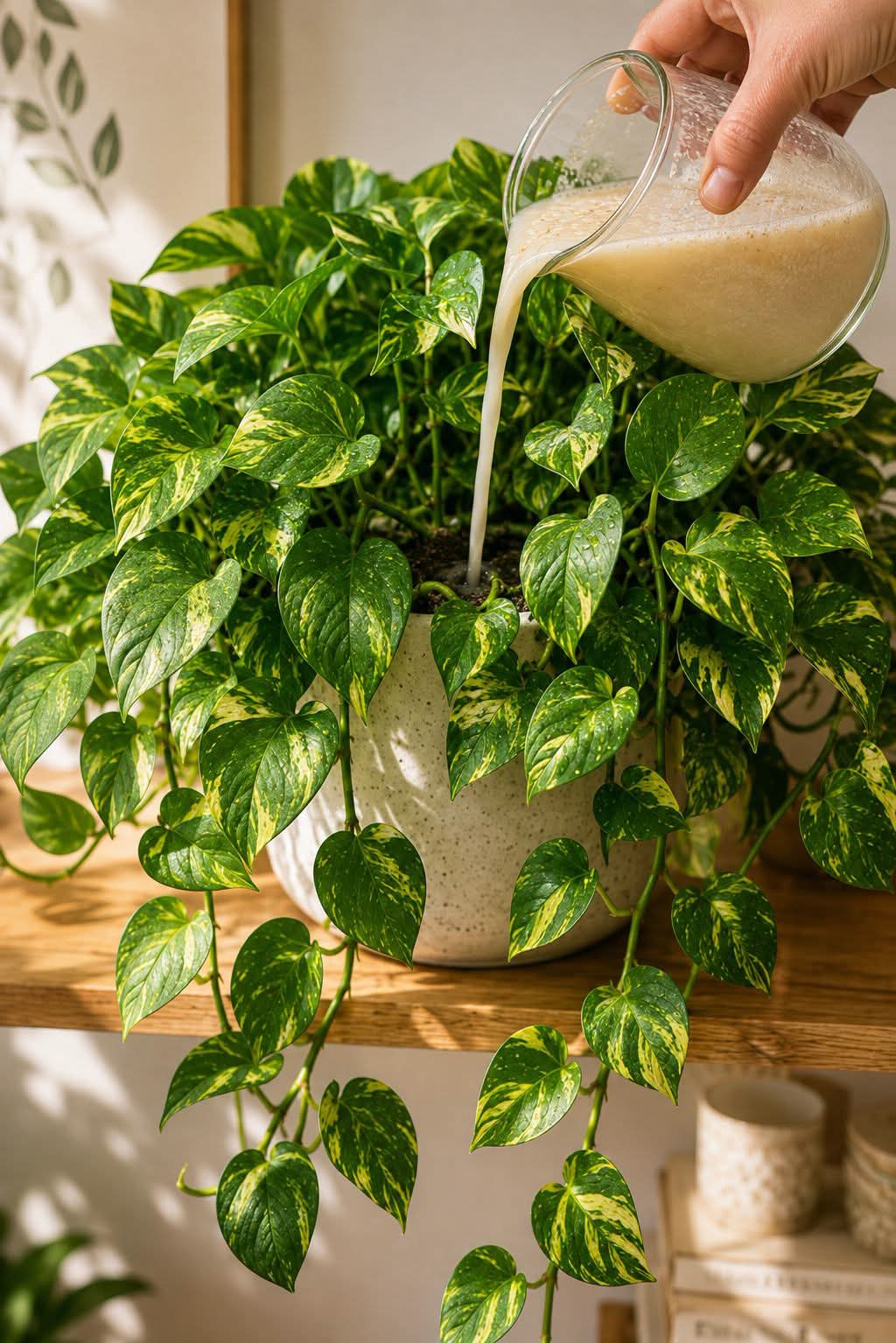
If you are an indoor plant parent, houseplant enthusiast, or home gardener looking to turn your Golden Pothos (Epipremnum aureum) into a lush, cascading waterfall of variegated green and yellow foliage, look no further 🌿✨! Golden Pothos is celebrated worldwide for its heart-shaped leaves, air-purifying qualities, and exceptionally resilient nature. Feeding your trailing potted specimens with gentle, nutrient-packed organic bio-elixirs—such as fermented rice water or oatmeal-banana teas—delivers bioavailable nitrogen, starch, potassium, and essential trace minerals directly to the root system 🛡️🍃.
By applying mild natural fertilizers directly around the central soil crown using a clear glass pitcher, you nourish beneficial soil microbes and stimulate rapid vine lengthening and leaf expansion. Let’s break down the complete ingredient matrix, step-by-step 4-stage feeding guide, potting substrate specifications, and professional botanical care secrets for guaranteed houseplant success!
🛒 Master Ingredient Matrix & Botanical Care Specifications
Nurturing a vibrant, trailing Golden Pothos requires balancing organic micro-nutrients, high-porosity potting media, stylish speckled ceramic containers with proper drainage, and bright indirect lighting 🌿🛡️. Here is your master specifications breakdown 📋✨:
| Care Component | Material & Tool Specifications | Botanical Function & Horticultural Impact | Recommended Organic Alternatives |
|---|---|---|---|
| Plant Specimen 🌿 | Trailing Golden Pothos (Epipremnum) | Primary potted specimen featuring variegated heart-shaped leaves and long vines (pictured center). | Marble Queen Pothos, Neon Pothos, or Philodendron. |
| Organic Starch Elixir 🥛 | Fermented Rice Water / Oat Milk Tea | Delivers starch, amino acids, nitrogen, and B-vitamins to feed soil microbes and roots (pictured). | Banana Peel Tea, Diluted Molasses Water, or Potato Water. |
| Glass Applicator 🥛 | Clear Glass Beaker / Pitcher | Allows smooth, controlled liquid volume application over the central root crown (pictured top-right). | Small Watering Can, Glass Measuring Cup, or Pipette. |
| Speckled Container 🏺 | Ceramic Pot with Drainage Hole | Holds well-aerated soil while elevating aesthetic display on wooden shelves (pictured center). | Terracotta Clay Pot or Hanging Basket. |
| Aerated Substrate 🪵 | Peat Moss + Perlite + Orchid Bark | Porous, free-draining mix that prevents waterlogging and aerial root decay. | Coco Coir mixed with Pumice Granules. |
| Indoor Light Setup ☀️ | Bright, Indirect Window Light | Drives active photosynthesis to maintain bright yellow leaf variegation without burning (pictured). | Diffused |
👩🌾 Step-by-Step Golden Pothos Organic Feeding Guide
Follow this simple 4-stage botanical care guide to inspect your plant, prepare a gentle nutrient-rich elixir, apply soil irrigation, and support vigorous vine growth, exactly as featured in the indoor garden setup 🌿✨!
Step 1: Inspect Foliage & Aerate Substrate Surface 🛠️🪵
- Position your potted Golden Pothos on a sturdy wooden shelf near a bright window (as shown in the main image).
- Examine the heart-shaped leaves and trailing vines to check for dust or dry stem tips.
- Gently loosen the top 1/2 inch of potting soil around the pot perimeter using a wooden skewer or small fork.
- Aerating topsoil ensures applied organic liquid feeds sink evenly down to active root structures instead of running off down the inner container walls.
- Wipe down variegated green leaves with a damp cloth to maximize light absorption for photosynthesis.
Step 2: Prepare a Gentle Starchy Organic Elixir 🥣🥛
- Avoid heavy chemical synthetic fertilizers, as concentrated nitrogen salts cause brown leaf tips and burn delicate Pothos root hairs!
- Prepare a mild, natural nutrient solution using organic household ingredients:
- Fermented Rice Water: Soak washed uncooked rice in water for 24 to 48 hours to release bioavailable starches, nitrogen, and vitamins.
- Oatmeal-Banana Infusion: Blend 1 tablespoon of oats and 1 dried banana peel in warm water, strain thoroughly, and dilute with water to create a milky feeding elixir (as featured in the clear glass pitcher).
- Diluted Milk Tea: Mix 1 tablespoon of plain milk into 2 cups of filtered water to provide calcium and proteins to soil fungi.
- Strain the solution through a fine mesh sieve to remove solid organic particles that could attract fungus gnats or create surface mold.
- Ensure the liquid feed reaches room temperature before applying to avoid thermal root shock.
Step 3: Apply Liquid Solution Target-wise to Soil 🥛🌱
- Fill a clear glass pitcher with your prepared organic feed solution (as demonstrated in the central action shot).
- Slowly pour the milky white liquid directly over the soil line around the base of central stems, allowing it to soak deep into the root zone.
- Botanical Secret: Pouring gently with a glass pitcher allows precise liquid control right where central roots absorb nutrients while keeping moisture off leaf blades, preventing fungal leaf spots!
- Allow excess moisture to drain into the catch saucer below, emptying standing water after 15 minutes to prevent root saturation.
Step 4: Manage Light, Humidity & Vine Maintenance ☀️📈
- Position your treated Golden Pothos in a location receiving bright, indirect sunlight (65°F to 85°F / 18°C to 29°C).
- Pothos plants thrive near bright windows where direct harsh rays are filtered out (pictured background).
- Maintain ambient humidity around 50% to 60% to encourage large leaf size and healthy aerial root nodes along vines.
- Water consistently whenever the top 1 to 2 inches of soil feel dry to the touch—Pothos foliage will droop slightly when thirsty, bouncing back quickly after hydration!
- Trim leggy vine tips periodically just below a leaf node to force bushy new growth from the base.
💡 Pro Secrets for Thriving Golden Pothos
- Maintain Vibrant Variegation: If your Golden Pothos starts turning solid green, move it closer to a bright light source! Higher light levels produce striking yellow and gold splashes ☀️.
- Propagate Vine Cuttings Easily: Snip 4-inch stem sections containing at least 2 leaf nodes and submerge the bottom node in a glass jar of water—roots will sprout within 1 to 2 weeks 🌿!
- Prevent Root Rot: Never let your ceramic pot sit in standing drainage water! Always use an airy, porous potting mix containing perlite and orchid bark to ensure fast drainage 🏺.
Incorporate this simple organic rice-watering routine into your houseplant care schedule today to enjoy vibrant variegated leaves and long, healthy cascading vines! 🌿✨🛡️🍃