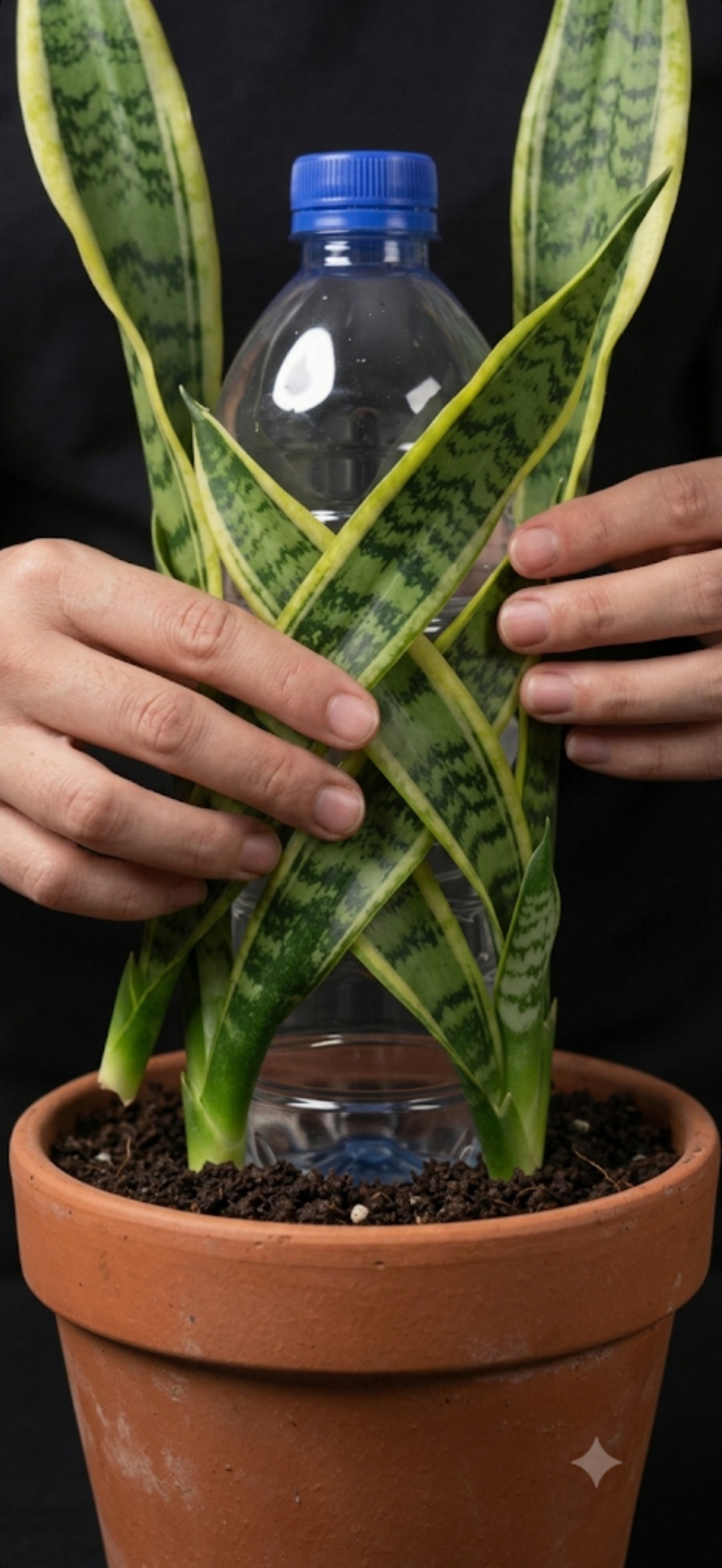
If you are an indoor plant styling enthusiast, houseplant lover, or urban gardener looking to transform straight, upright Snake Plant (Sansevieria Trifasciata ‘Laurentii’) cuttings into an artistic braided lattice structure, look no further ✨! Training snake plant leaf cuttings using a central plastic water bottle support structure is a clever horticultural design hack that creates a woven green artwork inside terracotta pots 🪴.
Snake plants are exceptionally resilient succulents known for their rigid, sword-like variegated leaves featuring bright yellow margins. By anchoring several flexible leaf trimmings into moist soil substrate around a central support bottle, you can crisscross and weave the leaves into a geometric lattice patterns as roots establish below. Let’s explore the master setup specifications, step-by-step weaving instructions, exact care ratios, and professional styling secrets!
🛒 Master Setup & Leaf Weaving Specifications
Creating a braided snake plant arrangement requires balancing flexible leaf selection, central structural support, and proper soil moisture 🌿✨. Here is your master specifications breakdown 📋✨:
| Equipment & Setup Element | Key Specifications & Components | Horticultural Function & Structural Purpose | Recommended Alternatives |
|---|---|---|---|
| Plant Variety 🌿 | Sansevieria Trifasciata ‘Laurentii’ | Succulent leaf cuttings featuring yellow borders and dark green banding (pictured). | Snake Plant Zeylanica or Moonshine. |
| Central Guide Support 🍾 | Recycled Plastic Water Bottle | Acts as a central cylindrical form to weave and crisscross leaves uniformly (pictured). | Wooden Dowel, PVC Pipe, or Glass Jar. |
| Container Base 🪴 | Porous Terracotta Clay Pot | Provides breathable soil conditions and weight stability to prevent tipping (pictured). | Ceramic or Heavy Concrete Planter. |
| Potting Substrate Base 🪨 | Cactus & Succulent Soil Mix | Fast-draining soil blended with perlite and sand to encourage clean rooting. | Coarse Sand + Pumice Blend. |
| Fastening Support 🧵 | Soft Plant Ties / Elastic Bands | Holds woven leaf intersections gently in place without biting into green leaf tissues. | Jute Twine or Garden Ribbon. |
| Lighting Environment ☀️ | Bright, Indirect Sunlight | Drives root formation and energy production while keeping leaf color margins vivid. | Medium |
👩🌾 Step-by-Step Professional Leaf Weaving Guide
Follow this simple 4-step professional guide to prepare soil, position central support, weave leaf cuttings, and care for your snake plant sculpture, exactly as demonstrated in the featured workspace photograph 🌿✨!
Step 1: Prepare the Terracotta Pot and Central Guide 🪴🍾
- Fill a clean terracotta clay pot two-thirds full with a fast-draining cactus and succulent soil mix.
- Remove the cap from a clean plastic water bottle and press the bottom of the bottle firmly into the center of the soil until it rests securely.
- Add additional soil mix around the base of the bottle and tamp it down lightly to ensure the central column remains completely upright.
Step 2: Anchor the Snake Plant Leaf Cuttings 🌿✂️
- Select 4 to 6 long, healthy, and slightly pliable snake plant leaf trimmings of similar height and thickness.
- Cut the bottom ends of the leaves cleanly using sterilized pruning shears.
- Insert the leaf bases deep into the soil around the perimeter of the bottle, spacing them evenly in opposite pairs (as shown in the bottom rim arrangement).
- Pro Tip: Allow the cut ends of the leaves to callous in a dry, shaded spot for 24 hours prior to planting to prevent soil rot!
Step 3: Weave the Lattice Pattern around the Bottle 🤲✨
- Take two adjacent snake plant leaves and gently bend them across each other over the front face of the plastic bottle (as captured in the hand-weaving photo).
- Crisscross the leaves in an alternating over-and-under pattern around the bottle, creating a woven diamond mesh or braid structure.
- Use soft plant ties or elastic bands at the crossover points to secure the leaves gently against the plastic bottle without pinching the leaf tissue.
- Continue weaving until you reach the top of the bottle, allowing the upper leaf tips to flare outward naturally.
Step 4: Water and Root Establishment 💧☀️
- Lightly moisten the soil around the base of the leaves using a narrow-spout watering can.
- Place the pot in a warm location receiving bright, indirect sunlight to encourage root initiation at the buried leaf bases.
- Keep the central bottle in place for 6 to 8 weeks while new white roots anchor into the soil. Once the leaves hold their woven shape permanently, the central bottle can be carefully removed or left as a hidden core structure!
💡 Pro Secrets for Weaving Snake Plants
- Select Flexible Younger Leaves: Mature snake plant leaves can be rigid and brittle 🌿. Choose slightly younger, supple leaf cuttings that bend smoothly without snapping or cracking along the central vein!
- Prevent Soil Rot during Rooting: Succulents store moisture inside their leaves 🪴. Water sparingly during the first 3 weeks of rooting—only moistening the soil when it feels completely dry to the touch.
- Terracotta Keeps Roots Healthy: Using porous terracotta pots absorbs excess soil moisture, keeping buried leaf cuttings dry, healthy, and free of fungal decay!
Try this artistic braided bottle technique today to transform simple snake plant cuttings into a eye-catching living sculpture for your home! 🌿✨🍾