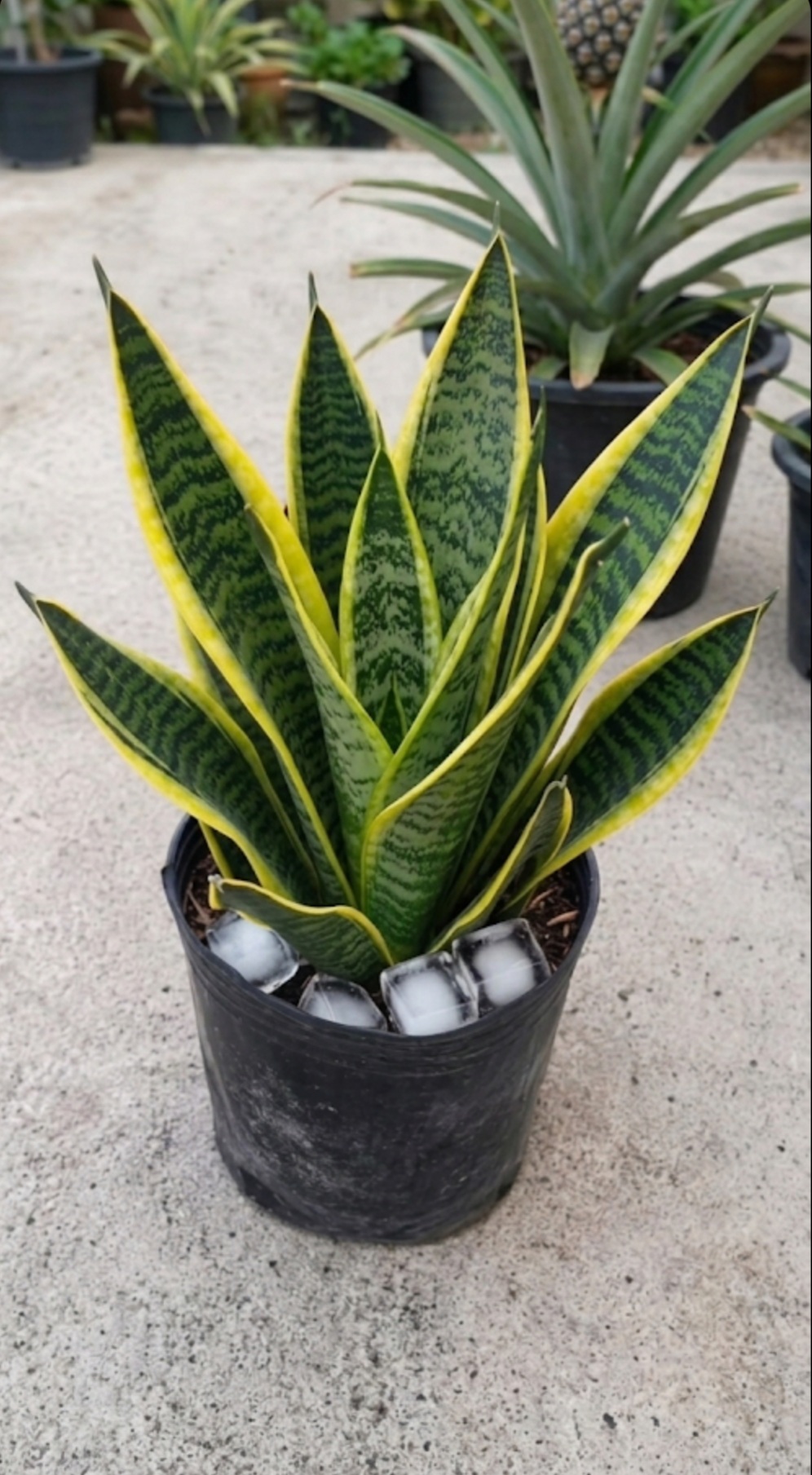
If you are an avid houseplant enthusiast, interior stylist, or succulent lover looking to maintain vibrant, erect Snake Plants (Sansevieria Trifasciata ‘Laurentii’), you may have encountered the trendy social media hack of using ice cubes to water potted houseplants 🧊. While placing ice cubes around the soil base appears to offer a slow-drip hydration method, understanding the true physiological impact of cold temperatures on tropical desert succulents is essential for maintaining healthy roots, vibrant variegated foliage, and preventing root shock 🌿.
Snake plants are desert-native succulents that thrive in warm, well-drained environments with deep, infrequent watering. While slow-melting ice provides controlled liquid delivery, direct ice contact with soil can cold-shock delicate root structures and cause cell wall collapse. Let’s explore the master setup specifications, step-by-step application guidelines, professional soil hydration ratios, and expert horticultural advice for safe snake plant care!
🛒 Master Setup & Ice Cube Watering Specifications
Understanding how temperature, soil substrate, and watering delivery methods interact helps keep variegated snake plants thriving without root rot or cold shock 🌿✨. Here is your master specifications breakdown 📋✨:
| Equipment & Component | Material & Specifications | Horticultural Function & Impact | Recommended Alternatives |
|---|---|---|---|
| Indoor Plant Variety 🌿 | Sansevieria Trifasciata ‘Laurentii’ | Succulent with erect, sword-like green leaves bounded by vivid yellow margins (pictured). | Sansevieria Zeylanica or Hahnii. |
| Watering Medium 🧊 | Solid Frozen Water (Ice Cubes) | Provides a slow-release melt, but risks root shock if placed directly on tender stems (pictured). | Room-Temperature Filtered Water. |
| Nursery Container 🪴 | Aerated Black Plastic Pot | Retains soil while offering bottom drainage holes for excess meltwater runoff (pictured). | Terracotta or Ceramic Planter. |
| Growing Substrate 🪨 | Cactus / Succulent Soil Mix | Fast-draining blend of coarse sand, perlite, and peat to prevent waterlogging. | Perlite + Pumice Mix. |
| Sunlight Exposure ☀️ | Bright, Indirect Window Light | Drives light absorption to maintain yellow foliage margins and thick leaf tissue. | Medium Ambient Room Light. |
| Temperature Range 🌡️ | 65°F to 85°F (18°C to 29°C) | Ideal tropical growing range; sensitive to temperatures below 50°F (10°C). | Warm |
👩🌾 Step-by-Step Professional Care & Watering Guide
Follow this 4-step professional guide to evaluate soil dryness, apply safe watering techniques, protect tropical roots, and maintain your snake plant, as shown in the featured photo 🌿✨!
Step 1: Assess Soil Moisture and Leaf Rigidity 🌿✨
- Insert a finger or moisture meter 2 inches into the soil before introducing any water or ice.
- Ensure the soil substrate is 100% dry throughout the upper and middle pot layers.
- Check the yellow-bordered leaves: healthy snake plant foliage should feel firm, thick, and rigid to the touch.
Step 2: Safe Ice Placement (If Using the Ice Method) 🧊🪴
- Place 3 to 4 standard ice cubes strictly along the outer perimeter edge of the pot, keeping them away from the central leaf cluster (as displayed in the image).
- Never let ice cubes touch the green stem bases directly, as direct freezing temperatures break down delicate plant cell walls.
- Allow the ice cubes to melt slowly at ambient room temperature, providing a gradual trickle of water into the topsoil.
Step 3: Optimal Hydration Strategy for Long-Term Health 💧☀️
- Professional Horticultural Alternative: For optimal root health, replace ice cubes with a thorough soak using room-temperature filtered water.
- Pour room-temperature water around the base until liquid drains freely from the bottom drainage holes.
- Allow all excess water to drain out completely before placing the pot back on a saucer or display tray to eliminate standing water risks.
Step 4: Placement and Seasonal Maintenance ☀️✨
- Position your snake plant in a bright location receiving indirect sunlight.
- Reduce watering frequencies during cold winter months, watering only once every 4 to 6 weeks.
- Dust the broad leaves monthly with a damp cloth to maximize light absorption and keep leaf colors crisp and vibrant!
💡 Pro Secrets for Snake Plant Hydration
- Root Temperature Shock Warning: Snake plants are native to tropical West Africa 🌿. Exposing tropical root zones to freezing ice temperatures can cause root necrosis, stunted growth, and mushy leaf bases.
- Room-Temperature Water is Best: Using lukewarm or room-temperature filtered water mimics natural rainfall, encouraging deep root extension without shocking the plant 💧.
- Prevent Soil Over-Saturation: Snake plants store water inside their thick leaves 🪴. Always allow the soil mix to dry out completely between waterings to prevent root rot!
Try this expert care approach today to keep your variegated snake plant vibrant, healthy, and growing strong for years to come! 🌿✨🧊