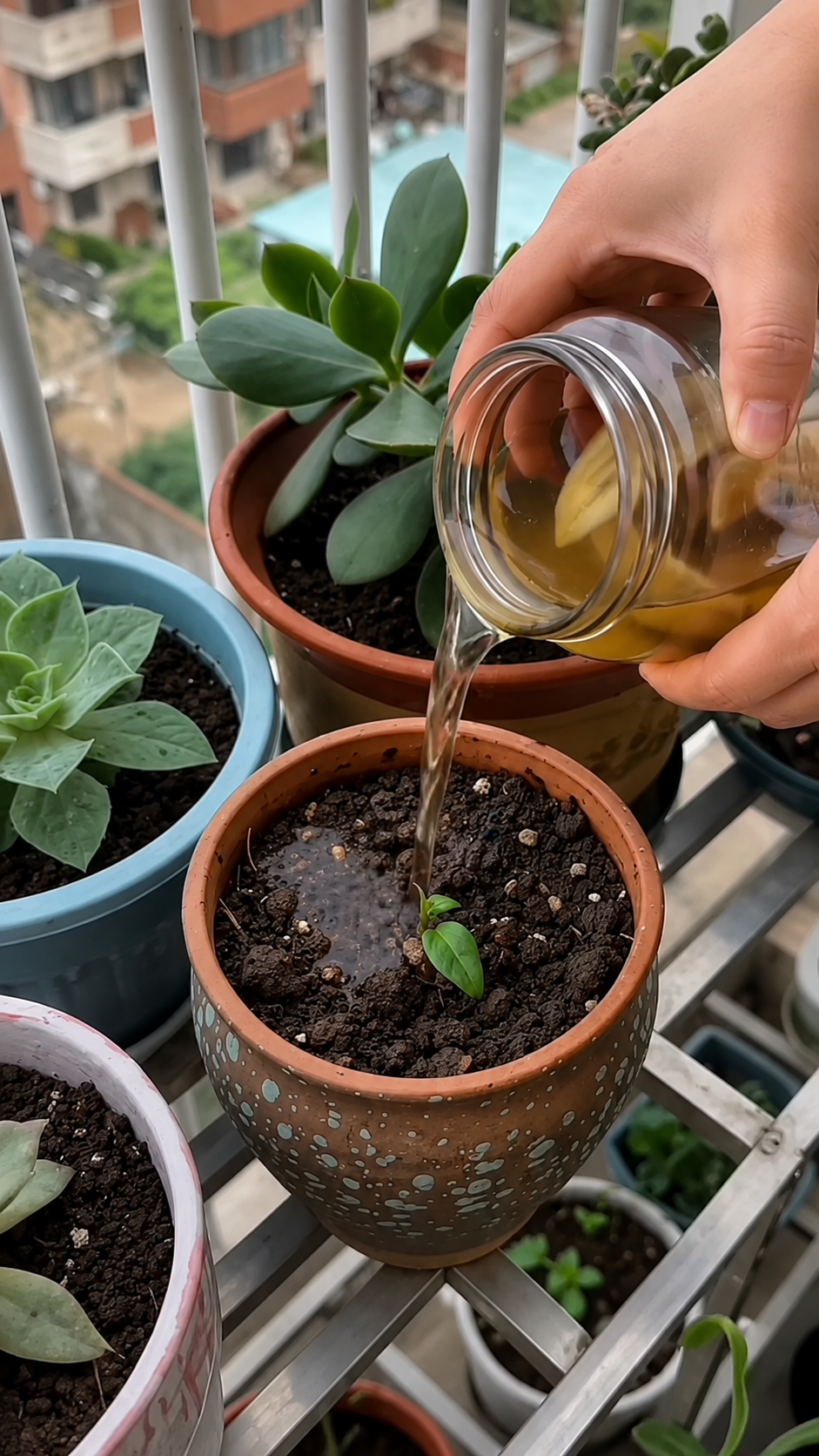
🪴 Organic Elixir for Jade Plant (Crassula ovata) 🪵
Jade plants (Crassula ovata) are iconic succulents renowned for their thick, fleshy leaves and woody, tree-like stems. Because succulents store water in their leaves, they require low-nitrogen, mineral-rich nourishment to maintain strong structural integrity without becoming soft or leggy. This organic homemade blend—crafted from potato peels, finely ground eggshells, pure water, and a micro-drop of plant oil—delivers slow-release potassium and calcium to strengthen stems, thicken leaves, and boost drought resilience.
| Ingredient | Target Benefit for Jade Plant |
|---|---|
| Potato Peels | High Potassium (K) to plump up fleshy leaves and firm trunk structure. |
| Eggshells | Calcium Carbonate to strengthen cell walls and prevent root/stem rot. |
| 1 Drop Vegetable Oil | Helps coat root zone lightly, regulating soil moisture and repelling soil gnats. |
| Water Base | Distributes gentle, organic trace minerals through well-draining succulent soil. |
| Application Rate | Once every 4 to 6 weeks during spring and summer (Active growth period). |
| Ideal Soil Type | Gritty, fast-draining cactus/succulent potting mix in porous terracotta pots. |
Jade plants require specific mineral ratios to prevent drooping, weak stems, or leaf drop. Here is why this kitchen-scrap recipe suits succulents perfectly:
- Fleshy Leaf Plumping: The potassium dissolved from potato peels regulates water retention inside succulent tissue, ensuring leaves stay glossy, thick, and firm.
- Woody Trunk Reinforcement: Calcium from eggshells provides the structural building blocks for the main stem, helping young Jade cuttings develop a sturdy, tree-like trunk.
- Rot-Safe Feeding: Unlike harsh synthetic chemical fertilizers that burn delicate succulent roots, this organic tea provides a diluted, mild nutrient delivery that avoids root damage.
- Pest Protection: The tiny oil surfactant helps discourage scale insects and fungus gnat larvae that often hide in the top layer of indoor potting soil.
- Prepare Ingredients: Wash peels from 2 raw potatoes to remove dirt. Clean 3 eggshells, dry them, and crush them thoroughly into a fine powder.
- Steep in Water: Place peels and powdered eggshells into a glass container with 1 liter of lukewarm water. Add exactly 1 drop of vegetable oil and stir.
- Infuse (24–36 Hours): Let the jar sit at room temperature for 24 to 36 hours. Strain the liquid completely using a fine mesh sieve to remove all solid residues.
- Water the Jade Plant: Ensure your Jade plant’s soil is completely dry first. Pour the strained tea around the soil base until it drains out the bottom hole. Discard excess runoff from the saucer.
Soft or slightly wrinkled leaves begin absorbing stored potassium and water, regaining their firm, plump texture.
Calcium absorption strengthens main branches, reducing bending or drooping in heavy upper foliage.
Fresh, compact pairs of dark green, red-tipped leaves emerge from branch tips under bright indirect sun.
A: No. Jade plants enter dormancy during cold winter months. Only apply this natural fertilizer during active spring and summer growth seasons.
A: As long as you stick to strictly 1 drop per liter of water, it will not clog soil pores. Always use well-draining succulent soil mix.
A: Un-strained potato pieces or large shell chunks sitting on wet succulent soil foster mold and stem rot, which can kill a Jade plant quickly.
💡 Final Thoughts
Jade plants are resilient, long-lived succulents that thrive on minimal intervention and balanced nutrition. Feeding your Jade plant with this custom potato peel and eggshell tea once a month during spring and summer provides the exact minerals needed for thick leaves and a thick woody trunk. Combine this organic feeding with bright sunlight and thorough drying periods for a stunning, healthy plant!