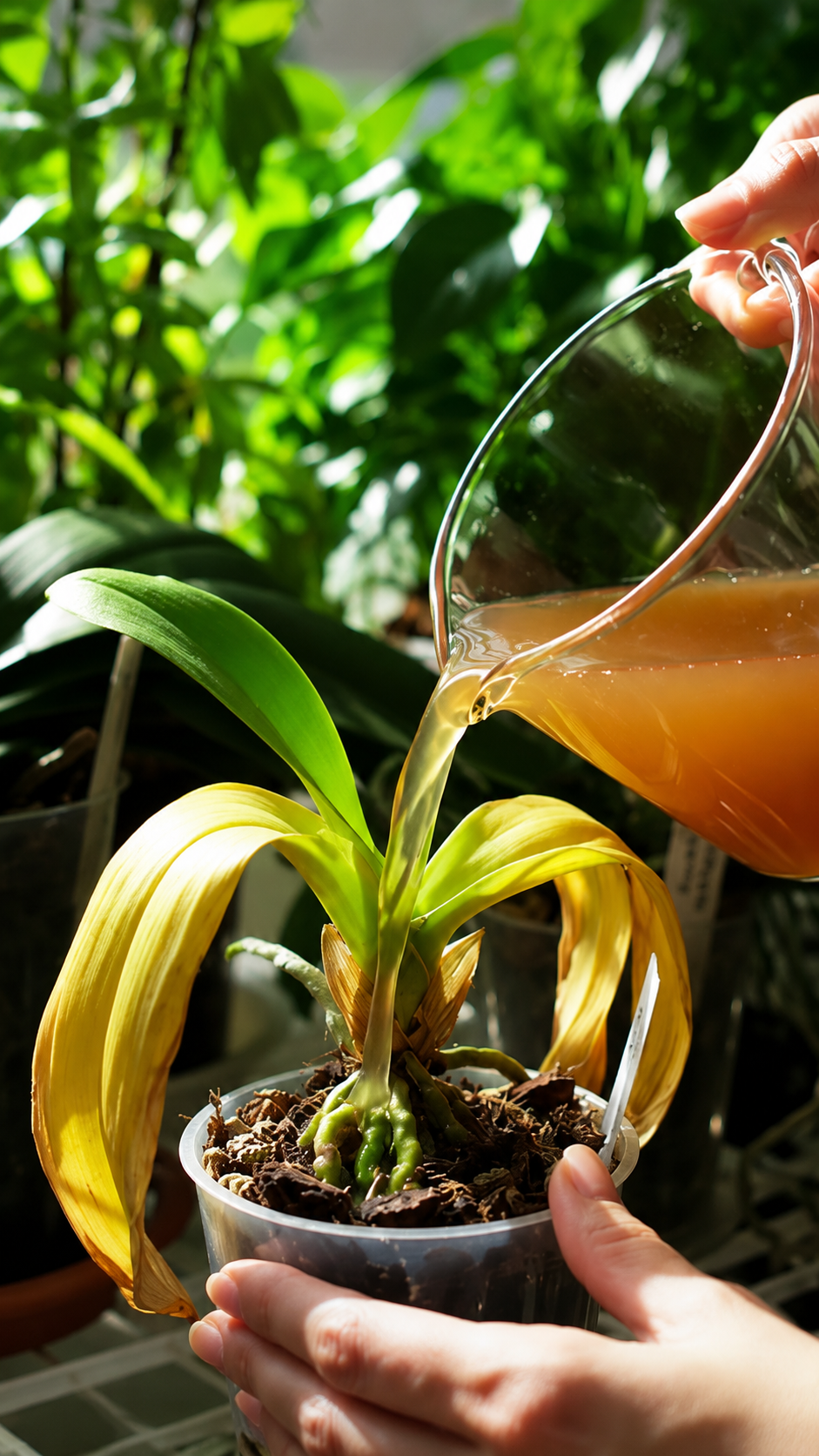
🍌 How to Revive a Dying Orchid with Banana Peel & Compost Tea 🌸
Orchids displaying severe leaf yellowing, dehydration, or drooping foliage are often suffering from root stress, nutrient depletion, or transplant shock. Rather than discarding a struggling plant, combining potassium-rich banana peels with bio-active aerated compost tea provides a gentle, organic bio-stimulant. This liquid solution reintroduces essential minerals, beneficial microbes, and natural enzymes directly into the root zone without risking chemical fertilizer burn on sensitive green aerial roots.
| Element | Specification & Details |
|---|---|
| Primary Ingredients | Ripe banana peels + organic worm casting or finished compost tea. |
| Key Nutrients | Potassium (K), Phosphorus (P), Magnesium (Mg), and Calcium (Ca). |
| Microbial Content | Beneficial bacteria and mycorrhizal fungi from aerated compost. |
| Target Condition | Dehydrated orchids, yellowing foliage, lost roots, or growth stagnation. |
| Application Frequency | Every 3 to 4 weeks during the active root rehabilitation phase. |
| Potting Mix Compatibility | Coarse pine bark mix, sphagnum moss, or clear plastic orchid pots. |
This dual organic treatment addresses both structural nutrient deficiencies and root microbiome health, making it ideal for weak or stressed Phalaenopsis orchids.
- Potassium Boost for Cellular Hydration: Banana peels are exceptionally high in soluble potassium, which regulates stomatal openings, aids water movement in leaves, and firms up limp, wrinkled foliage.
- Phosphorus for Root Regeneration: Trace phosphorus content triggers the growth of new green root tips from the base of the main stem, replacing dead or rotted roots.
- Beneficial Soil Microbes: Compost tea supplies millions of beneficial microorganisms that outcompete harmful soil pathogens (like Pythium and Phytophthora) that cause orchid root rot.
- Enzyme Activation: Organic acids in fermented banana water assist the orchid in absorbing micro-nutrients trapped in aging pine bark substrate.
- Prepare Banana Peel Extract: Chop 2 ripe banana peels into small pieces. Soak them in 1 liter of warm filtered water for 24 to 48 hours in a covered glass jar, then strain out all solid pieces completely.
- Brew the Compost Tea: Steep 2 tablespoons of organic compost or worm castings in a breathable mesh bag inside 1 liter of non-chlorinated water for 24 hours.
- Combine the Liquid Feed: Mix equal parts (1:1 ratio) of strained banana peel water and compost tea solution. Dilute with an additional part of pure water if the liquid appears too dense or dark.
- Drench the Root System: Gently pour the liquid mixture around the central stem base and aerial roots, soaking the bark medium thoroughly. Ensure all liquid drains completely out of the pot bottom.
Beneficial microbes colonize the orchid bark. Toxic salts from past synthetic fertilizers begin breaking down while old yellow leaves stabilize.
Potassium absorption restores water pressure within the leaf tissues, reducing wrinkle depth in softer green leaves.
Vibrant green or reddish root nubs begin pushing out from the crown base, actively anchoring into the fresh substrate.
A fresh, dark green leaf emerges from the central crown, signaling full recovery from previous stress conditions.
A: No. Leaving organic solids inside the pot attracts fruit flies, fungus gnats, and mold growth. Always strain the liquid thoroughly before applying.
A: Severely yellowed leaves will eventually drop off naturally as the plant reabsorbs their mobile nutrients. However, the treatment stops further leaf yellowing and fuels new green leaf growth.
A: Apply this solution once every 3 to 4 weeks. Water with plain, filtered water for regular waterings in between treatment cycles.
A: Compost tea is aerobic and contains living organisms, so it is best used immediately. You can store strained banana peel extract in the refrigerator for up to 5 days maximum.
💡 Final Thoughts
Reviving a weak orchid requires patience, proper lighting, and organic nourishment. Combining banana peel extract with compost tea offers a balanced, non-toxic bio-feed that restores healthy root dynamics and encourages vigorous leaf growth. Pair this natural feeding regimen with bright indirect light and correct drying periods between waterings for the best recovery results!