If you have ever dreamed of recreating that authentic, flaky French bakery experience right in your home kitchen, look no further 🍰✨! Golden, buttery, beautifully laminated, and irresistibly crisp on the outside while remaining tender and soft on the inside, classic Homemade Butter Croissants represent the absolute pinnacle of baking art 🥐🧈.
Mastering laminated dough might seem intimidating at first, but with clear steps, ideal dough temperatures, and precise rolling techniques, anyone can achieve golden, crescent-shaped croissants that rival top Parisian patisseries 🍰✨. Let’s dive into the complete ingredient ratios, step-by-step laminating and shaping process, professional baking specifications, and expert troubleshooting secrets!
🛒 Master Ingredient Ratios & Recipe Specifications
Creating hundreds of flaky, paper-thin butter layers requires a balanced yeast dough (detrempe) and proper butter block (beurrage) integration. Here is your master specifications breakdown 📋✨:
| Recipe Component | Key Ingredients Required | Professional Role & Texture Function | Prep / Baking Target |
|---|---|---|---|
| Yeast Dough Base 🌾 | Bread Flour, Milk, Water, Sugar, Active Dry Yeast, Salt | Forms a elastic, sturdy gluten matrix that traps butter layers during rolling. | Knead gently; chill dough at 40°F (4°C) for at least 1 hour before laminating. |
| Butter Layer (Beurrage) 🧈 | High-Fat European-Style Unsalted Butter (82%+ Fat) | Creates microscopic steam layers between dough sheets, yielding ultimate flakiness. | Pliable yet chilled; match dough consistency before encasing. |
| Egg Wash Coating 🥚 | Egg Yolk + Whole Milk or Heavy Cream | Promotes deep, golden-brown browning and a high-gloss sheen upon baking. | Brush gently twice—once before proofing, once right before baking. |
| Garnish & Finish 🌾 | Toasted Sesame Seeds or Coarse Sea Salt | Adds subtle crunch, visual flair, and flavor contrast to rich butter layers. | Sprinkle |
👩🌾 Step-by-Step Homemade Croissant Preparation Guide
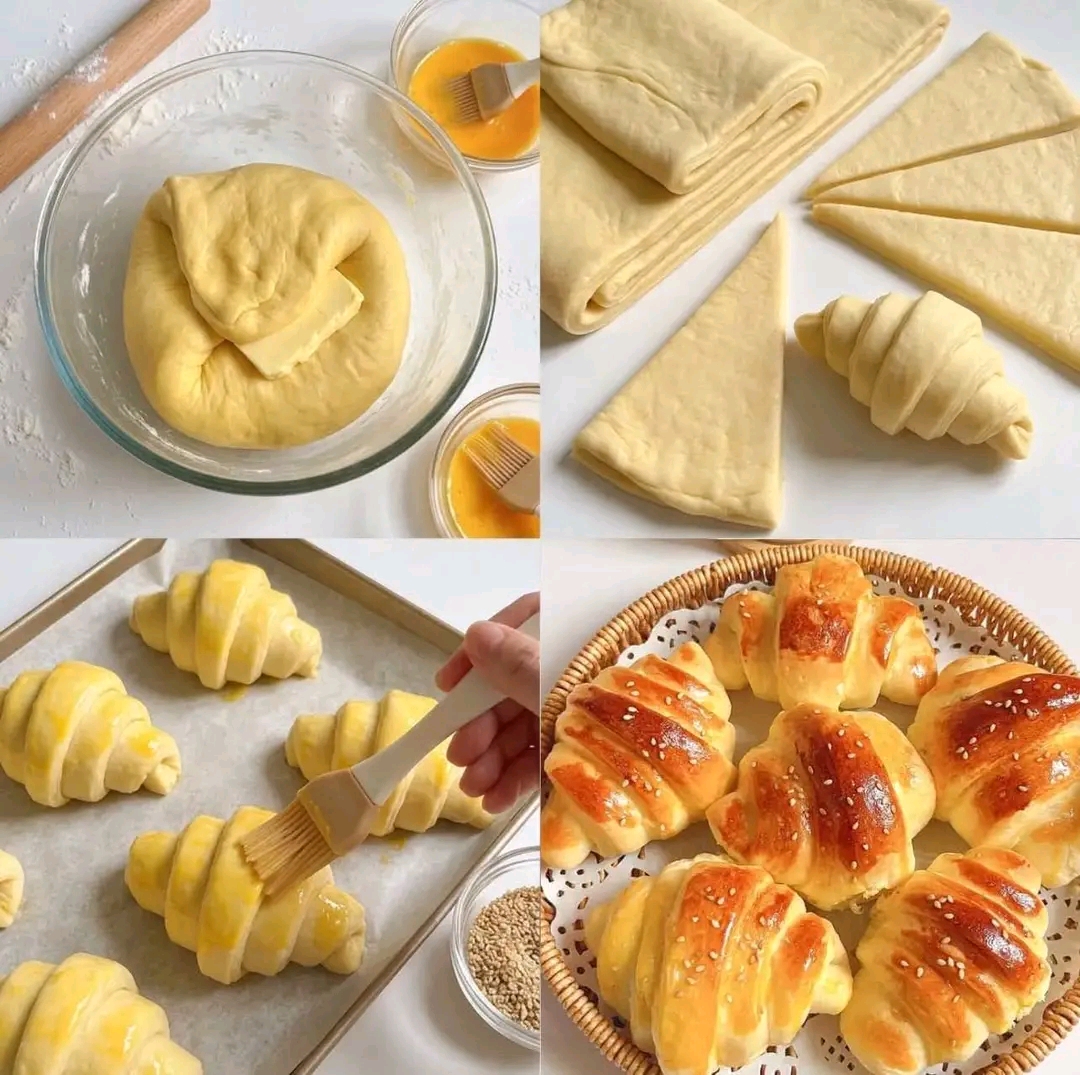
Follow this detailed 4-step visual guide to knead, laminate, shape, and bake golden butter croissants step-by-step, as shown in the featured photograph 🥐✨!
Step 1: Prepare Dough and Encase the Butter Block 🧈🥣
- In a large bowl, mix bread flour, warm milk, yeast, sugar, salt, and melted butter to form a smooth yeast dough.
- Wrap the dough tightly in plastic film and chill in the refrigerator for 1 hour.
- Shape chilled European butter into a flat, pliable rectangular block.
- Roll out the chilled dough, place the butter block directly into the center (top-left panel), and fold the dough flaps over the butter to encase it completely without air pockets!
Step 2: Laminate, Cut Triangles, and Roll 📐🥐
- Roll the encased dough out into a long rectangle and perform three single “letter turns” (folding like an envelope), chilling the dough for 30 minutes between turns to keep the butter from melting.
- Roll out the laminated pastry dough into a flat sheet about ¼-inch thick (top-right panel).
- Using a pizza cutter or sharp knife, trim edges cleanly and cut long, sharp isosceles triangles.
- Make a small notch at the wide base of each triangle, gently stretch the tip, and roll tightly from the base up to the apex into a neat crescent shape (top-right panel).
Step 3: Proof and Brush with Egg Wash 🥚✨
- Line a large baking sheet with parchment paper and place the shaped croissants leaving ample space between them.
- Allow croissants to proof in a warm, draft-free spot (75°F / 24°C) for 1.5 to 2 hours until doubled in size and visibly jiggly.
- Using a soft pastry brush, gently coat each croissant with a glossy layer of beaten egg yolk and milk (bottom-left panel).
- Sprinkle toasted sesame seeds across the tops for an elegant finishing touch!
Step 4: Bake to Golden Perfection and Serve 🥐🔥
- Preheat your oven to 390°F (200°C) for maximum initial steam rise.
- Bake croissants for 10 minutes, then lower heat to 350°F (175°C) and bake for an additional 12 to 15 minutes until deep mahogany brown.
- Transfer to a woven serving basket or cooling rack (bottom-right panel) and let cool for 20 minutes before pulling apart to reveal the airy honeycomb crumb!
💡 Expert Croissant Laminating & Baking Tips
- Temperature is Everything: The golden rule of croissant baking is to keep the butter and dough at identical temperatures 🧈. If the butter is too cold, it will shatter into chunks inside the dough; if too warm, it melts into the flour, losing the signature flaky layers!
- Never Skip Chilling: Rest dough in the fridge between turns. If you notice butter softening or leaking onto your work surface, immediately pop the dough into the freezer for 10 minutes to reset.
- Gentle Egg Washing: When applying egg wash, avoid letting liquid pool around the exposed side layers of the croissant 🥚. Excess egg wash on open pastry edges can fuse layers together, preventing proper expansion!
Enjoy serving these freshly baked, crispy, and buttery Croissants at your next Sunday breakfast or afternoon coffee session! 🥐✨🍰