🌱 Master Anthurium Propagation: Perlite & Plastic Box Method 🌿
Anthuriums are prized tropical plants known for their stunning foliage and vibrant blooms. Propagating young Anthurium plantlets or cuttings can feel challenging in standard potting soil due to the risk of root rot. Using a shallow plastic container filled with perlite (and a few clay LECA pebbles) creates a high-humidity microclimate that accelerates root growth and protects delicate young plants. Adding a concentrated liquid fertilizer or natural brown organic infusion provides the vital nutrients necessary for rapid growth.
| Component | Description & Function |
|---|---|
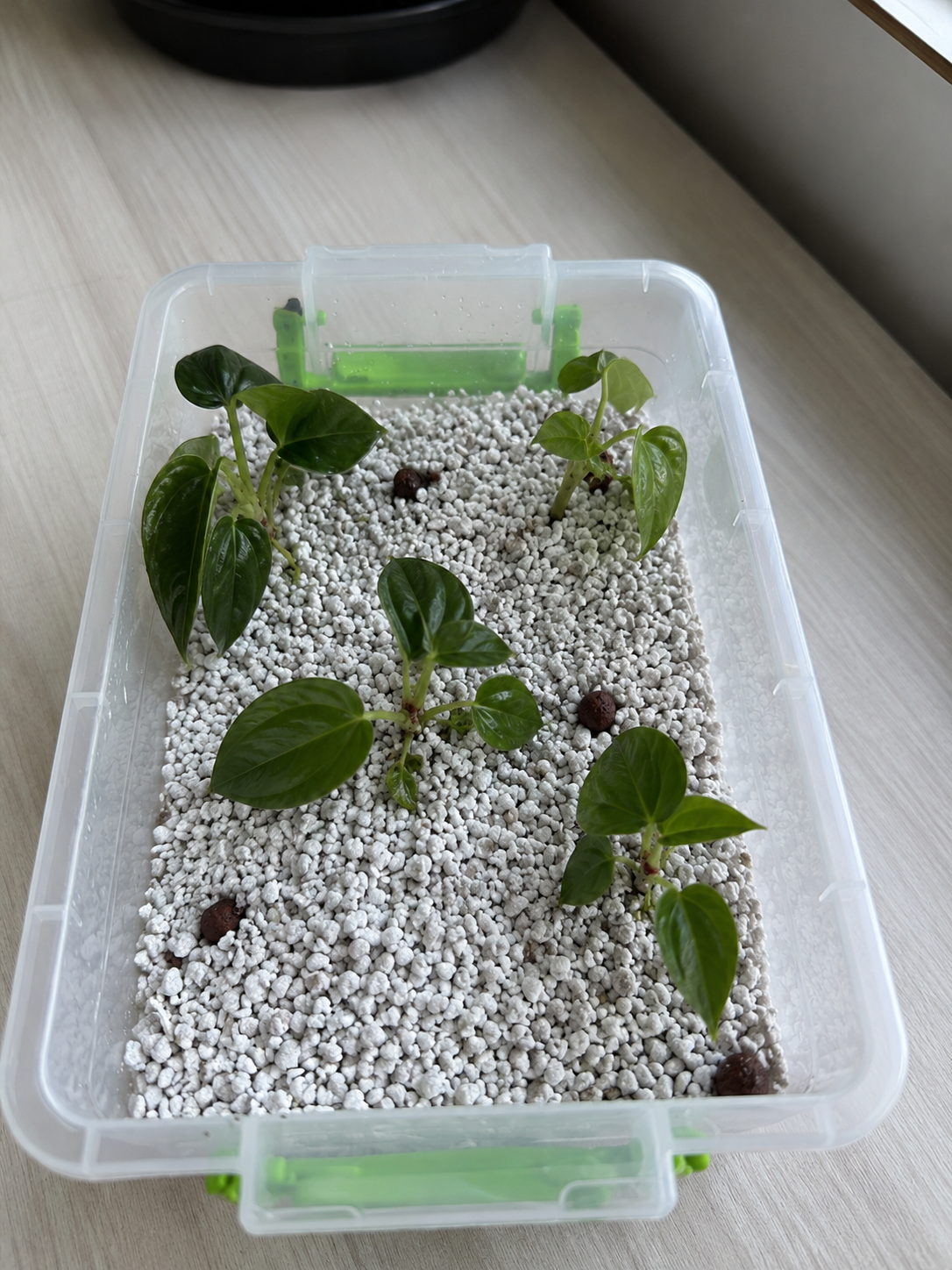
| Container Type | Clear plastic storage box with green locking latches (retains maximum humidity). |
| Primary Medium | Coarse horticultural perlite (provides exceptional aeration and moisture holding). |
| Secondary Medium | LECA expand clay balls scattered throughout for drainage balance. |
| Nutrient Solution | Water mixed with a liquid fertilizer (brown bio-liquid/seaweed extract/humic acid). |
| Target Plant | Young Anthurium plantlets, node cuttings, or tissue culture acclimate shoots. |
| Ideal Environment | Bright indirect sunlight or grow light LED setup at 22°C – 26°C. |
Using a closed perlite setup acts like a mini-greenhouse system. Here is why tropical plant collectors rely on this exact setup for sensitive Anthuriums:
- Maximum Root Oxygenation: Perlite creates a porous, airy environment that completely eliminates soil compaction, preventing root suffocation and rot.
- Controlled Humidity: Latching the clear lid keeps the relative humidity near 90–95%, reducing water loss from young Anthurium leaves.
- Targeted Nutrient Delivery: The brown liquid solution (such as liquid seaweed, humic acid, or organic tea) delivers immediate bio-available nitrogen and micronutrients right to the developing roots.
- Easy Root Inspection: The lightweight, white perlite medium makes it easy to monitor subterranean root progress without damaging delicate root tissues.
- Prepare the Box & Perlite: Fill a clean, clear plastic tub with rinsed perlite until it reaches a depth of roughly 3 to 4 centimeters. Scatter a few LECA clay pebbles across the layer to keep the medium structure stable.
- Plant the Anthuriums: Gently set your young Anthurium plantlets into the perlite layer. Ensure the root nodes are securely embedded into the white stones while keeping the stem base exposed above the top layer.
- Add Fresh Water & Brown Solution: Pour clean water into the bottom of the container to create a small reservoir (about 1 cm at the base). Pour a diluted brown organic liquid solution (such as liquid kelp or humic fertilizer) around the root bases.
- Seal and Position: Secure the green plastic latches to trap humidity inside. Place the bin in a warm spot with plenty of bright, indirect sunlight.
The plantlets acclimate to the high humidity inside the box. The brown nutrient liquid is gradually absorbed by capillary action through the perlite.
Thick, white aerial and subterranean roots begin pushing out from the main stems, branching freely into the damp perlite pebbles.
New leaf buds emerge from the center petioles. Leaves uncurl rapidly, exhibiting a healthy glossy green sheen thanks to the continuous liquid nourishment.
Once each Anthurium has established a sturdy, multi-branched root network, plantlets are ready to be potted into a chunky chunky aroid mix.
A: It is typically a organic liquid plant tonic such as liquid seaweed/kelp extract, humic acid, or a diluted liquid fertilizer. It accelerates root formation and provides minerals that plain perlite lacks.
A: Keep it closed most of the time, but open it for 5 to 10 minutes once a week to refresh airflow and prevent mold buildup.
A: Keep the water level restricted to the bottom 1/4th of the container height. The perlite will pull moisture upward naturally without submerging the stems.
A: Top up with fresh liquid solution every 2 to 3 weeks, or whenever the bottom water reservoir completely evaporates.
💡 Final Thoughts
Propagating Anthuriums using a plastic tub, perlite, and a rich organic liquid feeder is one of the safest and most efficient ways to grow vibrant young tropical plants. By maintaining high ambient humidity and excellent root aeration, you eliminate common potting issues like rot or dehydration. Give your plantlets bright light, maintain a small nutrient reservoir, and enjoy watching them flourish into mature, healthy Anthuriums!