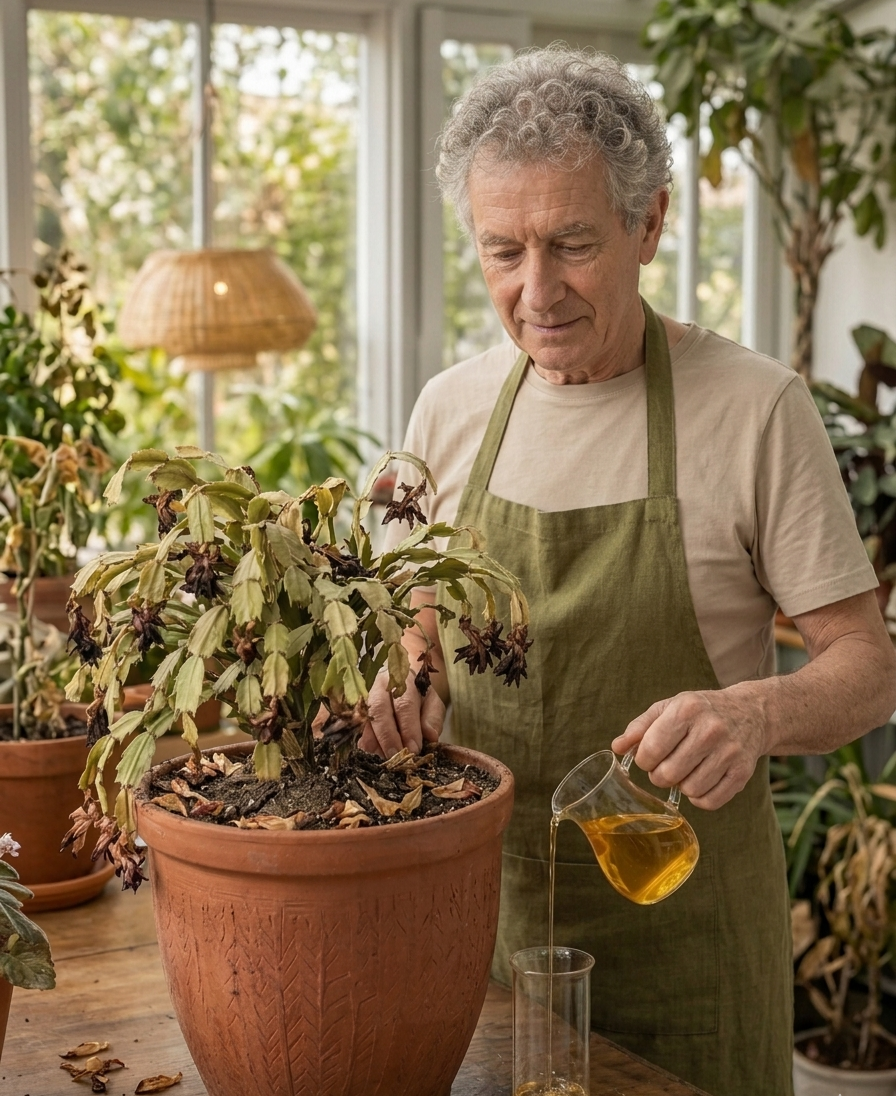
How to Revive a Struggling Christmas Cactus with Banana Peel Compost Tea
A Comprehensive Botanical Guide to Unlocking Explosive Blooms and Lush Green Growth
The Christmas Cactus (Schlumbergera bridgesii) is one of the most beloved holiday houseplants, prized for its dramatic display of vibrant pink, purple, or red blossoms right in the middle of winter. However, despite its hardy nature, it is not uncommon for a Christmas Cactus to become limp, faded, or stubborn about blooming. When synthetic fertilizers fail or risk burning the delicate root system of an epiphytic forest plant, natural organic amendments provide the safest, most effective solution.
Among organic remedies, Banana Peel Compost Tea stands out as a powerful bio-nutrient brew. Rich in bioavailable potassium, phosphorus, magnesium, and essential trace minerals, this homemade liquid fertilizer directly targets the physiological needs of the Christmas Cactus during its critical flowering and recovery phases.
I. The Science of the Christmas Cactus: Epiphytic Requirements
To understand why banana peel tea works so effectively, we must first look at the native habitat of Schlumbergera. Unlike desert cacti that store vast amounts of water in harsh sand, the Christmas Cactus is a tropical epiphyte native to the coastal rainforests of southeastern Brazil. In the wild, it grows anchored in the nooks of tree branches, absorbing nutrients from decaying organic debris, leaf mold, and rain showers.
Because their roots evolved to cling to bark rather than sit in dense soil, they are exceptionally sensitive to mineral salts found in synthetic chemical fertilizers. Concentrated commercial feeds often burn their tender root tips, leading to leaf drop, wilting stems, and bloom failure. Banana peel compost tea delivers organic nutrients in a mild, water-soluble form that mimics the natural compost runoff these plants absorb in the wild.
II. Why Banana Peels? Key Nutritional Benefits
Banana peels are packed with essential elements that directly support plant cell repair and floral development:
- Potassium (K): Essential for regulating water pressure within plant cells (turgor). Potassium strengthens limp, rubbery segment leaves and improves overall disease resistance.
- Phosphorus (P): The primary driver of flower bud initiation. High phosphorus levels signal the plant to transition from vegetative growth to bud production.
- Magnesium (Mg): A critical component of chlorophyll, the green pigment responsible for photosynthesis. It turns pale, yellowing stem segments back to a deep, rich green.
- Calcium (Ca): Strengthens the cell walls of the stem segments (cladodes), keeping the heavy cascading branches upright under the weight of dense blooms.
III. Step-by-Step: Preparing Banana Peel Compost Tea
🌱 The Master Brew Recipe
Ingredients & Tools Needed:
- 3 to 4 organic banana peels (chopped into small 1-inch pieces)
- 1 quart (approx. 1 liter) of room-temperature distilled or filtered water
- A glass jar or container with a loose lid
- A fine mesh strainer or cheesecloth
- A glass measuring jug or watering can
Step 1: Preparation & Chopping
Thoroughly wash the banana peels to remove any commercial waxes or residues. Chop the peels into small pieces. Cutting the peels increases the surface area, allowing nutrients to leach into the water much faster.
Step 2: Fermentation / Steeping Process
Place the chopped peels into your glass jar and fill it with room-temperature water. Cover the jar loosely with a lid or cloth (do not seal it airtight, as mild natural fermentation can create gas pressure). Allow the jar to sit in a cool, dark place for 48 to 72 hours. The water will turn a pale amber-brown color, indicating nutrient extraction.
Step 3: Straining & Dilution
Strain the liquid through a fine mesh strainer to catch all pulp fragments. Do not pour raw peel pulp directly into the plant pot, as decomposing organic solids can attract fungus gnats or foster mold on top of the soil. Dilute the strained tea: Mix 1 part banana tea with 1 part clean, room-temperature water. The final liquid should look like weak black tea.
IV. Application Protocol for Revival and Bloom Boosting
Timing and frequency are critical when applying organic liquid nutrients to Schlumbergera:
- Early Autumn (Pre-Bloom Preparation): Begin applying banana peel tea once every two weeks starting in early September. This boosts phosphorus levels right when the plant responds to shorter daylight hours by forming flower buds.
- Active Blooming Stage: Continue feeding lightly once a month while buds are forming. Once the blooms open fully, pause liquid feeding and water normally.
- Post-Bloom Recovery (Late Winter/Spring): After blooming ends and the plant enters a brief dormancy, resume feeding once every 3 to 4 weeks to help the foliage bounce back and produce fresh new leaf segments.
⚠️ Important Application Rule:
Never apply banana tea (or any fertilizer) to bone-dry soil. If your Christmas Cactus is severely dehydrated, water it with plain, room-temperature water first. Allow the root ball to rehydrate for 30 minutes before applying the banana tea infusion. This prevents root shock and ensures uniform nutrient uptake.
V. Final Thoughts & Quick Reference Guide
Restoring a dull or struggling Christmas Cactus doesn’t require complex chemical setups or expensive plant foods. By leveraging simple, home-brewed banana peel compost tea, you work in harmony with the plant’s natural epiphytic metabolism, promoting robust root development, firm stem segments, and spectacular seasonal blossoms year after year.
🌸 Final Thoughts: Key Elements of Banana Peel Tea Care
Reviving a Christmas Cactus with banana peel tea relies on gentle organic nourishment, proper timing, and avoiding common substrate mistakes.
| Core Concept | Detailed Explanation | Golden Success Tip |
|---|---|---|
| 1. Bio-Nutrient Extraction | Steeping chopped banana peels in water for 48–72 hours releases soluble potassium, phosphorus, and magnesium directly into a liquid form that delicate epiphytic roots can absorb instantly without burning. | Always strain out all solid pulp fragments before application to prevent attracting unwanted indoor pests like fungus gnats. |
| 2. Bloom Trigger Timing | Applying phosphorus-rich banana tea during late summer and early autumn strengthens leaf segments and provides the necessary metabolic signal for dense flower bud formation. | Pair autumn feeding with 12–14 hours of uninterrupted nighttime darkness to guarantee abundant blooming. |
| 3. Root Safety & Hydration | Epiphytic cacti lack deep taproots and rely on gentle moisture absorption. Organic tea prevents salt buildup in soil while restoring cell turgor pressure to wilted or wrinkled foliage segments. | Always moisten the soil with plain water prior to applying the tea, ensuring the roots absorb nutrients evenly without stress. |