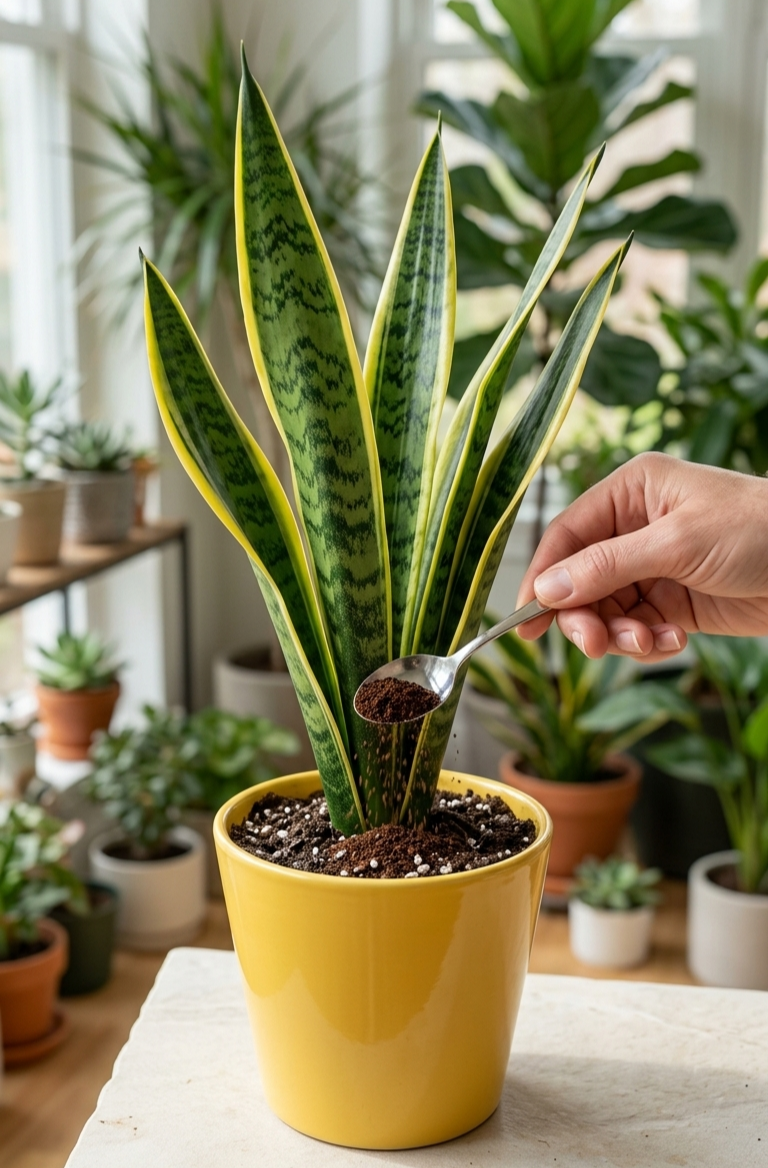
☕ The Secret Coffee Powder Trick for Snake Plants: Complete Care & Growth Guide
Snake Plants (Sansevieria / Dracaena trifasciata) are celebrated for their striking upright foliage, structural elegance, and incredible air-purifying qualities. However, maintaining vibrant variegation and encouraging new pup growth requires organic nutrients that feed the soil micro-ecosystem.
Adding spent coffee grounds or diluted organic coffee powder directly to your Snake Plant substrate has gained huge popularity among houseplant lovers. When used correctly, nitrogen-rich coffee powder acts as a natural slow-release soil conditioner that sharpens foliage colors and boosts root vitality.
🔬 1. The Science: Why Coffee Powder Works Magic on Snake Plants
Coffee powder isn’t just a morning energizer—it offers key biochemical benefits for indoor plant substrates:
- Nitrogen Enrichment (N): Coffee contains roughly 2% nitrogen by volume. Nitrogen is the primary driver of chlorophyll production, resulting in rich green leaves and prominent yellow margins.
- Organic Soil Structure: Fine coffee grounds break up dense potting mixes, improving organic aeration and moisture retention without making the soil soggy.
- Essential Trace Minerals: Unused or spent coffee releases low levels of potassium, magnesium, and phosphorus, fueling steady stem rigidity and healthy rhizome expansion.
🛠️ 2. Essential Ingredients & Application Tools
Before applying coffee grounds to your Snake Plant, gather these basic supplies:
📋 3. Step-by-Step Coffee Application Method
⚖️ 4. Benefits vs. Potential Risks (What It Helps & What It Harms)
Understanding the correct dosage prevents common organic gardening mistakes:
✅ What It Helps (The Benefits)
- Boosts Foliage Color: High nitrogen deepens the green pattern and sharpens yellow margins.
- Stimulates New Pups: Slow-release nutrition feeds the underground rhizomes, encouraging new shoots.
- Repels Pests: Naturally deters fungus gnats, snails, and indoor pests due to mild acidity and aroma.
❌ What It Harms (The Potential Risks)
- Soil Clogging: Adding thick layers creates an impenetrable crust that restricts oxygen to roots.
- Mold Growth: Dumping wet coffee grounds causes white fuzzy mold and root rot in succulent plants.
- Over-Acidification: Excessive un-brewed coffee increases soil acidity beyond the ideal neutral pH range (6.0–7.0).
❓ 5. Frequently Asked Questions (Snake Plant FAQ)
Q1: Can I pour liquid black coffee directly into my Snake Plant pot?
Only if heavily diluted. Concentrated liquid coffee is far too acidic. Dilute 1 cup of plain, unsweetened brewed coffee with 4 cups of water before watering, and use it no more than once every 2 months.
Q2: Is fresh coffee powder better than used coffee grounds?
Used coffee grounds are better. Brewing removes most of the harsh acidity and concentrated caffeine, making spent grounds safer for delicate Snake Plant rhizomes.
Q3: What should I do if mold forms after applying coffee grounds?
Scrape off the fuzzy top soil layer immediately, rake the surface soil to improve air circulation, and suspend all watering until the top 2 inches of substrate dry out completely.
🌿 Final Thoughts: Achieving Vibrant, Strong Snake Plants
Utilizing organic household ingredients like dry coffee powder is an efficient, eco-friendly method to boost your Snake Plant’s foliage intensity and encourage healthy rhizome growth.
🔑 Key Takeaway for Success:
Always prioritize moderation and low moisture. Snake plants are drought-tolerant succulents—dry coffee applied sparingly every few months will yield thick, sturdy leaves without risking root rot!